
Pharmaceutical manufacturing refers to the highly regulated process of transforming raw materials into finished medicinal products suitable for administration to patients. This sector integrates a series of chemical, physical, and biological operations to ensure products meet strict safety, quality, and efficacy criteria. The key processes span from research and development to large-scale commercial production, with a strong focus on compliance with international standards and local regulations.
Developments in pharmaceutical manufacturing address challenges such as batch consistency, process efficiency, contamination control, and timely production. Advanced equipment, automation technology, and continuous monitoring are increasingly used to support these goals. The emphasis remains on maintaining product quality while achieving operational efficiency. Oversight by agencies such as the U.S. Food and Drug Administration (FDA) and the European Medicines Agency (EMA) is integral throughout these stages.
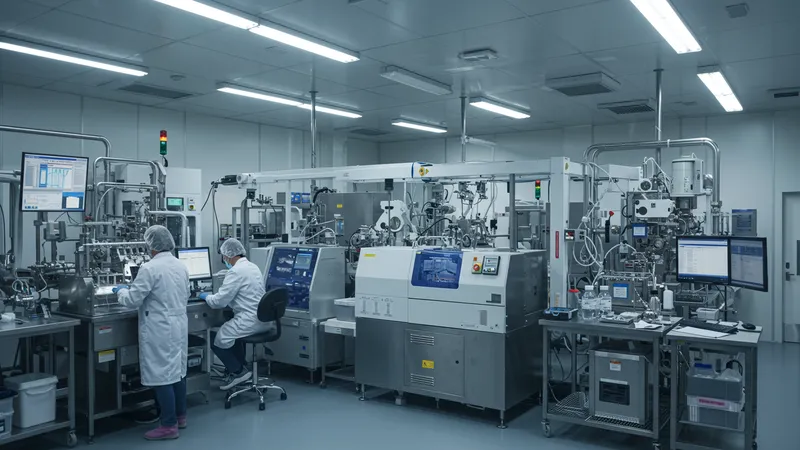
Solid dosage manufacturing forms the foundation of many oral therapies commonly used worldwide. Techniques such as granulation improve powder flow, while tablet compression and coating ensure consistent delivery and stability. Automation and in-process controls can enhance quality assurance and manufacturing speed. Multiple international guidelines define operational standards in these facilities.
Sterile manufacturing underscores the need for contamination-free production environments, especially important for medications directly entering the bloodstream or sensitive tissues. Techniques like aseptic fill-finish, high-efficiency particulate air (HEPA) filtration, and regular environmental monitoring may be implemented to safeguard product safety. Operators often adhere to good manufacturing practices (GMP) to achieve regulatory compliance.
Biopharmaceutical processing enables the production of advanced therapeutics, including recombinant proteins and cell therapies. This approach incorporates complex steps such as cell culture and downstream purification, requiring careful control of biological variables. Facilities operating in this area tend to invest heavily in validation, monitoring, and staff training to maintain process reliability.
These three examples represent major operational areas in today’s pharmaceutical manufacturing landscape. Selection between them often depends on the intended therapeutic agent, delivery route, and target patient population. Processes within each category continue to evolve, integrating digital technologies and new materials. The next sections examine practical components and considerations in more detail.
Solid dosage manufacturing remains a widely practiced methodology for producing oral pharmaceuticals. Tablets and capsules are among the most familiar formats, valued for their stability and ease of administration. Processes typically begin with precise weighing and blending of active ingredients and excipients to achieve uniformity. Granulation, either wet or dry, may then be employed to improve compressibility and flow properties of the mixture prior to tableting.
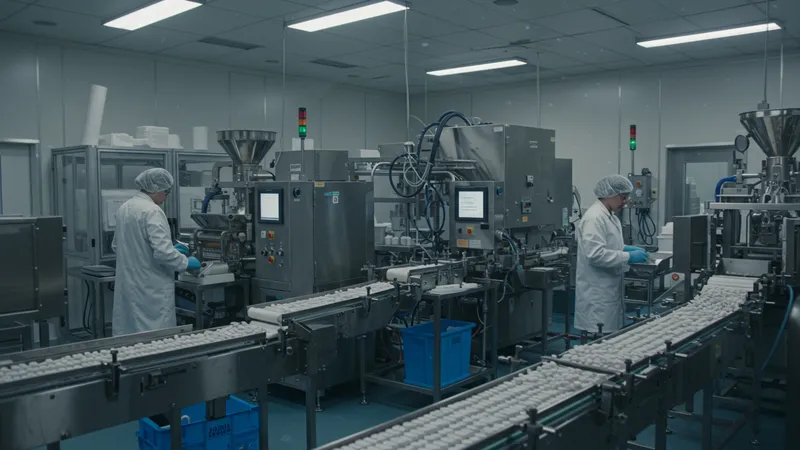
Control of particle size and moisture content is crucial during solid dosage manufacturing. Consistency in these variables helps to minimize batch variation and supports reliable drug release profiles. Manufacturers often utilize equipment such as oscillating granulators, fluid bed dryers, and rotary tablet presses. Quality assurance is reinforced by standards such as those established by the International Council for Harmonisation (ICH) and regional authorities.
Coating is a subsequent step that may provide functional benefits, such as masking taste, controlling drug release, or enhancing product appearance. Film coating and sugar coating are among the common techniques applied. The selection of coating materials and technology can impact overall product stability and consumer acceptance. Information about regulatory expectations is available from agencies like the FDA and EMA.
Automated systems and process analytical technologies (PAT) are increasingly integrated into solid dosage manufacturing. These additions aim to enhance in-process monitoring and real-time quality control. PAT tools can permit faster detection of deviations, allowing corrective actions before final product testing. Adoption of such technologies may represent significant investment, but could yield improvements in consistent product output.
Sterile manufacturing focuses on the production of medications and formulations that must remain free from microbial contamination. This process is critical for products administered via injection, infusion, or into sensitive tissues. Production environments are typically maintained under controlled conditions using cleanroom technology. Personnel often undergo specialized training to minimize contamination risks.
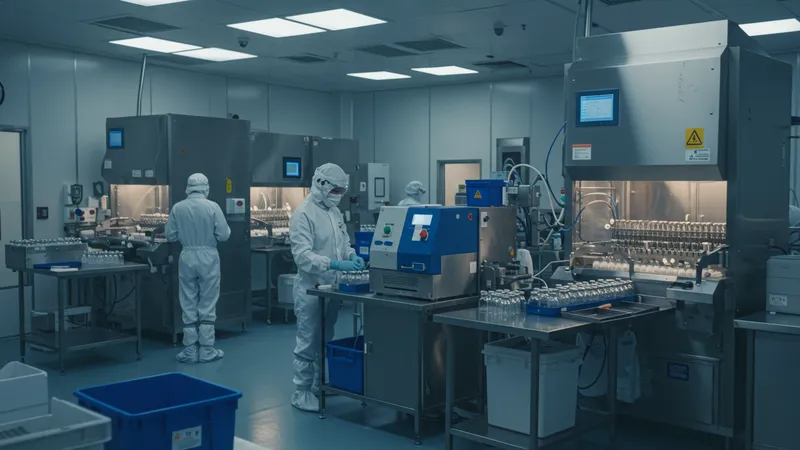
The creation of a sterile product may involve several stages, including sterilization of components, preparation of sterile solutions, and aseptic filling of containers. Maintenance of sterility is accomplished through use of laminar airflow hoods, restricted access barriers, and periodic air and surface sampling. Techniques such as terminal sterilization or aseptic assembly are selected based on product attributes.
Regulatory bodies establish clear guidelines for sterile manufacturing practices. Documentation, validation of cleaning and sterilization methods, and routine monitoring are required to ensure regulatory compliance. Equipment such as isolators and automated fill-finish lines may be adopted to reduce operator involvement and further decrease contamination risks. Manufacturers often conduct media fill tests as a performance qualification measure.
Investments in sterile manufacturing infrastructure can be considerable, given the need for advanced engineering controls and compliance with strict regulations. Ongoing training and calibration of instruments remain important for continued product quality assurance. The push for higher levels of automation and integration of robotics is often observed in newer facilities as a means to enhance reliability and efficiency.
Biopharmaceutical processing refers to the use of living organisms or biological systems to produce complex therapeutic agents. These products include monoclonal antibodies, vaccines, and recombinant proteins. The process generally encompasses cell culture, fermentation, purification, and formulation stages, each requiring careful monitoring and validation to ensure consistency and safety.
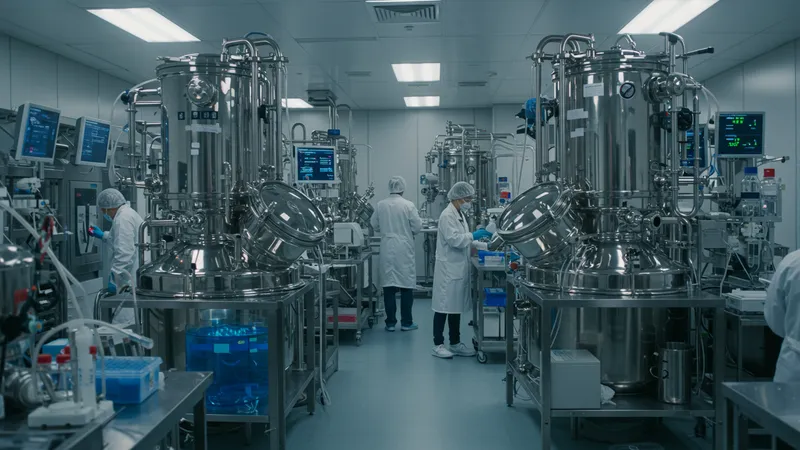
Cell lines or microbial systems are maintained in sterile bioreactors under tightly regulated conditions. Parameters such as temperature, pH, oxygen concentration, and nutrient supply are controlled to optimize cell growth and product yield. Downstream processing then isolates and purifies the desired product, utilizing techniques like chromatography, filtration, and ultrafiltration. Each step is accompanied by quality control testing.
The regulatory landscape for biopharmaceutical manufacturing is complex. Guidelines often require extensive documentation and validation of processes, from the sourcing of raw materials to final product formulation. Advances in single-use technologies, process automation, and digital control systems may improve efficiency and contamination control in these settings. However, new biological modalities can present unique challenges necessitating specialized expertise.
Investment in biopharmaceutical facilities can be higher compared to traditional solid or sterile manufacturing due to specialized equipment and infrastructure. The costs are often justified by the high scientific value and potential for producing life-changing therapies. Manufacturers face the ongoing task of balancing innovation, scalability, and compliance in a rapidly evolving sector.
Pharmaceutical manufacturing is experiencing changes influenced by advancements in automation, digitalization, and regulatory science. New manufacturing models, such as continuous processing and modular production facilities, can provide flexibility and enable faster adaptation to changing market needs. These trends are particularly noticeable in regions with robust pharmaceutical sectors and innovation-driven policies.
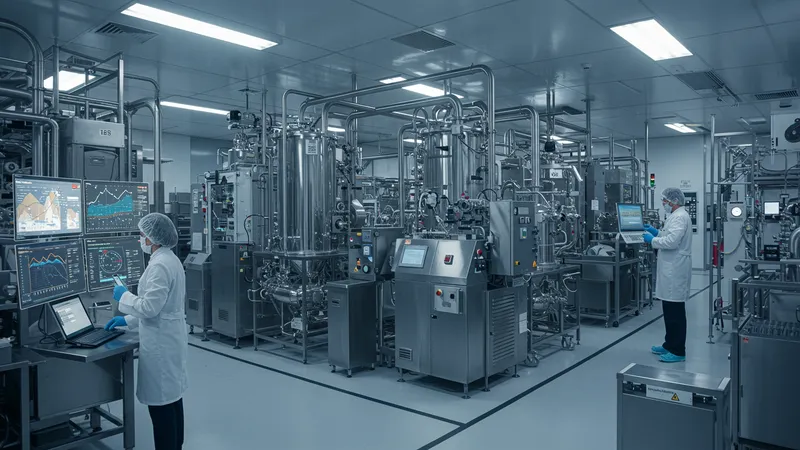
Quality by Design (QbD) and real-time monitoring systems are being integrated into key manufacturing steps. QbD encompasses systematic methodologies for process development and risk assessment, emphasizing consistent product quality and regulatory compliance. Adoption of these approaches may streamline regulatory submissions and increase process understanding among technical staff.
Increasing attention is also placed on environmental sustainability within pharmaceutical manufacturing. Waste reduction initiatives, energy-efficient technologies, and responsible sourcing of raw materials can support sustainable practices. Companies may seek to align production standards with recognized frameworks or environmental regulations in their respective markets.
Global supply chain dynamics, workforce development, and ongoing regulatory evolution are additional factors affecting pharmaceutical manufacturing. Adapting to new requirements and leveraging emerging technologies can help maintain product quality and supply continuity. Continued investment in research, infrastructure, and collaboration contributes to shaping the future of pharmaceutical manufacturing on an international scale.