
Air conditioning systems are essential for maintaining comfortable indoor environments in both commercial and residential spaces throughout the United States. Selecting an appropriate system involves consideration of multiple technical and practical factors. These considerations often include the intended application (such as office buildings, homes, or retail spaces), the structure’s size, and specific cooling demands based on climate and occupancy.
One of the main challenges when evaluating air conditioners is determining the required cooling capacity, commonly measured in tons. This calculation is influenced by factors such as square footage, insulation quality, geographic region, and anticipated occupancy levels. Additionally, different air conditioner types—central, ductless, and window units—offer distinct installation, operational, and efficiency characteristics, which may affect suitability for various environments.
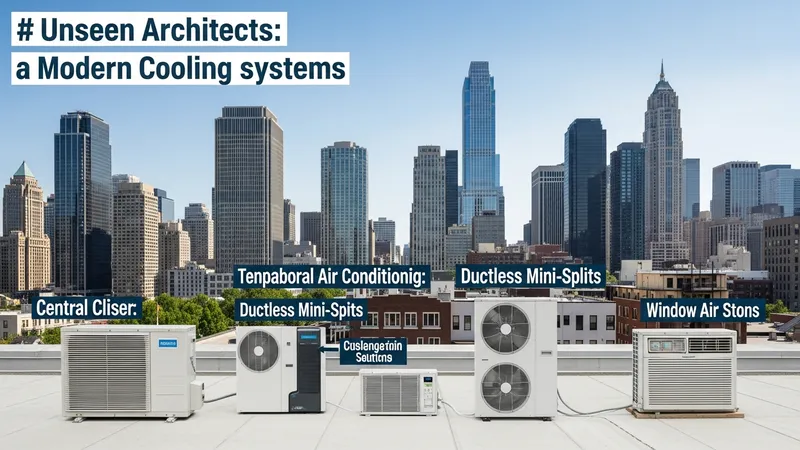
The process of selecting an air conditioner often begins with an assessment of required tonnage. Square footage is a primary input, but United States climate zones can significantly impact cooling load estimations. For example, higher temperatures and humidity in southern states may increase demand, leading to selection of systems with larger capacities, while northern locations might permit the use of smaller units.
Building type also plays a significant role in air conditioner choice. Commercial spaces, which may include offices or retail settings with higher occupancy and equipment heat loads, frequently require centralized solutions with more sophisticated controls. In contrast, many non-commercial or residential settings may use room units or mini-split systems to more efficiently target specific areas without cooling unused spaces.
System efficiency standards in the United States are defined by regulatory bodies, such as the Department of Energy, which specify minimum Seasonal Energy Efficiency Ratio (SEER) ratings. Higher SEER ratings, typically ranging from 13 to 25, can contribute to reduced annual electricity consumption, though initial costs may vary accordingly. Consideration of energy efficiency is often balanced with upfront pricing and ongoing operating costs.
In addition to basic functionality, advanced system controls and integration options are increasingly common. Timers, Wi-Fi enabled thermostats, and zoning capabilities may offer greater user flexibility, especially in commercial applications where varying usage patterns are prevalent. Such features could influence the long-term value and user satisfaction with an air conditioning system.
Choosing the right air conditioner is a multilayered process. The system’s type, the cooling tonnage needed, local regulations, and available efficiency features all interact to shape suitability for a given application. The next sections examine practical components and considerations in more detail.
Cooling capacity is a critical attribute when selecting an air conditioning system for both commercial and residential spaces in the United States. The unit of measurement, known as tonnage, reflects the rate at which an air conditioner can remove heat from an indoor area. One ton of cooling capacity generally equates to the removal of approximately 12,000 BTUs of heat per hour. Calculating the necessary tonnage for a space involves assessing the total square footage as well as factors like ceiling height, insulation quality, and sun exposure.
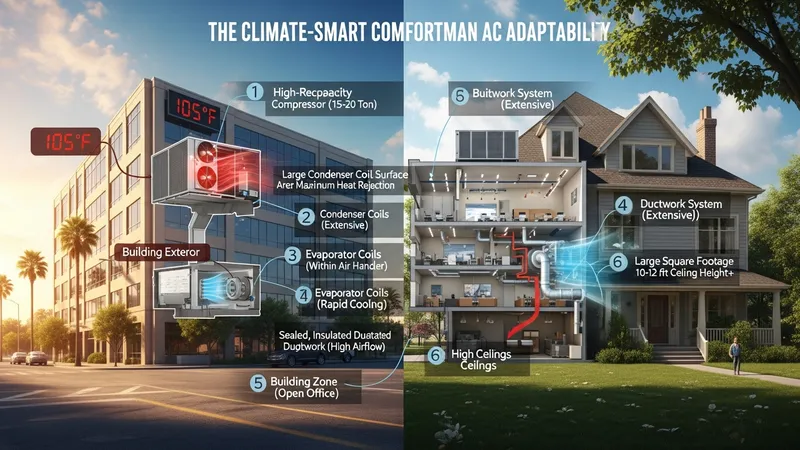
Regional climate variations across the United States may lead to different recommendations regarding required capacity. For example, buildings in Texas or Florida may require systems with higher tonnage due to long, hot summers. By contrast, structures in northern states may function effectively with lower-capacity units, given the cooler climate and shorter cooling seasons. Using general formulas or consulting local professionals may help provide reasonable estimates tailored to these factors.
Specific guidelines typically suggest that residential spaces in the United States may require about 1 ton of cooling for every 400–600 square feet, though exact needs will vary. Commercial environments often introduce additional complexities, such as heat generated by equipment, higher occupancy, or unique structural characteristics. These factors can lead to cooling load requirements that differ substantially from a strictly square footage-based estimate.
In addition to static calculations, dynamic considerations may affect real-world cooling requirements. For instance, a space with extensive glass exposure may experience higher heat gain, increasing the load on the air conditioning system. Ventilation rates, internal equipment, and even local construction codes can play roles in determining appropriate tonnage, emphasizing the value of a site-specific analysis. Considering these components may contribute to more effective system selection and energy use planning.
Air conditioners are offered in various types to meet the diverse needs of United States users. Central air conditioning systems remain prevalent in many homes and commercial buildings, featuring either split or packaged configurations dependent on factors such as building layout and available ductwork. Central systems often provide uniform cooling throughout larger spaces, and they integrate with existing ventilation infrastructures.
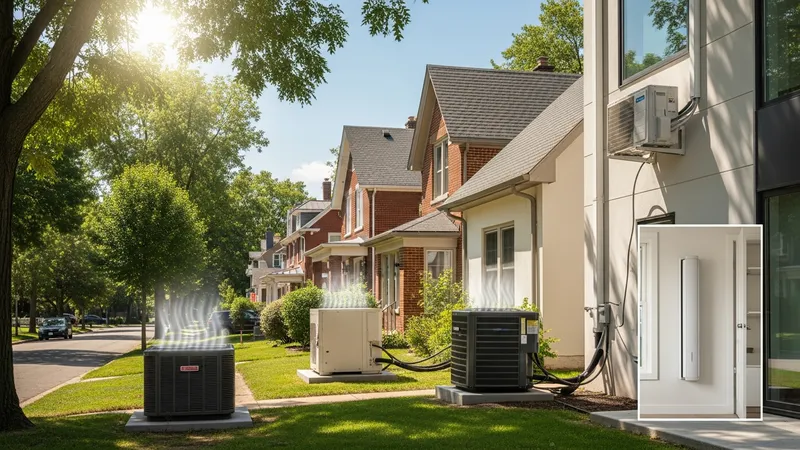
Ductless mini-split systems have become increasingly popular for both retrofit applications and new construction where duct installation may be impractical or cost-prohibitive. They usually consist of an external compressor and one or more interior air handlers connected via refrigerant lines. These systems may offer zoning flexibility, allowing users to adjust temperatures in specific rooms or zones according to occupancy and preference.
Window and portable air conditioners can be suitable for smaller spaces or scenarios that do not require whole-building solutions. These units are frequently deployed in individual offices, single rooms, or temporary settings. Installation generally involves minimal modification to the structure, providing a localized cooling effect where central or ductless options might not be practical.
The most appropriate air conditioner type for a given United States location is typically selected based on existing infrastructure, size of the conditioned space, and anticipated use patterns. Energy codes and utility incentive programs may further influence decision-making by encouraging certain technologies or efficiency features that align with wider energy management objectives.
Air conditioners available in the United States are subject to a range of efficiency and performance standards outlined by federal and sometimes state agencies. The United States Department of Energy (DOE) regulates minimum efficiency thresholds, most notably through SEER (Seasonal Energy Efficiency Ratio) ratings, which indicate how efficiently a system converts electricity into cooling over a season. Equipment with higher SEER values may reduce operational energy use when compared with basic models, though upfront investment can differ.
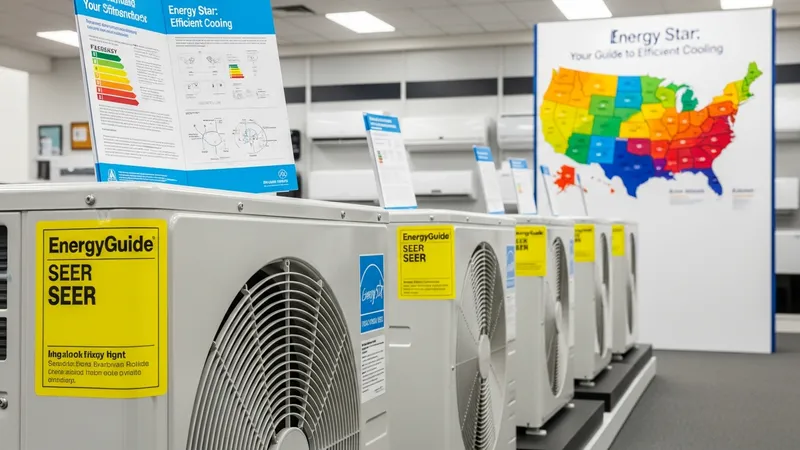
Manufacturers must ensure their systems comply with these federal minimums, and many products display their energy efficiency ratings on standardized yellow EnergyGuide labels. In some states or municipalities, additional requirements may exist, sometimes offering financial incentives or rebates for higher-efficiency selections. It is common for central air conditioners in the United States to require minimum SEER values between 14 and 15, depending on the region’s climate zone as determined by national guidelines.
The Environmental Protection Agency (EPA) further supports voluntary efficiency initiatives through programs such as ENERGY STAR, which label air conditioners that meet or surpass certain performance and efficiency metrics. Although voluntary, ENERGY STAR-certified equipment may be recognized by utilities or government agencies as eligible for cost savings or rebates, making efficiency a practical consideration for many buyers.
Regulatory requirements may also address refrigerant use, installation standards, and data reporting, all aimed at promoting safety, environmental protection, and consumer transparency. Being familiar with both national and local standards can inform the air conditioner selection process, helping users understand the compliance and performance characteristics tied to their choices.
The installation process for air conditioning systems in the United States often varies according to system type, building age, and structural complexities. Central air conditioning systems, for example, typically require integration with ductwork and electrical systems, which may involve coordination with licensed HVAC professionals. The presence of existing duct infrastructure can influence installation timelines and overall project cost.
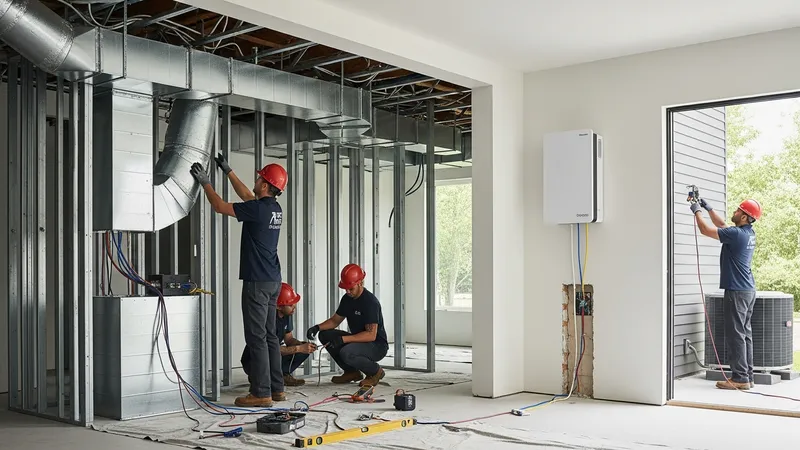
Ductless mini-split systems may offer simplified installation procedures, as they do not require air ducts. These systems use refrigerant lines routed through small wall openings, which could reduce construction impact and facilitate installation in buildings where ductwork would be impractical. The modular nature of mini-split systems often allows for staged installation or future expandability as needs evolve.
Operational aspects such as routine maintenance and filter replacement are important across all air conditioner types. Regular service can contribute to optimal system efficiency and may extend equipment life. In commercial settings, the use of building automation systems or smart thermostats can further optimize energy consumption patterns by adapting cooling levels to occupancy or external temperature changes.
Noise levels, power requirements, and air quality features (for example, integrated filtration) may also be relevant considerations, particularly in shared or sensitive environments such as offices or healthcare facilities. These elements can influence occupant comfort and satisfaction, and may be viewed alongside core factors such as capacity, efficiency, and cost when choosing an air conditioner in the United States.