
Investing in bonds in Switzerland involves acquiring debt securities issued by governments, corporations, or other entities, with the goal of receiving periodic interest payments and the return of principal at maturity. Swiss bonds are typically considered a means of portfolio diversification, as they may offer stability and predictable income relative to equities or other asset classes. The Swiss bond market includes both local and international issuers, providing investors with a range of choices that vary by credit rating, currency, and duration.
Participants looking to invest in Swiss bonds may encounter several approaches. These can include purchasing individual bonds from a bank or broker, accessing local government bonds, or choosing investment funds and exchange-traded funds (ETFs) that track bond indices. Each route has distinct features, cost structures, and risk profiles. Understanding the mechanisms involved and the characteristics of bond products in Switzerland may help investors make informed decisions aligned with their investment objectives and risk tolerance.

Investing in individual Swiss government bonds via a brokerage account can offer a transparent view of the bond’s characteristics, including maturity, coupon, and issuer credit rating. Swiss Confederation bonds are often regarded as cautious choices due to the government’s high credit quality, but yields may be lower than other bond types. Brokerage fees and regulatory requirements may apply, and investors are advised to review these before proceeding.
Cash bonds obtained from Swiss banks allow investors direct access to specific bond issues. This method may be attractive to those seeking tailored bond maturity dates or particular issuers. Minimum purchase sizes and bond selection can vary between financial institutions, and banks may also provide clients with guidance on available options. Investors typically need to hold an account with the bank to transact in cash bonds.
Bond ETFs listed on the Swiss exchange provide diversified access to the bond market without requiring the investor to select individual issues. These funds may invest in government, corporate, or other Swiss franc-denominated bonds. ETFs are structured to reflect the performance of an underlying index, and their liquidity enables trading throughout the market day. Ongoing fees, known as total expense ratios (TER), can vary among different ETF products.
Each investment approach may carry distinct risks and potential benefits. Factors such as issuer default risk, interest rate changes, and liquidity constraints can influence outcomes for both direct bond purchases and ETF participation. The regulatory framework in Switzerland, overseen by entities such as the Swiss Financial Market Supervisory Authority (FINMA), aims to support market transparency and investor protection.
Understanding these investment avenues and their typical requirements can help market participants align their actions with broadly accepted principles of risk awareness and diversification. The next sections examine practical components and considerations in more detail.
Swiss bonds are available in several forms, each with specific characteristics and risk profiles. Government bonds, known as Confederation bonds, are issued and backed by the Swiss federal government, typically with maturities from a few years up to decades. Corporate bonds, on the other hand, are issued by Swiss or multinational companies active in Switzerland, usually offering higher yields to compensate for increased credit risk. Municipal bonds are issued by cantons or local authorities and may carry distinctive legal or taxation features, depending on the region and current regulations.

One of the distinctive traits of Swiss government bonds is their reputation for stability. The Swiss franc (CHF) is considered a stable currency, and bonds denominated in CHF are sometimes used as a benchmark asset in European fixed income markets. However, the yields on these instruments are typically modest, reflecting the low interest rate environment and high credit quality of the issuer. Investors can typically monitor available issues through official listings published by the Swiss National Bank or the Swiss Federal Finance Administration.
Corporate bonds in Switzerland span a range of issuers, including major financial groups such as UBS and Nestlé, as well as smaller firms. The creditworthiness of each issuer is evaluated by rating agencies, which may influence demand and pricing. Swiss corporate bonds may be available in both domestic and international forms, with differences in tax treatment, minimum investment, and secondary market liquidity. Investors often review prospectuses and official disclosures before participating in such offerings.
Some Swiss investors may also consider structured bond products, which can include features like fixed-to-floating coupons or capital protection mechanisms. These products are typically issued by banks and are subject to their own risk factors, such as counterparty credit risk. Regulatory oversight and transparency requirements are designed to protect investors, but participants are encouraged to consult available documentation to understand the structure, fees, and associated risks. This diversity allows investors to build portfolios tailored to various income needs and risk preferences.
Acquiring Swiss bonds typically involves opening a securities account with a Swiss-regulated broker or financial institution. Retail investors may access platforms affiliated with major Swiss banks or with international brokers registered to operate within the country. Account setup procedures can involve personal identification, anti-money laundering checks, and agreement to local regulatory conditions. Once an account is established, clients can access bond purchase platforms, either directly online or through in-branch advisory services, depending on the institution.

Direct investment in bonds may involve purchasing newly issued bonds, also known as primary market participation, or buying previously issued securities on the secondary market. The Swiss Market Index (SMI) and other official trading venues host periodic auctions and continuous markets for government and corporate bonds. Minimum lot sizes, settlement periods, and transaction fees can vary. Many brokers provide real-time quotes and public documentation to support informed decision-making.
Some Swiss banks allow for the subscription and purchase of cash bonds in specific tranches. Clients typically specify the amount, desired maturity, and in some cases, the issuer. The bond is then held in the client’s custody account, generating regular interest coupons until maturity or earlier sale. This method may provide investors with more control over the composition of their fixed income holdings and can be suited to those preferring buy-and-hold strategies.
Investors seeking diversification without individually selecting bonds may turn to bond ETFs listed on the SIX Swiss Exchange. These ETFs track a collection of bonds and allow investors to gain exposure to different sectors and maturities. Swiss and internationally listed ETFs commonly offer daily liquidity, transparent holdings, and are typically operated under strict European or Swiss regulation. Fact sheets with details on holdings, past performance, and fees are often made public to aid investor research.
Costs associated with Swiss bond investment can include brokerage fees, custody charges, and, for ETFs, an annual total expense ratio (TER). Brokerage transaction fees typically range from CHF 10 to CHF 50 per trade, depending on the platform and level of service. Custody fees for maintaining bond holdings in a securities account may be charged as a percentage of assets or as a flat annual amount. Investors in bond ETFs may encounter ongoing TER charges, which frequently range from 0.10% to 0.50% per year for Swiss bond-focused products.
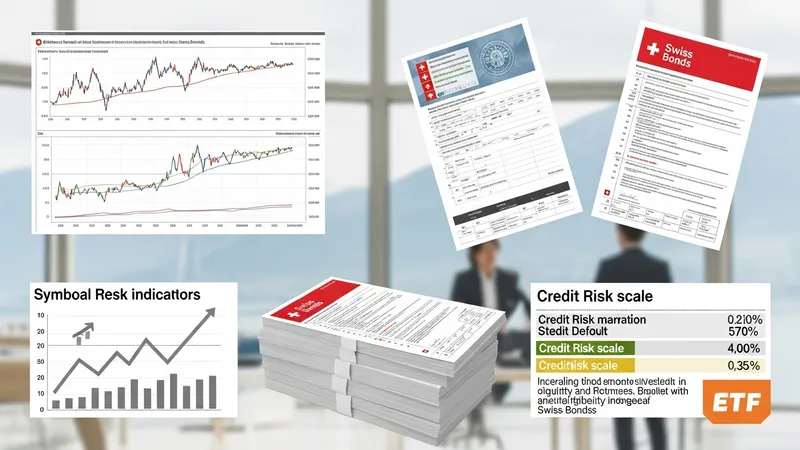
Key risks in Swiss bond investment include interest rate risk (the potential impact of rising rates on bond prices), credit risk (the possibility that an issuer fails to meet payment obligations), and liquidity risk (marketability of the bond before maturity). While Swiss government bonds tend to bear lower default risk, their yields also tend to be lower. Corporate and municipal bonds may compensate for increased risk with higher coupons, but are subject to issuer-specific assessments and market fluctuations.
Regulatory oversight in Switzerland is provided by the Swiss Financial Market Supervisory Authority (FINMA) and, where applicable, the Swiss Exchange. These authorities set rules for market transparency, investor protection, and disclosure. All investment products must comply with established Swiss and, in some cases, EU-wide standards. Regular audits and compliance checks are conducted to maintain market integrity and safeguard investor interests.
Taxation is another important aspect for investors to consider. Interest income from Swiss bonds is generally subject to Swiss withholding tax, currently set at 35%, which may be partially reclaimable by residents through annual tax filings. Foreign investors may have different tax treatment depending on their country of residence and double tax treaties. Detailed tax reporting and documentation are commonly provided by Swiss banks and brokers to assist with compliance obligations.
Many investors in Switzerland include bonds in their investment portfolios to balance equity exposure and manage overall risk. Bonds, especially government issues, can act as a stabilizing force during periods of equity market volatility. Swiss franc-denominated bonds are valued for their currency stability and may appeal to risk-averse investors or those with CHF-based obligations.

Recent years have seen shifts in the Swiss bond market, with yield levels often influenced by monetary policy decisions from the Swiss National Bank (SNB) and global interest rate trends. Negative or very low yields have been observed on some Swiss government bonds, particularly during times of heightened demand for safety. Such conditions may impact the risk-reward profile of bond portfolios, prompting some investors to seek broader diversification through corporate or international bonds.
Bond ETFs have become increasingly prominent in the Swiss market, providing broad access for institutional and individual investors alike. These funds typically maintain diversified exposure across multiple issuers, reducing single-issuer credit risk. ETF structures also allow for efficient market access and transparency, with regular disclosures of portfolio composition and costs in line with Swiss regulatory standards.
Looking forward, developments in sustainable finance are notable in the Swiss context. The issuance of "green bonds" and other socially responsible investment products has grown, allowing investors to direct capital towards projects with environmental or social objectives. As these offerings expand, Swiss investors may consider integrating such products within diversified fixed income portfolios, while remaining attentive to regulatory and market developments.