
AI-based supply chain forecasting involves the use of advanced computational algorithms to analyze data and predict future trends in supply and demand. In the United States, these systems often employ machine learning and predictive analytics to interpret large volumes of historical data, which can include sales figures, inventory levels, seasonal patterns, and external market factors. The goal is to produce forecasts that support more efficient planning, inventory management, and logistics coordination.
Implementation of such forecasting systems typically requires organizations to integrate a diverse data infrastructure with software platforms capable of handling structured and unstructured inputs. By processing information across numerous channels, these AI systems can identify underlying patterns that may be less visible through manual analysis. This approach may assist companies in reducing overstock and stockouts, responding more effectively to market shifts, and optimizing warehousing and delivery routes.

Enterprise adoption of AI supply chain forecasting tools in the United States can be influenced by industry, company scale, and IT infrastructure. For example, large retail and manufacturing operations may invest significantly in commercial platforms, while smaller firms frequently explore modular or cloud-based options due to cost efficiency. Customization and scalability are often cited as deciding factors in the selection process.
The use of historical and real-time data, including external sources such as weather or macroeconomic trends, can improve the performance of AI forecasting models. Systems may adjust forecasts dynamically as new information becomes available, providing businesses with more timely insights. This adaptability is particularly valuable in volatile markets or during periods of rapid demand change.
Many organizations in the United States choose solutions that provide integration capabilities with their existing supply chain management and ERP systems. This enables seamless information flow from forecasting modules to production planning, procurement, and logistics teams. Effective implementation often includes data governance and periodic model validation.
While AI-powered forecasting may enhance the accuracy of demand and inventory planning, results can vary depending on data quality, model configuration, and external factors. Studies indicate that organizations can typically observe incremental improvements in operational efficiency, but outcomes are not guaranteed and should be monitored regularly.
In summary, AI supply chain forecasting in the United States encompasses a combination of data analysis, automated prediction, and real-time adaptation, supported by platforms such as SAS, IBM, and Google Cloud. The next sections examine practical components and considerations in more detail.
Machine learning algorithms are central to AI supply chain forecasting systems in the United States. These algorithms may leverage supervised and unsupervised learning to interpret vast datasets and generate predictive models. Commonly, methods such as regression analysis, time series forecasting, and neural networks are implemented to identify trends and anticipate supply chain needs. Advances in deep learning and reinforcement learning have further expanded the scope of what AI systems can analyze.
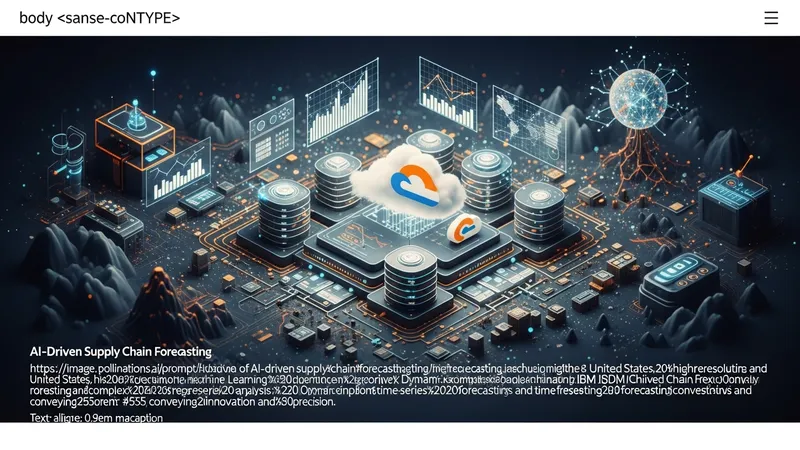
Cloud computing infrastructure is another foundational technology for AI forecasting. Platforms hosted on cloud environments, such as Google Cloud Supply Chain Optimization and IBM Cloud, enable scalable data storage and on-demand computing power. These capabilities are particularly relevant for organizations with fluctuating or seasonal demand patterns, as resources can be adjusted without large capital investment. Security standards in these environments generally comply with United States data protection regulations, ensuring robust controls.
Integration with enterprise resource planning (ERP) and supply chain management (SCM) software is a common feature of advanced forecasting platforms. This integration ensures that insights produced by AI models are accessible across business units, from procurement to distribution. For example, outputs from SAS Supply Chain Analytics are frequently used to automate order scheduling and adjust inventory levels in real time, helping to synchronize upstream and downstream processes.
Data visualization and reporting tools offer transparency into the forecasting process, enabling practitioners to interpret predictions and scenario analyses more effectively. Interactive dashboards provided by enterprise platforms typically support customizable views, trend charts, and key performance indicators. This functionality is valuable for executive decision-making and routine operations, allowing for continuous improvement of forecasting workflows.
United States-based organizations planning to implement AI supply chain forecasting often begin by evaluating data readiness and compatibility. Collecting and preparing data for analysis may involve consolidating information from sales, finance, logistics, and external sources such as market trends. Data quality is an important factor, as inconsistencies or gaps may affect model output accuracy. Routine audits and validation can help organizations identify issues early in the forecasting lifecycle.

Change management is another consideration for successful implementation. Deploying AI forecasting models usually requires collaboration between IT teams, supply chain analysts, and business leaders. Training and upskilling employees is a common practice so that staff can interpret and utilize AI-generated insights responsibly. This cross-functional approach may improve user adoption and foster a culture of continuous improvement.
For many enterprises, selecting the right solution involves comparing technical capabilities, integration potential, and cost structures of different providers. SAS, IBM, and Google Cloud each offer distinct functionality; some organizations may prioritize advanced analytics, while others focus on seamless interoperability with existing systems. Evaluation frameworks often include pilot testing, proof-of-concept deployments, and performance benchmarking against legacy forecasting methods.
In addition to selecting a platform, organizations commonly need to establish governance over AI models and data access. This includes assigning roles for model oversight, setting policies for retraining algorithms as business conditions evolve, and monitoring compliance with United States regulations such as data privacy laws. Documentation and transparent reporting are frequently implemented to support accountability and auditability.
AI supply chain forecasting may influence a variety of operational metrics in United States organizations. Commonly documented outcomes include reduced inventory holding costs, improved order fulfillment rates, and decreased instances of product obsolescence. While these results are not universally guaranteed, studies from industry associations and academic researchers highlight cases where data-driven forecasting supports better alignment of supply with demand.

Organizations that have integrated AI-based tools such as IBM’s Supply Chain Intelligence Suite often report improvements in forecast responsiveness during periods of market disruption. For example, rapid changes in consumer preferences or supply chain interruptions may be addressed more efficiently by systems capable of real-time data analysis. However, the magnitude of benefits achieved may depend on sector-specific dynamics and the quality of model inputs.
Another area of measurable impact is logistics optimization. By anticipating demand at a granular level, AI systems can facilitate more accurate transportation planning and inventory distribution across warehouse networks. Enterprises using cloud-based platforms like Google Cloud may observe enhanced route planning and reduced shipping delays, though these advantages typically require ongoing monitoring and adjustment.
Many organizations in the United States use dashboards and analytics modules to track key performance indicators linked to supply chain objectives. Metrics such as stockout frequency, lead times, and forecast accuracy are commonly monitored post-implementation. This feedback loop enables continuous refinement of AI models and supports data-driven decision-making across the enterprise.
The field of AI supply chain forecasting in the United States continues to evolve with advances in both technology and industry practices. Emerging techniques in artificial intelligence, such as probabilistic modeling and explainable AI, are gaining attention for their potential to increase model interpretability and stakeholder trust. Researchers and practitioners are also exploring new ways to incorporate external factors, such as social sentiment or geopolitical developments, into forecasting frameworks.
Collaboration between technology vendors, academic institutions, and industry consortia is fostering innovation in this space. As organizations experiment with hybrid forecasting models, combining classical statistical approaches with machine learning, they may achieve greater robustness in unpredictable conditions. Some platforms are introducing automated feature engineering and hyperparameter tuning to streamline the model development process further.
Regulatory expectations and ethical considerations are also shaping the future of AI in supply chain management. In the United States, companies are increasingly attentive to issues of data privacy, algorithmic bias, and accountability. Documentation practices and independent audits are being adopted to ensure responsible use of predictive analytics and to build confidence among external stakeholders.
Overall, AI supply chain forecasting is positioned as a dynamic component of supply chain management in the United States, with ongoing developments in methodology and implementation. As more organizations pursue digital transformation, the integration of AI-based forecasting systems may continue to be refined to suit evolving supply chain demands and regulatory landscapes.