
Enterprise Resource Planning (ERP) suites designed for logistics organizations offer unified software platforms that support various operational areas. Through standardized modules, these technology solutions allow businesses to coordinate activities such as inventory management, transportation scheduling, warehouse operations, and supply chain processes. By centralizing data and automating routine tasks, ERP suites can help logistics firms achieve greater accuracy and improved oversight throughout their distribution networks.
In logistics environments, ERP suites facilitate cross-departmental visibility, allowing for the tracking of goods as they move through procurement, storage, and distribution. Many of these platforms are developed to integrate with other software typically used in the industry, helping to reduce data silos and streamline workflow coordination. The utilization of ERP technology also enables more precise analytics related to shipment timelines, order fulfillment, and resource allocation.

ERP suites in logistics typically support end-to-end processes by connecting procurement, storage, and transport operations. These connections may allow companies to automate postings of inventory movements, automatically generate shipping labels, and assign drivers while maintaining regulatory compliance. Such streamlined coordination is often fundamental to meeting customer expectations related to order accuracy and delivery timelines.
Analytics and reporting functions embedded within ERP platforms often provide critical insights for logistics professionals. By monitoring real-time key performance indicators, managers can identify inefficiencies and make informed adjustments to scheduling, stock levels, or carrier selection. The transparency offered by these systems can contribute to improved cost control.
Adopting an ERP suite may enable logistics organizations to minimize manual data entry. When information flows seamlessly across departments, there can be fewer discrepancies and delays during the order-to-delivery cycle. This advantage may contribute to long-term improvements in customer satisfaction and operational stability.
Businesses evaluating ERP systems for logistics often assess scalability, integration support, and compliance capabilities. Many providers, such as those listed, have adapted their solutions for a range of enterprise sizes and industry use-cases, allowing for expansion as logistics networks grow. Reviewing vendor documentation, official demo environments, and case studies is a common practice among decision-makers prior to system selection.
In summary, ERP suites for logistics are multi-functional tools that may help organizations coordinate supply chain processes more effectively. Future pages will explore their specific functionalities, feature comparisons, and essential considerations for logistics operations.
Modern ERP suites in logistics are built with an array of modules that address specific functional areas. These may include order management, stock tracking, transportation planning, and real-time warehouse operations. By offering a unified interface, ERP systems can connect diverse workstreams and provide end users with a consistent approach for accessing up-to-date information across the logistics chain.
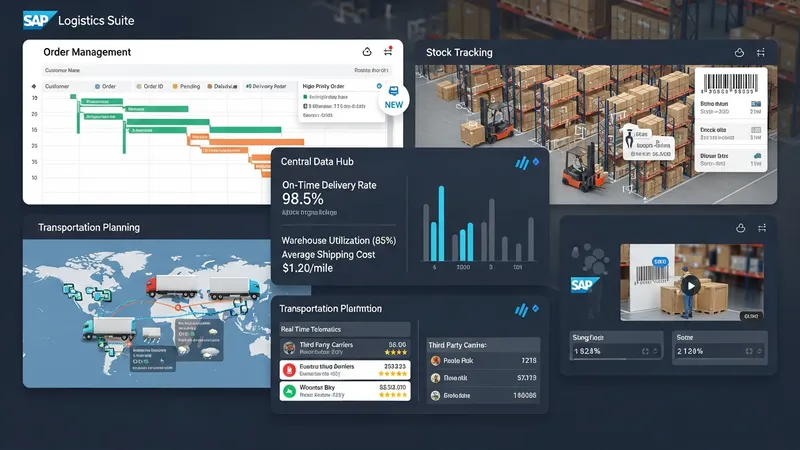
Integration capabilities are often central to the value proposition of logistics-focused ERP suites. Software from providers like SAP, Oracle, and Infor is typically engineered to link with barcoding systems, vehicle telematics, and third-party carrier management solutions. This enables logistics professionals to gain a more complete understanding of shipments from their origin point through delivery.
Advanced reporting within ERP platforms allows logistics managers to monitor trends such as delivery lead times, inventory turnover rates, and fleet utilization. The regular analysis of these metrics can support data-driven decision making, as well as the identification of bottlenecks or areas where process improvements may yield benefits.
Compliance management is another area frequently addressed by ERP suites used in the U.S. logistics sector. These systems can assist with record-keeping, audit trails, and documentation required to meet regulatory mandates from agencies like the Department of Transportation. Flexible configuration options may allow operators to tailor compliance features to specific business requirements.
Integration flexibility is a defining characteristic of many leading logistics ERP solutions. Enterprises often leverage this by connecting their ERP suite with existing warehouse management systems, electronic data interchange (EDI) platforms, and legacy databases. This approach can help enhance system interoperability, allowing for more streamlined data transfer and communication across business units.

Many vendors offer customization options that enable logistics organizations to adapt workflows, dashboards, and reporting tools to their unique operational contexts. These features may support differentiated order fulfillment strategies, product-specific handling requirements, or tailored billing processes. Organizations can typically choose which modules to implement based on their current needs, expanding capacity as the scope of logistics operations evolves.
For companies operating in the U.S., ERP customization may also involve adherence to standards such as the Freight Payment Index or alignment with domestic transportation regulations. By reflecting local business practices within the ERP configuration, logistics firms can more easily comply with reporting and documentation obligations required in the current regulatory landscape.
It is common for ERP providers to offer integration toolkits or application programming interfaces (APIs). These resources often assist IT teams in extending the core platform's functionality to include real-time shipment tracking, partner collaboration portals, or direct carrier integrations. The level of available customization may influence both user satisfaction and the long-term scalability of the ERP investment.
Security and compliance remain critical priorities in the deployment of ERP suites for logistics. Sensitive information, such as customer delivery details, shipment schedules, and contract data, is routinely managed within these platforms. U.S. logistics organizations frequently evaluate providers based on their adherence to data protection standards, including guidelines set by federal or state-level authorities.

Access controls are a standard feature in many ERP systems, enabling administrators to manage permissions by role or department. Such controls can help reduce unauthorized data access and maintain the confidentiality of sensitive business information. Periodic auditing of user activity logs, which is supported by most ERP platforms, may help identify potential compliance gaps or unusual patterns that require review.
Logistics ERP providers often support encryption protocols for data in transit and at rest. This security feature can be particularly important for organizations managing interstate or cross-border transport, where there may be additional requirements related to the protection of shipping documentation and personal information.
Regular software updates and vulnerability assessments constitute another layer of protection in the use of ERP suites. Leading providers often release security patches in response to emerging threats or to maintain compliance with newly enacted U.S. data privacy statutes. Many supply chain firms consider these practices essential in order to manage risk and maintain operational resilience.
Assessing the effectiveness of an ERP suite for logistics involves examining operational outcomes and cost factors over time. Metrics such as order fulfillment accuracy, lead time reductions, and inventory holding costs are commonly measured to determine the value derived from technology adoption. Organizations may also consider the impact on employee productivity, customer satisfaction, and compliance effort reductions when evaluating performance.

Total cost of ownership for logistics ERP systems often includes licensing fees, hardware or cloud hosting expenses, implementation services, and ongoing maintenance. U.S. logistics firms regularly compare these costs against projected gains in efficiency or reductions in manual workload before making investment decisions. Transparent vendor pricing and scalable licensing options can assist businesses in matching solution deployment to their operational size.
ERP implementation success rates in the logistics sector can vary based on organizational readiness, the complexity of operations, and the extent of software customization. Many firms in the U.S. complement their deployment projects with staff training and ongoing performance monitoring. This approach can help ensure that users adopt new workflows and leverage the full suite of features available within the ERP system.
Ultimately, the adoption of an ERP suite in logistics is often considered to foster process improvement, reporting accuracy, and operational standardization. By gathering internal feedback and industry benchmarks, U.S. logistics organizations can continue to refine how ERP technology supports their goals as supply chain expectations and regulations evolve.