
Establishing a safe and compliant environment before construction commences is a critical procedural step across projects in the United Kingdom. This process involves a structured evaluation to identify foreseeable hazards, analyse their associated risks, and determine reasonable actions that could reduce incidents on site. Legislative frameworks such as the Health and Safety at Work Act 1974 and the Construction (Design and Management) Regulations 2015 (CDM 2015) provide clear mandates for risk assessment during site setup. These obligations extend to clients, designers, contractors, and other dutyholders involved in preparing and operating construction sites.
Risk assessment at the onset of construction typically follows a defined sequence. It requires not only spotting physical and procedural dangers but also carefully judging the likelihood and potential impact of each risk. From there, site managers may select practical control measures reflecting the principles of prevention, such as elimination, substitution, or implementing engineering controls. Documentation of this process enables ongoing review and ensures legal requirements are met.
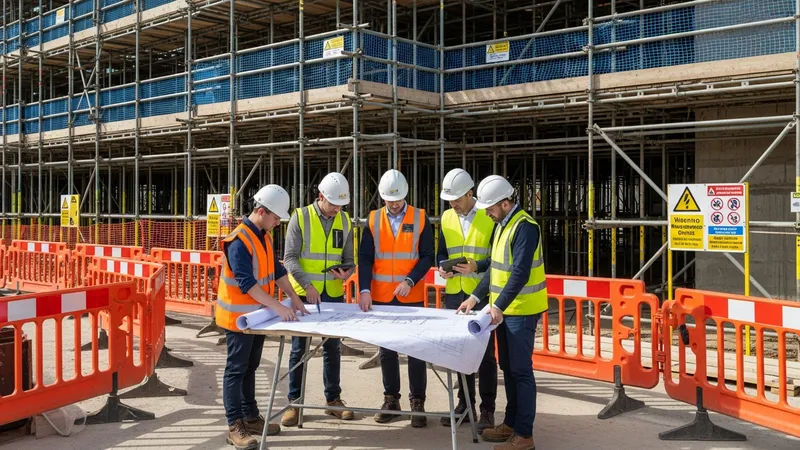
Construction site setup risk assessments in the UK may take into account a range of site-specific and regulatory factors. For instance, working near public roads or existing utility networks typically introduces unique hazards and can require particular planning controls. Structured assessment tools, like those referenced by the Health and Safety Executive (HSE), are widely adopted for their standardised approach, allowing for both compliance and adaptability to varied project scales.
Site layout considerations often extend beyond simple space planning. Practicalities such as segregating high-traffic plant vehicle zones, designated storage areas for hazardous materials, and accessible welfare spaces are all commonly incorporated. By pre-emptively mapping these out, project leaders may reduce congestion, improve visibility, and limit exposure to common risks in construction environments.
Hazard identification is considered a foundational stage in risk assessment. Reliable identification methods can involve site surveys, stakeholder consultations, and the use of checklists developed to current standards. Engaging workers, safety representatives, or external specialists during this phase has been shown to increase the breadth and accuracy of hazard recognition.
The selection and implementation of appropriate control measures typically address both immediate risks (such as falls or moving machinery) and underlying organisational factors like inadequate supervision or unclear information. Transparent documentation of these controls, maintained throughout the project lifecycle, is often required for compliance and inspection by enforcing bodies.
In summary, risk assessment as part of construction site setup is grounded in regulatory obligations and widely respected industry practices in the United Kingdom. The next sections examine practical components and considerations in more detail.
Comprehensive hazard identification is an initial and ongoing element within the risk assessment cycle for construction setups. It involves systematically reviewing work activities and site characteristics to anticipate potential causes of harm. Methods typically include physical inspections, analyses of previous incident data, and formal input from workers familiar with the tasks and environment. UK guidance provided by the Health and Safety Executive (HSE) emphasises including both routine and non-routine site operations, such as plant movement and material delivery procedures, during hazard reviews.

Stakeholder engagement is frequently regarded as beneficial during hazard identification. When clients, designers, contractors, and workforce representatives contribute knowledge during early planning, the resulting assessment may capture less obvious hazards linked to project-specific logistics or design features. This practice aligns with the collaborative approach encouraged by CDM 2015, where sharing relevant information between dutyholders is a statutory expectation.
Tools such as risk checklists and templates, including those offered on the official HSE website, help enable consistent, repeatable reviews. These resources prompt assessors to consider areas like work at height, ground conditions, and the presence of existing structures. Using standardised templates may assist in ensuring that no critical hazard types are inadvertently overlooked, especially on complex or multi-phase sites.
External environmental factors—including proximity to public highways, utilities, or ecologically sensitive zones—are often factored into hazard identification. For example, construction sites neighbouring live railway infrastructure or schools may require specific consideration of pedestrian movements, noise, or dust. The approach to identifying these hazards generally follows sector norms and integrates known regulatory requirements for special site contexts.
Following hazard identification, a key phase of the risk assessment process is determining the likelihood and potential severity of each risk. This risk evaluation involves clearly describing how and when harm may arise, who could be affected, and what the probable outcomes might be. In United Kingdom practices, risk is often scored qualitatively or semi-quantitatively, using matrices that rate consequences alongside probabilities. This stage helps prioritise which risks should be acted upon most urgently during site setup.
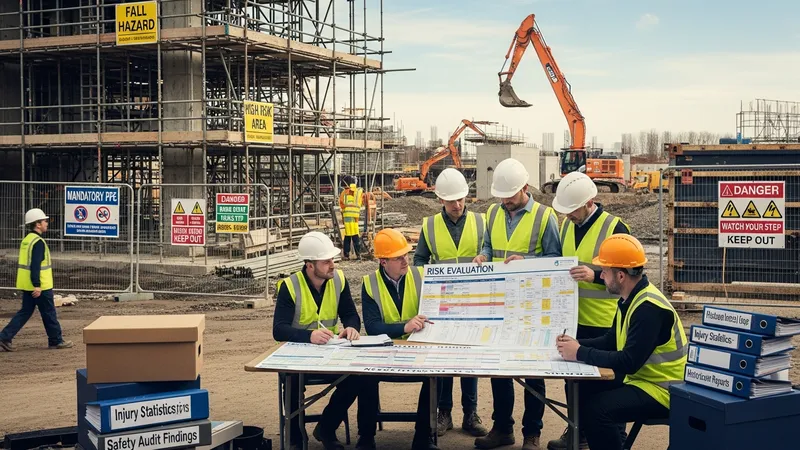
Risk evaluation for construction site setup frequently utilises both recorded observations and historical reference data from similar projects. For instance, injury statistics or near-miss trends available from organisations like the HSE may provide a benchmark. These data points, when used appropriately, assist organisations in recognising which hazards warrant the greatest attention—such as work at height or contact with moving machinery, both of which remain leading contributors to workplace incidents in the UK construction sector.
Documentation requirements in the UK typically stipulate that risk evaluations are both retained and reviewed throughout the life of the project. This means as site conditions evolve—for example, as new subcontractors arrive or weather creates new challenges—the initial assumptions about risk are checked and, if necessary, updated. Keeping records current is particularly important for demonstrating compliance during site inspections and for continuous improvement practices.
Risk communication forms an integral part of the evaluation process. Information regarding assessed risks and planned control measures is usually shared with workers and relevant dutyholders through briefings, inductions, and signage. This helps ensure everyone on site is aware of the risks identified during the setup stage and understands the basis for any procedures or restrictions applied. Such communication aligns with CDM 2015 requirements on cooperation and information sharing.
Once risks have been evaluated, the next stage in UK construction site setup is applying suitable control measures to mitigate those risks. This process starts with considering the hierarchy of controls, which prioritises eliminating hazards entirely, followed by substituting safer processes or materials, implementing engineering controls, using administrative steps, and finally relying on personal protective equipment (PPE) as a last resort. By applying this order, project leaders typically aim to achieve what is reasonably practicable in the site context, as mandated by UK law.
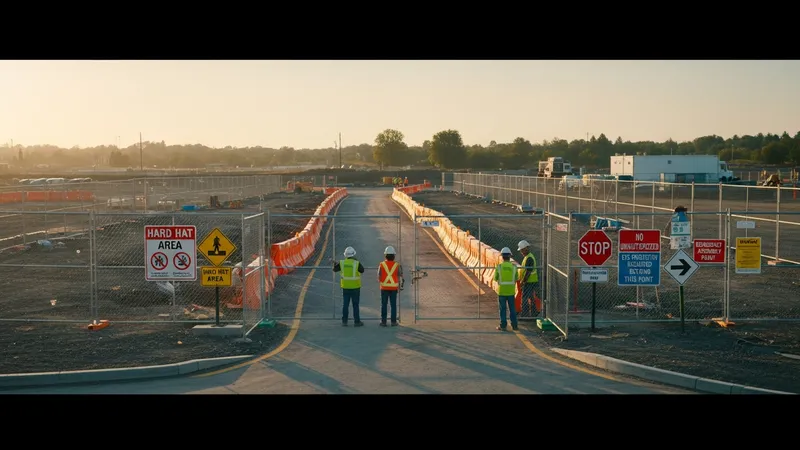
Common control measures during setup may include installing secure fencing, using clear signs in accordance with the Health and Safety (Safety Signs and Signals) Regulations 1996, and separating pedestrian walkways from vehicle routes. Construction sites often employ barriers, visual markings, and physical gates to restrict unauthorised access and protect both workers and members of the public. Evidence suggests that combining physical and procedural controls can improve the reliability of risk reduction efforts, especially on busy or congested sites.
Site welfare arrangements, required by CDM 2015, are another example of control measures linked directly to risk assessment findings. Facilities such as toilets, handwashing stations, and clean rest areas must be appropriately located and accessible. These measures help manage health risks, particularly when dealing with hazardous substances or physically demanding tasks. Welfare provisions are routinely inspected and adjusted as site setup progresses and worker numbers change.
Control measure effectiveness is typically monitored throughout the project. Dutyholders may periodically check barriers, signage, or other interventions to verify that they remain fit for purpose as the site environment changes. Adjustments are made as necessary, and all actions are documented within the risk assessment file. This ensures transparency and supports ongoing regulatory compliance under United Kingdom construction law.
Thorough documentation is central to the risk assessment process for construction site setup in the United Kingdom. Organisations are required to keep clear, legible records of hazard identification, risk evaluations, and the selection of control measures. These documents support both regulatory compliance and effective site management. According to HSE guidance, records should be updated as circumstances change, such as new phases of work or discoveries of unforeseen risks during construction activities.
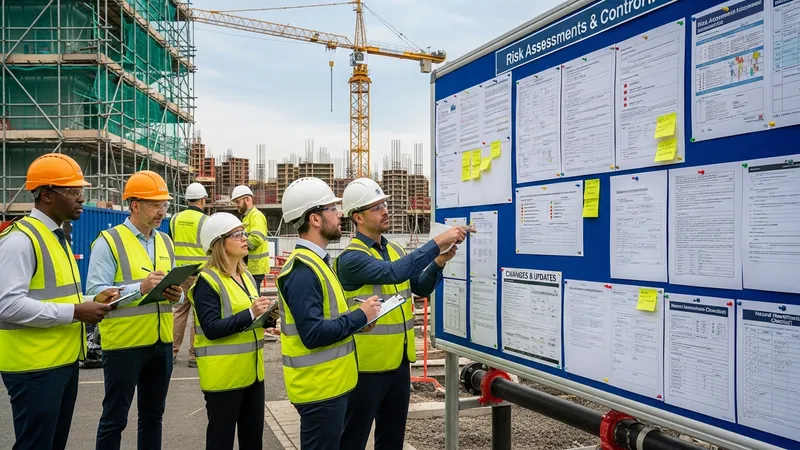
Compliance review involves periodic checks not only of the physical site controls but also of the adequacy of the recorded risk assessments and control implementation. On-site reviews or audits may be undertaken by internal safety teams or external consultants to verify that documented procedures match current practice. Changes or gaps are typically highlighted and acted upon promptly to maintain legal and operational standards.
Dutyholders—including clients, principal designers, principal contractors, and workers—each have distinct responsibilities in maintaining the integrity of risk assessment documentation. Principal contractors may coordinate most updates during the construction phase, but all stakeholders are generally expected to contribute relevant information to assist in hazard management. This collaborative approach is reflected in both CDM 2015 and accompanying HSE guidance.
Finally, documented records serve as evidence in case of incidents, HSE inspections, or contractual reviews. Accurate documentation may help demonstrate that a structured, reasonable approach was taken to site setup and safety management. This supports organisational resilience and aligns with quality assurance objectives common to UK construction projects.