
Infrastructure as a Service (IaaS) is a model of cloud computing that delivers essential IT resources—such as virtual servers, storage, and networking—over the internet. In hybrid cloud environments, IaaS serves as the external component that interacts seamlessly with an organization’s private, on-premises infrastructure. The core idea is to enable flexible use of both local and cloud-based resources, allowing organizations to manage workloads across diverse platforms.
Adopting IaaS within a hybrid strategy involves integrating public cloud resources with in-house IT systems. This approach often leverages tools for orchestration, security, and automation to facilitate coordination of applications and data flows between environments. Organizations may select IaaS for specific demands such as scalability, workload shifting, or disaster recovery, while retaining sensitive or legacy systems in-house.

IaaS integration in hybrid settings typically involves connecting on-premises networks to cloud platforms via secure links, ensuring that data and applications move smoothly between environments. Management tools and APIs may be used to automate deployment, monitoring, and scaling, which helps organizations allocate resources dynamically based on demand.
Security is a central consideration in these integrations. The hybrid model may leverage identity federation, encryption, and policy-based access control to address various risk factors associated with transmitting and storing data across distinct environments. These approaches often align with frameworks commonly discussed in cloud security literature and may be customizable according to organizational needs.
Hybrid cloud with IaaS can support both predictable workloads—such as routine business operations—and highly variable tasks, like data analytics or seasonal spikes. Integration efforts typically focus on interoperability and workload portability, utilizing open standards or cloud-native technologies. This can enable organizations to respond to changing requirements while maintaining existing investments in their data centers.
Operational monitoring in hybrid cloud environments is vital for performance and compliance. IaaS providers often offer tools for logging, alerting, and analytics, which organizations may integrate with their on-premises monitoring solutions. This helps maintain visibility over systems distributed across both clouds and local infrastructure, contributing to more accurate resource usage insights.
In summary, IaaS in hybrid cloud environments is designed for flexibility and resource optimization, combining public and private infrastructure to support complex IT needs. The next sections examine practical components and considerations in more detail.
Hybrid cloud integration with IaaS involves several core components that contribute to the seamless operation of mixed IT environments. Networking is a foundational element, as organizations typically establish secure connections between on-premises systems and cloud resources using VPNs or dedicated lines. These connections allow for data transfer and resource sharing while supporting compliance requirements for privacy and security.
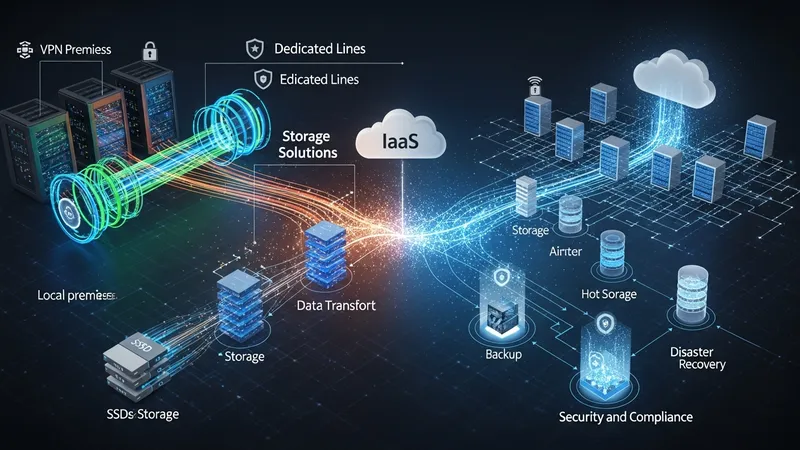
Storage solutions play a significant role in hybrid models. Many IaaS providers support hybrid storage architectures, enabling organizations to extend or replicate data from local systems to the cloud. This functionality may assist with backup, archiving, or disaster recovery strategies. Features such as tiered storage help optimize costs and performance by assigning data to the appropriate medium based on usage patterns.
Resource orchestration tools are another critical component in IaaS-driven hybrid environments. These platforms automate the provisioning and scaling of computing resources, making it easier to maintain service levels during changes in demand. For example, orchestration services may distribute workloads to either cloud or on-premises resources according to policies set by the organization.
Identity and access management ensures that users and applications can interact securely across both environments. Hybrid solutions often rely on integrated authentication systems and centralized user directories. This allows organizations to enforce unified access policies and monitor activities regardless of where resources are hosted.
Workload allocation is a central focus when integrating IaaS within hybrid cloud environments. Organizations may shift workloads dynamically between on-premises infrastructure and IaaS platforms based on factors such as performance needs, regulatory considerations, and cost efficiency. This level of agility can enable improved utilization of available resources and may assist with managing changing operational requirements.

Automation is frequently used to streamline workload management. IaaS providers offer APIs and orchestration frameworks that allow administrators to set thresholds and policies for workload movement. These automation tools typically monitor system metrics, reallocating workloads when certain conditions are met, which may result in less manual intervention and enhanced responsiveness to demand.
Portability is another important aspect, supported by technologies that enable virtual machines and containerized applications to move between on-premises and cloud environments without significant reconfiguration. Tools such as container orchestration platforms can help standardize application deployment workflows across hybrid infrastructures, encouraging consistency and operational simplicity.
Monitoring and analytics play a crucial role as well, offering insights into workload performance and resource utilization. Logging, alerting, and reporting features from IaaS platforms can be integrated with local monitoring tools, providing comprehensive visibility across the hybrid landscape. This information is instrumental for ongoing optimization and compliance verification.
Implementing IaaS in hybrid cloud setups may introduce several technical and operational challenges. One common consideration is the compatibility of legacy applications with cloud-based infrastructure. Some workloads may require modifications or middleware solutions to function optimally in distributed environments, which can add complexity to integration efforts.

Network latency and bandwidth limitations are practical factors organizations often address. Because hybrid cloud models can involve frequent data movement between on-premises systems and the cloud, the impact of latency or inconsistent network speeds may influence performance-sensitive applications. Solutions can include optimizing data transfer routes or using content delivery technologies, but outcomes can vary based on unique network configurations.
Data governance presents another layer of complexity. Maintaining consistent data policies—around encryption, retention, and compliance—across both local and cloud environments requires careful planning. Organizations may use unified management platforms or policy automation tools to help enforce standards, although coverage depends on existing IT infrastructure and provider capabilities.
Cost monitoring is also a recognized challenge. While IaaS pricing is typically usage-based, tracking expenses across multiple environments can be less straightforward compared to single-location deployments. Organizations may use cost management tools from IaaS providers or third parties to improve transparency and budgeting, acknowledging that variations in resource usage have an impact on overall expenditures.
Developments in IaaS hybrid cloud integration are being shaped by advances in automation, interoperability, and security protocols. Many organizations are exploring technologies such as infrastructure-as-code and event-driven automation, which may enhance the speed and reliability of deploying hybrid resources. These approaches could make it easier to consistently manage environments with minimal manual configuration.

There is growing emphasis on interoperability, supported by adoption of open standards and APIs. This trend is facilitating smoother connections between diverse cloud platforms and on-premises systems, reducing dependencies on specific vendors or technologies. Enhanced interoperability may assist organizations in maintaining flexibility and choice as their infrastructure evolves.
Security remains a prominent consideration, with ongoing research and innovation in areas like zero trust architecture and automated threat detection. Hybrid environments can benefit from layered security controls and greater visibility across environments, but successful implementation typically depends on integration with organization-wide governance and risk management strategies.
Evolving workload types, such as artificial intelligence, machine learning, and real-time data analytics, are influencing how IaaS is integrated into hybrid models. These emerging applications often require on-demand scalability and rapid data movement, leading IaaS providers to expand their offerings and support for hybrid orchestration. The continuous evolution of infrastructure technologies suggests that hybrid integration with IaaS will remain a dynamic area for further exploration and improvement.