
Microfluidic polymer devices represent a class of engineered systems capable of controlling small amounts of fluids within channels typically ranging from tens to hundreds of micrometers in size. These devices utilize selected polymers as their main construction material, offering customizable mechanical, chemical, and optical properties suited for managing fluid movement in a variety of controlled environments. The underlying principle centers on manipulating liquids through tiny, precisely shaped pathways, enabling applications that require high resolution, reproducibility, and low reagent consumption.
Advancements in microfabrication and material science have led to the widespread use of polymers in designing microfluidic devices. The selection of polymers often depends on desired properties such as biocompatibility, chemical resistance, flexibility, and optical clarity. Techniques for fabricating these devices are chosen to support the intended functionality, with each method presenting distinct advantages in cost, scalability, and complexity. As a result, these devices can be adapted for a broad range of experimental and practical functions in research and industry.
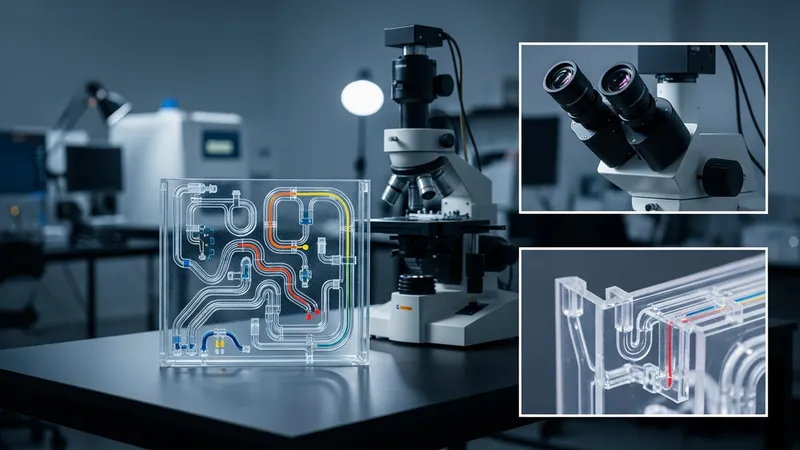
Soft lithography may be favored for its experimental flexibility and rapid prototyping capabilities. It allows researchers to iterate designs and create complex patterns using accessible procedures. The use of PDMS yields optical transparency and is generally compatible with biological samples, making it suitable for academic and diagnostic research. However, PDMS-based devices can be less suitable for large-scale manufacturing due to material limitations and processing throughput.
Injection molding is often employed for the reproducible mass production of microfluidic devices, particularly in industrial settings. Thermoplastic polymers such as polycarbonate or polymethylmethacrylate (PMMA) may be selected to balance mechanical stability with chemical resistance. The requirement for precision-engineered molds contributes to a higher initial investment but can enable cost-effective per-unit fabrication at scale.
Hot embossing offers an alternative for medium-volume production. This process may provide structural precision and is compatible with a range of thermoplastic polymers. It allows creation of detailed features without the need for solvents or photoinitiators, and the resulting devices can exhibit robust mechanical properties. Hot embossing is typically utilized when design fidelity and smoother surfaces are prioritized over the low upfront costs associated with soft lithography.
Applications for microfluidic polymer devices span diverse fields, including life sciences, environmental monitoring, and chemical synthesis. These devices often enable miniaturized assays, rapid sample handling, and integration with electronic or optical systems. Their modular nature supports versatility across requirements, and ongoing development continues to expand the possibilities for accessible and precise liquid manipulation at the microscale.
In summary, microfluidic polymer devices are defined by their tailored material composition and the fabrication techniques adopted to realize fluidic functions at small scales. Subsequent sections will examine the operational components and design considerations of these devices in greater depth.
The choice of polymer materials in microfluidic device construction is often dictated by the application’s requirements for mechanical, chemical, and biological compatibility. Commonly utilized polymers include PDMS, PMMA, polycarbonate, and cyclic olefin copolymer (COC). These materials provide varying combinations of elasticity, transparency, chemical resistance, and processability. Engineers and researchers typically weigh trade-offs such as cost per unit, ease of fabrication, and compatibility with solvents or biological reagents. The optical clarity of some polymers, such as PDMS and COC, can support real-time imaging or analytical detection.
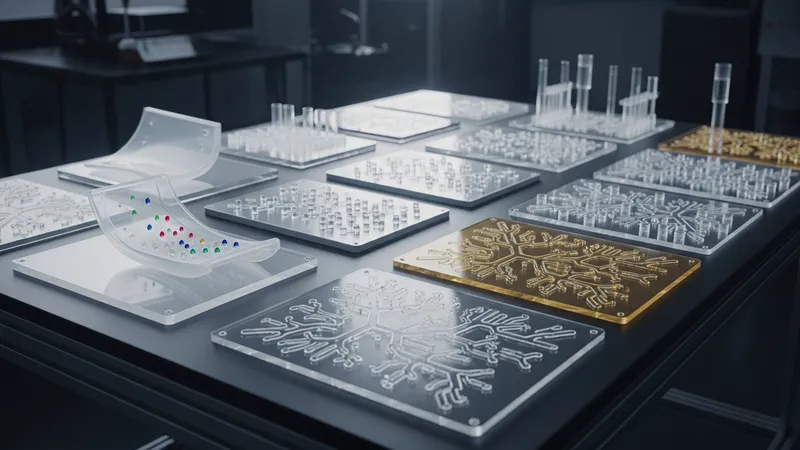
PDMS is frequently chosen for academic and experimental devices due to its flexibility and ability to replicate fine details. Its permeability to gases can be an advantage for cell culture applications but may present challenges for other uses where vapor loss or absorption of small molecules must be minimized. Meanwhile, PMMA and polycarbonate tend to be favored in industrial applications that demand robustness, batch consistency, and resistance to specific solvents.
Material selection can also influence the long-term durability, shelf-life, and reusability of microfluidic devices. Factors such as water absorption, environmental exposure, and potential leaching of additives from the polymer matrix are commonly evaluated. Some emerging applications may require polymers with specialty surface treatments to promote or inhibit fluid wetting, enhance bonding, or reduce non-specific adsorption of biomolecules, thereby improving analytical performance.
Ongoing development of new polymer grades and blends continues to expand the toolkit available for microfluidic fabrication. Selected materials might be further optimized through additives, surface modifications, or multilayer structures to enhance performance for specific operating conditions. This flexibility supports a wider range of device designs and applications as the field progresses.
Soft lithography, injection molding, and hot embossing are representative of the main manufacturing approaches for creating microfluidic polymer devices. Soft lithography generally involves casting PDMS against a mold patterned with microscale features—frequently produced through photolithography—to create negative relief structures. This method offers rapid prototyping and customization but may be limited in throughput. It is well suited for iterative academic research and small-batch experimental devices.
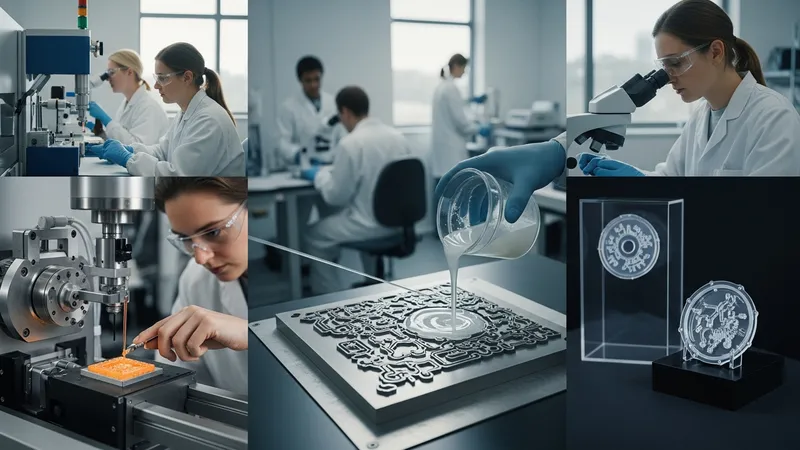
Injection molding involves developing a high-precision die corresponding to the desired channel geometries. Molten polymer is then injected under pressure into the mold, replicating the design with high accuracy. This process can be automated for volume manufacturing and is routinely used for thermoplastics. Typical challenges include maintaining mold quality, managing material shrinkage, and ensuring uniformity across batches.
Hot embossing shares similarities with injection molding but generally requires pressing a structured die into a solid polymer substrate at elevated temperatures. Following cool-down and demolding, the channel features remain permanently imprinted. This method allows production of relatively large numbers of microfluidic parts with good fidelity and low defect rates. Hot embossing is especially effective for thermoplastics with high glass transition temperatures.
Other emerging techniques, such as 3D printing and laser ablation, are being explored to address specific fabrication challenges. These may allow for faster prototyping, integration of complex design features, or working with non-traditional materials. Each fabrication technique comes with distinct considerations related to throughput, resolution, cost, and ease of integration with downstream processes.
Microfluidic polymer devices are commonly employed in several domains, including biomedical research, point-of-care diagnostics, chemistry, and environmental monitoring. In biomedical applications, these devices may enable highly controlled cell culture experiments, drug screening, and DNA analysis. Their small scale and precision support rapid assay turnaround and can often reduce consumption of costly reagents or patient-derived samples.
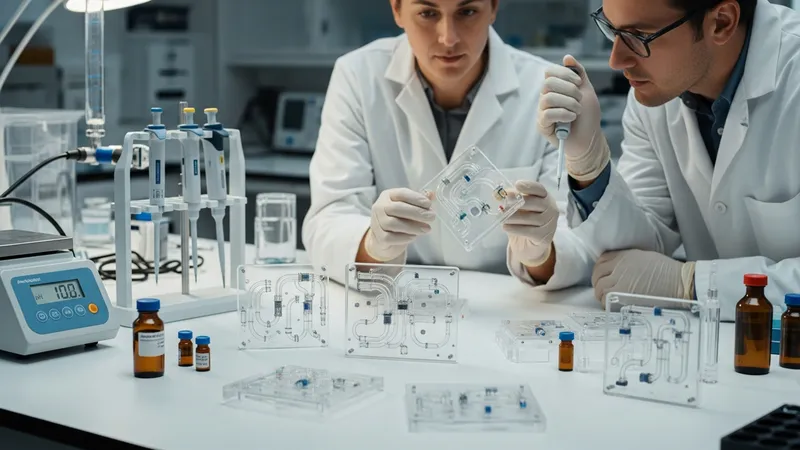
In the area of diagnostics, polymer-based microfluidic devices serve as the basis for portable and automated platforms that may analyze blood, saliva, or urine. These tools allow sample processing and detection on a compact chip, supporting decentralized testing environments such as clinics or field laboratories. Ongoing improvements in fabrication are enabling the integration of sensors, electrodes, or optical detection paths within the same device footprint.
Environmental monitoring applications utilize microfluidic polymer devices to detect pollutants, pathogens, or toxins in water and air samples. Automated sample handling and robust construction can be advantageous in remote or resource-limited settings. Furthermore, these devices can facilitate high-throughput chemical synthesis or reaction screening in industry, where miniaturization may lead to gains in speed and increased control of reaction parameters.
Across all these application areas, adaptability and scalability remain central advantages of polymer-based microfluidic platforms. Devices can be designed as disposable cartridges for single-use analysis or developed for multiple cycles of operation with cleaning protocols. Their use continues to expand as fabrication processes and polymer chemistries evolve to address specialized requirements in emerging research and industrial fields.
Designing effective microfluidic polymer devices involves evaluating fluid dynamics, material properties, and compatibility with interfacing equipment. Channel geometries, surface characteristics, and bonding techniques must be optimized for the intended function and sample type. Computer-aided simulations are often used to predict flow profiles, analyze mixing, or prevent unwanted cross-contamination between fluid lanes. The complexity of a device’s architecture can directly influence fabrication feasibility and cost.
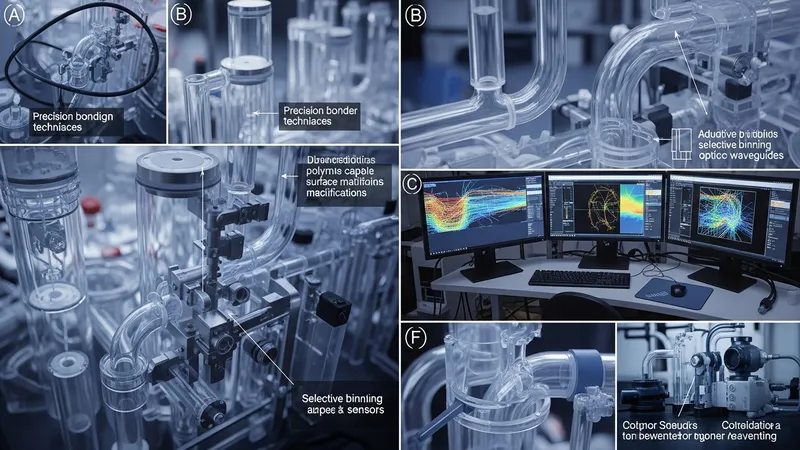
Efficient integration of microfluidic polymer devices into larger workflows typically depends on standardization of connection ports, packaging formats, and detection modalities. Close attention is paid to ensure reliable coupling with pumps, valves, sensors, or analytical instruments. Polymers amenable to surface modifications may support advanced features, such as selective binding, anti-fouling coatings, or optical waveguides, broadening their potential uses.
Quality control and testing protocols are integral for reproducibility, particularly in regulated environments or clinical contexts. Dimensional consistency, leakage resistance, and sterility are routinely assessed. Batch-to-batch variation can be minimized through automated fabrication and inspection processes. Device reusability may be considered during early design stages, factoring in cleaning, storage, and long-term stability.
Looking ahead, the development of novel polymer chemistries and hybrid manufacturing methods may further improve device robustness, enable more complex microarchitectures, and reduce costs for high-volume production. As new applications emerge, ongoing research is directed at optimizing the interface between microfluidic polymer devices and electronic, optical, or biological systems, supporting continued evolution in this versatile field.