
Production planning involves organizing manufacturing processes to meet customer demand while optimizing resource use. Advances in automated data analysis have introduced new methods for aligning production schedules with expected market needs. Artificial intelligence (AI) encompasses computational techniques that process diverse datasets to identify patterns and support decision-making in these planning activities. By integrating AI, production planners can access refined insights derived from historical operations and fluctuations in demand indicators. This enables more nuanced anticipation of required output levels and adjustments to multipart scheduling constraints.
AI applications in production planning often utilize machine learning models, which iteratively improve by analyzing large volumes of data. These models may process information from supply chains, sales trends, and external market signals to project potential demand shifts. Outcomes from such models can inform decisions about procurement, inventory management, and workforce allocation. Typically, AI systems complement traditional planning tools by offering data-driven forecasts that reflect evolving conditions rather than static assumptions. This can contribute to enhanced synchronization between production and market dynamics.

Demand sensing tools use short-term real-time data such as point-of-sale transactions or sensor outputs to detect changes in consumption patterns that may not be reflected in traditional forecasts. These tools often rely on AI techniques like neural networks and regression algorithms to enhance sensitivity to immediate signals. While they can improve responsiveness, the reliability of outcomes depends on the quality and granularity of incoming data.
Forecasting platforms combine historical sales data with external factors like seasonality or macroeconomic indicators to develop scenarios of future demand. Machine learning approaches may be favored for their ability to model complex relationships and adapt as new data becomes available. Forecasts generated in this way typically include confidence intervals, reflecting the inherent uncertainty in predictive modeling.
Scheduling optimization applications take demand forecasts and translate them into executable production plans that respect operational limitations. These may employ heuristic algorithms or advanced optimization techniques to balance efficiency with flexibility. Incorporating AI allows such tools to consider a wider range of variables and potential constraints than manual planning, though solutions usually represent feasible approximations rather than absolute optima.
The integration of AI techniques in production planning demonstrates a shift toward more data-driven and adaptive processes. By coupling forecasting and scheduling components, organizations may align production activities more closely with customer needs while managing inventory levels prudently. The next sections examine practical components and considerations in more detail.
Data collection constitutes a foundational element of AI-supported planning. Typically, systems draw on multiple sources including historical production records, sales transactions, supplier lead times, and external market data. Integration of these heterogeneous datasets is essential for comprehensive analysis. In practice, this may involve consolidating structured data from enterprise resource planning (ERP) software with unstructured or near-real-time inputs from sensors or social media trends.

Real-time data has become increasingly relevant as industries adopt Internet of Things (IoT) devices to monitor production lines and supply chains. Such continuous inputs can inform rapid adjustments in scheduling and reduce the latency between demand changes and production responses. However, integrating this data requires attention to consistency and latency management to ensure reliable functioning of AI models.
Data quality and preprocessing are critical considerations. Missing or erroneous entries can degrade model performance. Many AI applications include routines for cleansing data, imputing gaps, and normalizing values. These steps help maintain the validity of forecasting and scheduling outputs, especially when data volume grows or sources diversify.
Interoperability with existing information systems is often necessary to implement AI tools effectively. This may involve using standardized data formats and APIs to facilitate smooth data flow between planning software and production infrastructure. The design of such integrations can impact system scalability and maintenance requirements over time.
Machine learning encompasses a suite of algorithms that identify patterns from data to make predictions or classifications. Common approaches for demand forecasting include regression models, time series analysis, and more complex structures like recurrent neural networks (RNNs). Model selection often depends on the nature and volume of available data as well as the forecasting horizon.
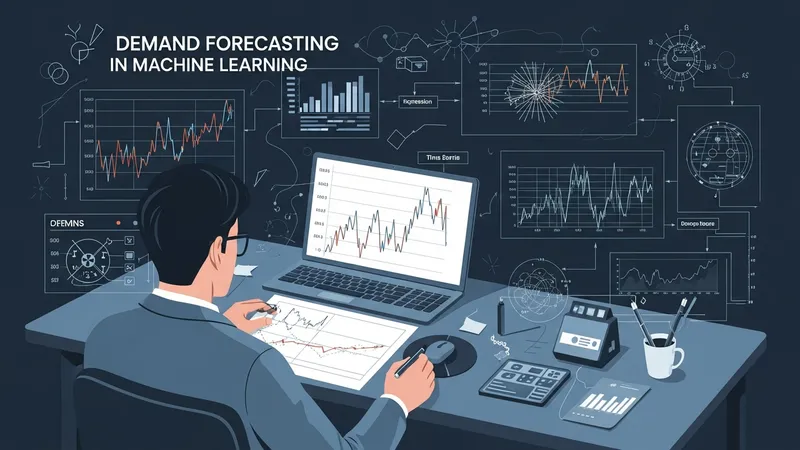
Regression techniques typically relate demand to explanatory variables such as price, promotions, or economic indicators. Time series models analyze sequential demand data to capture trends and seasonality. RNNs and other deep learning methods may be employed when datasets incorporate complex dependencies or require handling of irregular intervals. Each approach carries strengths and limitations in terms of interpretability, computational demand, and adaptability.
Training these models involves exposure to historical data, during which parameters adjust to minimize prediction errors. Validation processes commonly segment data into training and testing subsets to estimate model accuracy on unseen observations. Overfitting—where models conform too closely to training data and perform poorly in real scenarios—is a common risk addressed through techniques like regularization or cross-validation.
Updates to forecasting models can be performed periodically or continuously, depending on the dynamics of the production environment and availability of new data. Incorporating fresh inputs helps models maintain relevance amid changing consumer behavior or market conditions. Transparency in model functioning also supports comprehension and trust among planning personnel.
Scheduling within production involves sequencing tasks and allocating resources to meet demand forecasts while respecting operational limitations. AI-enhanced scheduling may use optimization algorithms that integrate forecast data with constraints such as machine availability, maintenance windows, and labor shifts. These algorithms frequently rely on metaheuristics or mixed-integer programming.

Systems capable of dynamic rescheduling can adjust plans in response to unexpected events like delays or demand fluctuations. AI can support such flexibility by rapidly analyzing alternatives and recalculating task assignments. The degree of automation in rescheduling varies depending on organizational policies and system sophistication.
Transparency in AI-driven scheduling outcomes is important for operational acceptance. Visualization tools often accompany scheduling software to help planners understand proposed sequences and identify potential bottlenecks. This can ease interactions between human decision-makers and automated systems, facilitating informed adjustments.
Integration of AI scheduling with upstream functions such as procurement and inventory control may further enhance coherence in production management. Coordinated planning efforts can contribute to more balanced workflows and efficient use of resources, although complexities increase with expanded scope.
While AI offers improved capabilities for forecasting and scheduling, certain limitations and considerations are relevant. Data availability and quality remain crucial determinants of system effectiveness. Incomplete or biased datasets may lead to inaccurate projections that propagate through planning processes.

Model complexity can affect interpretability. Highly sophisticated models such as deep neural networks may provide detailed forecasts but yield results that are difficult to explain unequivocally. This can present challenges for planners who need to understand underlying assumptions and confidence levels.
Implementation costs and infrastructure requirements, including data storage, computational power, and integration efforts, may represent significant investments. Organizations must assess these factors relative to anticipated improvements in planning accuracy and efficiency.
Regulatory and privacy considerations also apply, especially when integrating external data sources. Ensuring compliance with applicable data protection standards is essential when handling sensitive information within AI frameworks. Additionally, ongoing monitoring and validation of AI systems help detect and mitigate errors or drift in performance over time.