
Lead prospecting platforms are software systems designed to help sales and marketing teams identify potential business contacts, capture structured contact information, and maintain organized records for outreach workflows. These platforms typically aggregate data from public profiles, corporate registries, and commercial databases, and they present filters and search tools that allow users to locate prospects by role, company attributes, industry sector, and other professional signals. The aim in practical terms is to reduce manual research time by centralizing candidate leads and making contact details and firmographics accessible within a searchable interface.
In operation, lead prospecting platforms often include features for data enrichment, which may append job titles, company size, and business contact points to an existing record. Many integrate with widely used customer relationship management systems so that identified prospects can be exported or synchronized into sales pipelines. These platforms can also support tagging, notes, and activity histories so multiple team members can coordinate outreach without duplicating effort. Functionality tends to vary by provider, with tradeoffs between breadth of data, freshness, and integration depth.
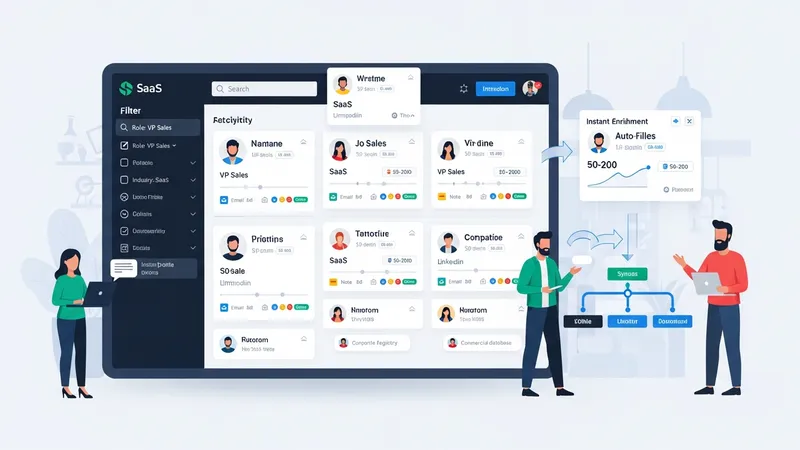
Lead discovery tools can be compared across several dimensions: the diversity and recency of data sources, the precision of search filters, and the quality of CRM integration. Data may be collected from corporate websites, public filings, and professional social networks; each source can affect coverage and freshness. Search filters that allow Boolean logic, territory constraints, or intent indicators may narrow lists in different ways. Integration options often include direct connectors to U.S.-based CRMs and middleware platforms that facilitate data synchronization and reduce manual CSV handling.
Data enrichment services that accompany prospecting platforms may append firmographic details such as revenue band, employee count, or headquarters location. Enrichment often uses automated matching and heuristics, which can introduce mismatches that require human review. Teams in the United States commonly balance automated enrichment with periodic verification steps to maintain list accuracy. Platform interfaces frequently include confidence scores or source-attribution metadata that may guide users when prioritizing follow-up and cleansing efforts.
Workflow features within prospecting platforms typically include saved searches, alerting when new matching records appear, and bulk export options. Saved searches can help teams replicate successful filter combinations without rebuilding queries. Alerting may notify users when target companies post relevant updates or when a new contact matches saved criteria. Export formats and API capabilities influence how smoothly prospect records flow into U.S. CRM tools and outreach automation; compatibility with major CRMs is often a deciding factor for deployment.
Security and data governance measures merit attention when using prospecting platforms in a United States context. Providers may implement access controls, audit logs, and role-based permissions to limit who can export or modify contact records. Compliance with U.S. regulations governing electronic communications and privacy is an operational consideration; teams often establish internal policies that align platform usage with applicable legal obligations. Evaluating vendor practices for data deletion and retention can be part of that compliance review.
In summary, lead prospecting platforms combine searchable data repositories, enrichment services, and workflow integrations to support organized outbound efforts. The platforms previously listed illustrate different approaches to sourcing and managing prospect information within U.S. commercial contexts. The next sections examine practical components and considerations in more detail.
Feature coverage typically spans search capabilities, enrichment layers, and record management. Search tools often include filters for company size, industry classification, geographic location within the United States, and seniority level; these filters may be combined using logical operators to refine candidate lists. Enrichment processes attempt to append missing attributes to records, such as phone numbers or direct email formats, and often include a provenance indicator showing the originating source. Users typically weigh the breadth of attributes against update frequency, since larger coverage may come with more stale entries in some segments.
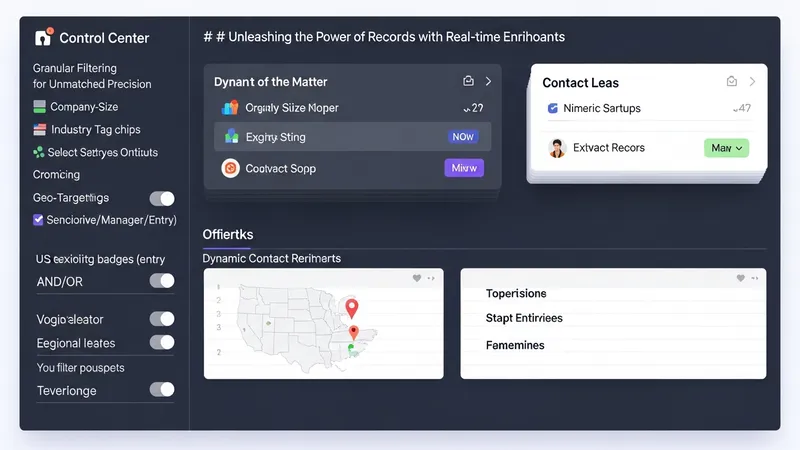
Providers differ in how they refresh and source data. Some rely heavily on professional-network signals and user-contributed corrections, while others ingest commercial datasets and public filings to populate firmographics. For example, LinkedIn Sales Navigator primarily leverages platform profile activity, ZoomInfo aggregates corporate and commercial sources, and HubSpot CRM focuses on contact capture and integration. Teams often compare how each approach affects match rates for target personas relevant to U.S. market segments.
Accuracy and deduplication features are commonly offered to reduce redundant outreach. Systems may provide matching rules that merge near-duplicate records or surface the most recently updated instance. Automated deduplication can be useful but may require manual review to prevent incorrect merges, especially when contacts have similar names across distinct subsidiaries. Organizations in the United States sometimes schedule regular deduplication audits and sample-based verification to maintain list hygiene.
When evaluating enrichment outputs, teams tend to consider confidence indicators and source diversity. Confidence scores can help prioritize records for manual validation. Source diversity—combining social profiles, corporate websites, and third-party directories—often improves coverage for certain industries but may complicate provenance tracking. Practical usage patterns often involve using enrichment to populate fields for segmentation while retaining a verification step before higher-value outreach.
Integration capability is a central consideration because prospecting outputs often feed into CRM workflows used by U.S. sales teams. Common integrations include native connectors to CRMs, CSV import/export, and API endpoints for programmatic synchronization. Platforms that offer bi-directional sync may reflect status changes such as "contacted" or "qualified" back into the prospecting tool, helping to prevent duplicate outreach. Integration maturity can affect time-to-value, with more seamless connectors typically reducing the need for manual list transfers.
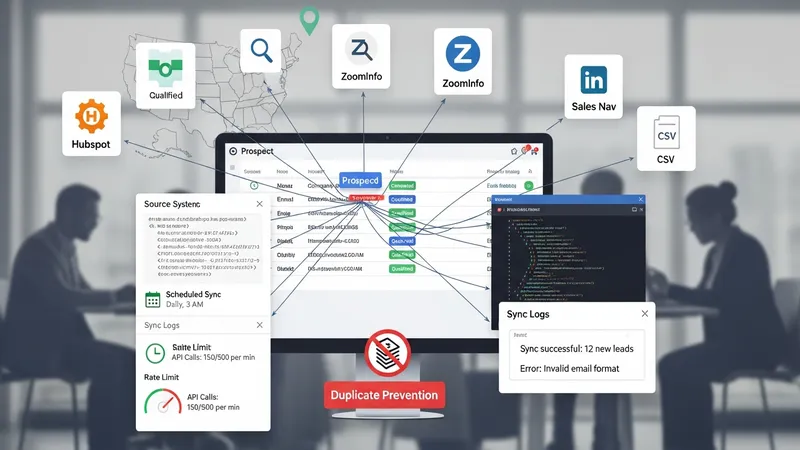
Compatibility with popular U.S. CRMs and marketing automation platforms is frequently verified during vendor evaluation. For instance, HubSpot CRM may be used both as a prospecting endpoint and as a follow-up platform; ZoomInfo and LinkedIn Sales Navigator have documented integration paths with a range of U.S. CRM vendors. Buyers often examine whether integrations support field mapping for custom attributes, scheduled syncs, and rate limits on API calls to understand operational constraints.
Middleware tools and iPaaS services are sometimes used to bridge feature gaps between prospecting platforms and enterprise systems. These intermediaries can handle transformation rules, de-duplication, and staged validation before records reach the main CRM. Such an approach may be helpful for organizations that need to enforce specific data standards or routing logic for U.S.-based territories. Teams often test sample syncs to validate mappings and timing before full-scale adoption.
Operational considerations include auditability and rollback capabilities when syncing large volumes of prospect data. Change logs and synchronization reports can help trace when a record was created or updated, which is useful for compliance and troubleshooting. Organizations in the United States often define synchronization cadences and error-handling procedures to minimize the risk of propagating incorrect records into sales pipelines.
Using prospecting platforms in the United States requires attention to federal and state rules that affect data collection and outreach. Statutes and regulations such as the Telephone Consumer Protection Act (TCPA) and the CAN-SPAM Act govern certain forms of electronic contact; platforms may offer features to support consent tracking or suppression lists. State-level privacy frameworks, for example the California Consumer Privacy Act (CCPA), introduce specific rights around data access and deletion that may influence vendor contracts and operational practices.

Vendors may provide tools to manage opt-out lists and to flag records for restricted use, but platform-level controls do not remove the need for organizational policies. Teams commonly implement intake checks to ensure lead capture workflows include consent indicators where required, and they document purposes for processing prospect data. For regulated outreach types—such as telemarketing that could implicate TCPA rules—businesses often consult legal counsel to align platform use with compliance obligations.
Data residency and third-party sharing practices are additional considerations. Platforms that aggregate data from multiple sources may disclose sharing arrangements in privacy policies; procurement teams in the United States often review those terms to assess contractual obligations and deletion procedures. When platforms allow data exports, buyers typically confirm retention windows and deletion processes to satisfy requests from individuals asserting privacy rights under state law.
Auditing and recordkeeping features can support regulatory response. Systems that log consent, capture timestamps for opt-outs, and provide accessible records for data subject requests help operationalize compliance. Organizations often combine vendor features with internal governance—such as training and periodic reviews—to ensure that prospecting activities remain consistent with evolving U.S. legal expectations.
Cost models for prospecting platforms may be subscription-based, usage-based, or a hybrid. Subscription plans commonly charge per seat or per account, while usage-based pricing may bill for API calls, data credits, or the number of enriched records. U.S. buyers often evaluate typical billing components—seats, exports, and enrichment credits—when estimating total cost of ownership. Contract terms, renewal cadence, and overage policies can materially affect annualized costs and budget planning.
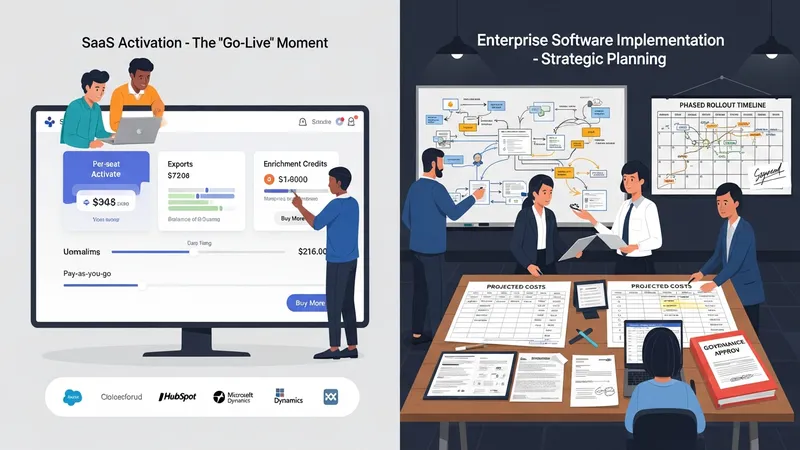
Deployment approach varies from cloud-hosted SaaS configurations with minimal setup to enterprise deployments that require custom integration work. Smaller U.S. teams may opt for immediate SaaS activation with standard connectors, while larger organizations sometimes plan phased rollouts that include data mapping, user training, and pilot validation. Deployment timelines can be influenced by the complexity of CRM integrations and internal governance approvals.
Operational readiness includes defining user roles, access privileges, and data stewardship responsibilities. Establishing who can export lists, approve integrations, or request record deletions helps reduce accidental data exposure. In U.S.-based operations, teams commonly align stewardship roles with sales territories and account ownership models to preserve data consistency and clarify accountability for prospect follow-up.
Ongoing measurement and maintenance are typical parts of platform stewardship. Metrics such as contact match rates, enrichment accuracy, and sync error rates help teams monitor platform performance. Regular audits of source attribution, deduplication effectiveness, and compliance logs often form part of quarterly or semiannual reviews to ensure the platform continues to meet operational and regulatory expectations in United States contexts.