
Selecting a roof covering for long-term performance requires detailed evaluation of how different materials respond to environmental exposure, structural load, and installation practices. Homeowners and building professionals commonly assess factors such as expected service life, resistance to wind and moisture, weight relative to roof framing, and compatibility with local building codes. Durability in this context refers to how well a material maintains its protective and aesthetic functions under typical United States climate patterns and maintenance routines.
Key aspects also include how the material ages (for example, gradual granule loss in some shingle types), the frequency of repairs over time, and how installation quality can affect lifespan. Consideration of supporting systems—underlayment, ventilation, flashings—and inspection access often influences material choice. When reviewing options within the United States, it may be useful to align material characteristics with local wind, hail, and snow loads and with codes such as the International Residential Code as adopted by many jurisdictions.
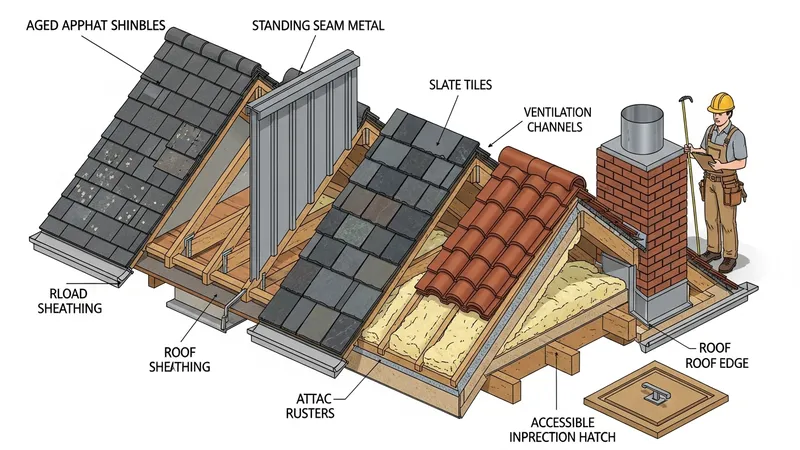
Durability comparisons often consider both intrinsic material properties and the risk profile of a given U.S. location. For example, coastal regions may prioritize salt- and moisture-resistant coverings, while inland areas with high heat may weigh thermal expansion and UV stability more heavily. Wind resistance ratings and hail impact classifications, commonly referenced in U.S. insurance and building guidance, may influence selection. Material warranties and documented performance in similar climatic zones can provide context, but installation quality and roof deck condition typically have major effects on outcomes.
Support systems such as underlayment, ventilation, and flashings interact with material choice and can alter expected service life. Proper underlayment selection may reduce moisture migration, and ventilation strategies that follow U.S. building guidance can moderate attic temperatures and condensation risk. Flashing details at valleys, chimneys, and penetrations are frequent failure points; durable flashing materials and correct integration with the chosen roofing product often reduce localized degradation. When evaluating options, consider how these subsystems match the physical properties of the primary covering.
Structural implications matter because weight differences among materials affect framing requirements. Clay tile and natural slate may impose loads several times higher than asphalt shingles, which can require reinforcement of rafters or trusses in older U.S. homes. Conversely, lightweight metal or synthetic systems may allow retrofit without major structural changes. Roof slope and drainage patterns also influence material suitability: some products perform poorly on low-slope assemblies and may require specially rated systems and installation practices commonly referenced in U.S. roofing standards.
Life-cycle factors such as expected maintenance, repairability, and recyclability often contribute to durability assessments. In the United States, common maintenance needs include periodic sealant replacement around flashings, replacement of damaged units after hail events, and clearing of debris that traps moisture. Some materials may be easier to spot-repair, while others require matched units or specialist installers. Consideration of end-of-life handling—recycling availability or disposal requirements in local U.S. jurisdictions—may also affect long-term planning.
Cost is a component of selection but interacts with longevity and risk exposure. Initial installation costs may be lower for some materials yet entail earlier replacement cycles or higher maintenance. Conversely, higher initial cost materials may typically offer longer service intervals, though regional labor rates and permitting practices in the United States can shift total installed cost. Balancing upfront expense with expected performance under local climate and code requirements helps form a practical choice. The next sections examine practical components and considerations in more detail.
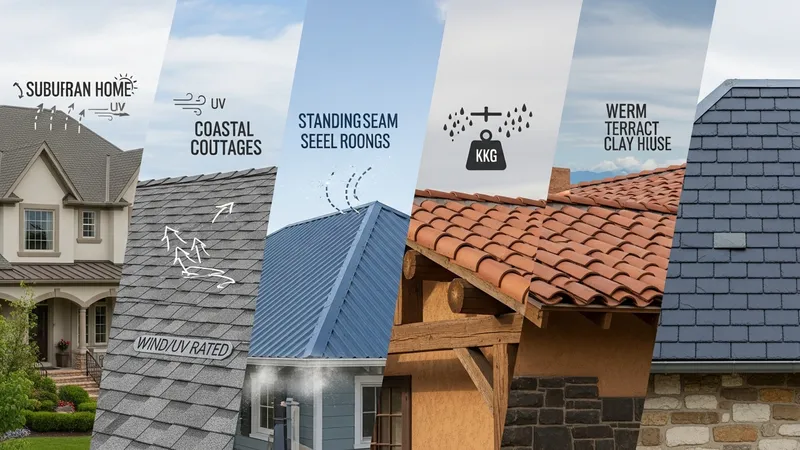
Different material types present distinct durability profiles relevant to U.S. conditions. Asphalt composition shingles are widely used across many U.S. climate zones and may perform well where wind uplift and UV exposure are moderate; they often have ratings and classifications that installers reference. Metal systems, including standing-seam steel or aluminum, commonly feature factory-applied coatings that resist corrosion in many U.S. regions, though coastal salt exposure can accelerate wear without appropriate finishes. Clay and concrete tiles are frequently seen in southwestern and southern coastal areas of the United States and may tolerate high solar loads but require framing that handles their weight.
Natural slate has been used historically on U.S. buildings where long-term weathering resistance was a priority; intact slate can remain serviceable for many decades, but replacement materials and skilled installers are less common in some U.S. markets. Synthetic and composite products aim to reproduce visual characteristics of traditional materials while reducing weight and potentially lowering installation complexity; performance can vary among manufacturers, and U.S.-based testing standards or listings may help compare options. Each material category may include product lines with different tested wind, fire, and impact classifications applicable in U.S. code compliance.
Performance under impact (hail) and wind is often quantified through standardized tests that are used by U.S. insurers and code officials. For example, impact-resistant classifications or wind-uplift ratings commonly appear on product data sheets; these ratings can guide choices in regions prone to severe weather events. Hail resilience may be particularly relevant in parts of the central United States, while wind uplift testing can matter along Atlantic and Gulf coasts. Evaluating test listings and inspection reports from U.S. jurisdictions often provides practical insight into expected field performance.
Material compatibility with accessory components influences durability. For instance, certain underlayments and fasteners are formulated to work with specific coverings to reduce galvanic corrosion or ensure adhesive bonding at expected temperatures. In the United States, manufacturers and industry bodies typically publish installation guidance and accepted accessory pairings; following these details generally supports longevity. Where local installations deviate from standard practice, additional inspection and documentation may be prudent to assess potential long-term effects.
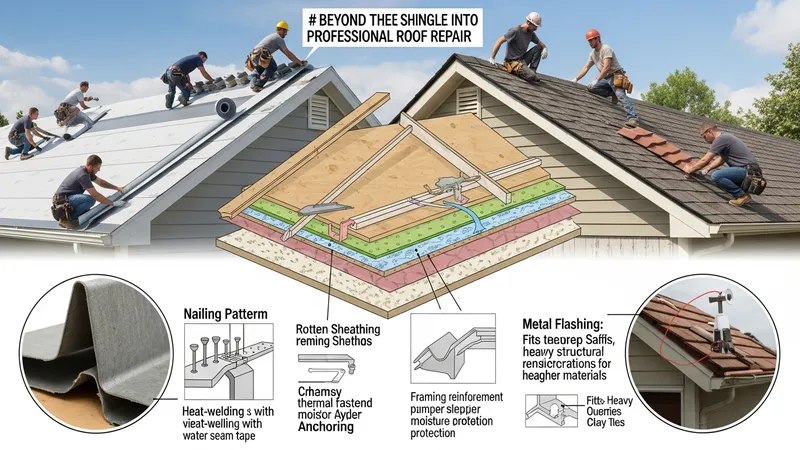
Installation quality often strongly influences how long a roof will perform in U.S. settings. Proper nailing patterns, fastener types, adhesion techniques, and sealing methods are commonly specified in manufacturer instructions and referenced by U.S. building codes or standards organizations. Poorly executed laps, insufficient fasteners, or incorrect flashings can accelerate failures, regardless of material quality. Using installers familiar with local climatic demands and with access to relevant product listings and testing data can reduce the risk of premature deterioration.
Roof structure and slope determine the types of products suitable for a given house. Low-slope systems in the United States usually require membrane roofing rated for low slopes, while steeper slopes accept shingles, tiles, and metal panels. The roof deck condition—presence of rot, uneven sheathing, or compromised framing—may necessitate repairs before installing a durable covering; neglecting deck repairs can shorten the effective life of any material. Load-bearing capacity is particularly relevant when considering heavier coverings like clay tile or natural slate, as framing reinforcement may be needed to meet U.S. structural safety practices.
Moisture management through flashing details, underlayment selection, and ventilation often affects material longevity. In many U.S. climates, controlling attic temperatures and condensation risk can reduce thermal stress and moisture-related decay. Underlayments that provide secondary water-shedding may protect against wind-driven rain, and properly integrated step and counterflashings can limit leakage at penetrations. These assembly-level considerations are commonly addressed in U.S. roofing guidelines and can influence warranty applicability when followed as directed.
Inspection and quality assurance practices during and after installation can improve long-term outcomes. Pre-installation checks of deck flatness and substrate integrity, mid-job verification of fasteners and flashing integration, and post-installation documentation of materials and ratings can support future maintenance and insurance claims in the United States. Periodic professional inspections that record observed conditions may help plan maintenance before minor issues develop into larger problems, thereby supporting expected material performance over time.
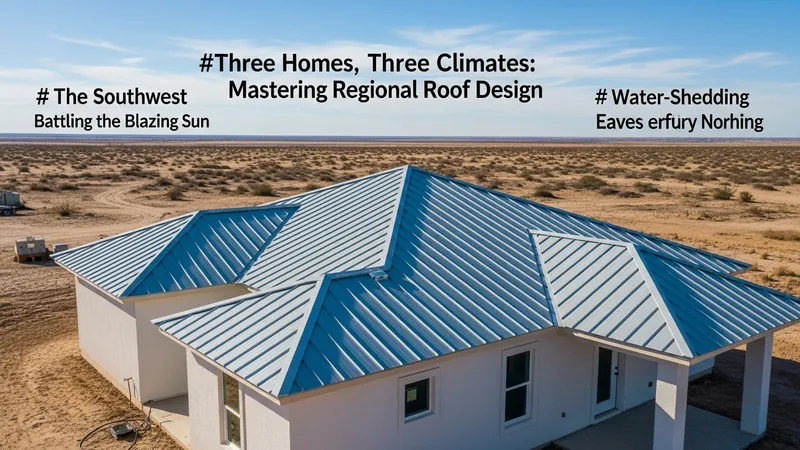
Regional climate patterns in the United States often shape which materials perform well in practice. In hot, arid areas of the Southwest, materials that resist thermal expansion and UV degradation may be prioritized, and lighter-colored or reflective surfaces can reduce heat transfer into buildings. In humid Gulf Coast regions, corrosion resistance and resistance to wind-driven rain are commonly significant factors. Northern climates with freeze–thaw cycles may require materials and installation details that limit water ingress and accommodate ice-damming tendencies, often through appropriate eave protection and ventilation practices.
Exposure to extreme weather events influences typical insurance and code considerations in different U.S. regions. Coastal areas may reference higher wind design loads in local codes, and some jurisdictions require specific attachment or uplift-resistant details. Hail-prone regions of the central United States often see increased interest in impact-resistant classifications for coverings. Understanding regional risk patterns and reviewing local building code amendments or community hazard mitigation resources, such as county storm mitigation plans, can help align material selection with expected environmental challenges in that area.
Local availability and contractor experience in U.S. markets vary and can affect practical durability. Certain materials, like clay tile or natural slate, may be extensively used in particular states or metropolitan areas, resulting in a deeper local supply chain and installer familiarity. Conversely, less common systems may require sourcing skilled installers from outside the immediate region, which can affect scheduling and cost. Checking local product listings and installer certifications familiar with regional practices is often part of a prudent planning process.
Energy performance and reflectivity considerations also differ across U.S. climate zones. Cool roof properties are more frequently referenced in hot climates and may be supported by local incentive programs or energy codes in some U.S. municipalities. Conversely, in colder climates the influence of roof color on heating energy may be reduced, while durability under snow and ice becomes more prominent. Evaluating energy and durability factors together can yield balanced choices aligned with local climate characteristics.
Understanding lifecycle costs helps frame material durability in U.S. contexts. Installation costs may vary by region and complexity: as an example, installed costs for common asphalt shingle systems in many U.S. markets may often be lower per square foot than heavier clay or slate systems, while metal panels frequently fall between those ranges. These figures can vary widely, and factors such as roof pitch, penetrations, and local labor rates typically influence total installed expense. Considering maintenance frequency and likely repair scenarios often clarifies long-term cost expectations.
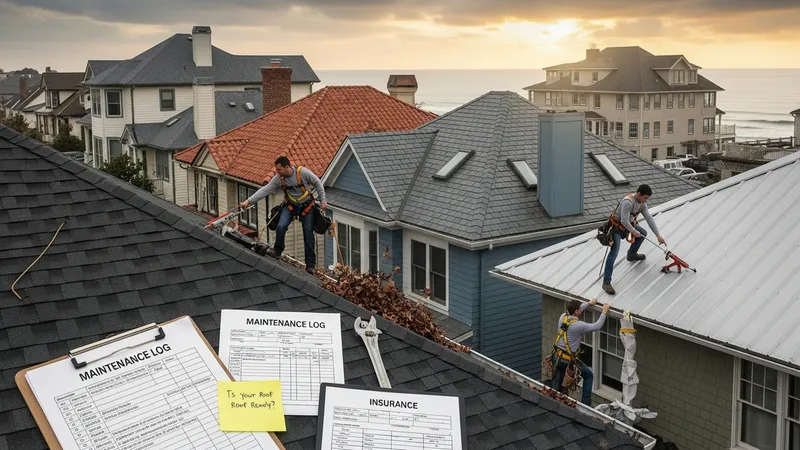
Maintenance expectations in the United States typically include periodic inspections after major weather events, clearing of debris from gutters and valleys, and timely repair of damaged flashings or fasteners. Some materials may require more frequent attention to sealants or coatings, especially in corrosive coastal environments. Documenting maintenance and repairs can assist with property insurance interactions and may support claims about expected performance when records align with manufacturer guidelines or local code requirements.
Regulatory factors such as building codes, local permitting, and historic district requirements can constrain material choices. Many U.S. jurisdictions adopt versions of the International Building Code or International Residential Code, with local amendments that can affect wind, fire, and snow load requirements. Historic properties may face additional review for visible materials. Familiarity with local permitting processes and code criteria is often necessary for ensuring that the chosen assembly meets required standards and that inspections confirm compliance.
Sustainability and end-of-life considerations are increasingly part of material selection decisions in the United States. Recyclability of tear-off materials, availability of recycled-content products, and embodied energy profiles may be factors for some building owners and municipalities. Additionally, some states and utilities offer programs or incentives that encourage energy-reflective roofing or materials with documented performance benefits. Reviewing local programs and disposal options can inform material choices alongside durability and cost assessments.