
Plumbing emergency repair refers to the structured process used by trained technicians to assess and address immediate failures in water supply and drainage systems. Professionals typically begin with rapid containment to limit water ingress and related hazards, then proceed to diagnostic steps that identify the source and scope of a fault. Work at this stage often balances temporary measures—such as isolating a valve or applying a clamp—with assessment tasks like visual inspection, moisture mapping, and basic pressure testing to determine if a localized repair or broader intervention is needed.
Following initial containment, technicians usually prioritize actions that reduce safety and property risk while collecting data for a repair plan. Common priorities include ensuring electrical areas are safe, documenting damage for records, and identifying affected fixtures, pipe runs, or drainage channels. Skilled practitioners may coordinate with other trades or building managers where structural concerns or multi-system impacts are present. The overall goal in early stages is to stabilize the situation and produce a clear diagnostic picture that informs appropriate repair techniques and timelines.
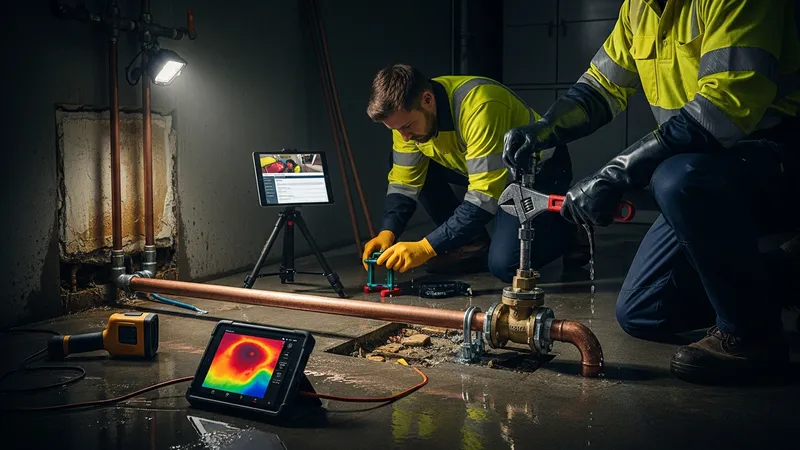
Acoustic and thermal leak detection tools often form the first detailed diagnostic step after a visible failure is stabilized. Acoustic devices may detect the sound of running water in concealed cavities, while infrared imaging can reveal temperature differentials where hot or cold lines have breached or where moisture affects surrounding materials. Moisture meters and probes can quantify dampness levels to help distinguish active leaks from historical water intrusion. Together, these methods often reduce unnecessary invasive openings by focusing interventions where evidence indicates active flow or saturation.
Blockage removal methods are selected based on the likely cause and location of an obstruction. Mechanical augers or drain snakes can clear hair, small debris, or collapsed scale from accessible runs. Hydro-jetting, which uses pressurized water, may be employed where scale, grease, or mineral buildup is extensive and pipe material and condition permit such force. CCTV cameras are frequently used in tandem with clearing techniques to confirm the nature of the blockage and verify that clearing operations have restored through-flow without damaging pipe walls.
System inspection approaches help create a broader picture of network condition beyond the immediate failure. CCTV drain surveys may reveal root intrusion, joint failures, or long-term corrosion that suggests sections of piping require replacement rather than spot repair. Pressure testing, sometimes performed at controlled intervals, can indicate whether a closed system holds under expected loads or whether hidden leaks are present. Inspection findings often influence whether a temporary repair is appropriate or whether a staged replacement plan is more suitable for long-term reliability.
Repair selection typically weighs material compatibility, expected remaining service life, and accessibility. Temporary measures might include external clamps, epoxy wraps, or valve isolation to manage flow while parts are sourced. Permanent repairs can range from sectional pipe replacement using matched materials to trenchless relining techniques that restore pipe integrity with minimal excavation. Decisions about repair methods are informed by inspection data, structural constraints, and safety considerations, and they often consider how a repair will affect overall system hydraulics and future maintenance access.
In summary, responding to urgent water and drainage failures involves a sequence of containment, targeted diagnostics, and context-sensitive repair planning. The examples listed above illustrate typical tools and methods used to locate leaks, clear blockages, and inspect systems to guide repair work. Subsequent sections examine practical components and considerations in more detail.
Emergency plumbing incidents often present as leaks, drain backups, or sudden loss of pressure. On arrival, professionals typically conduct a rapid on-site assessment that identifies visible signs such as pooling water, wet finishes, or damp odors, and checks for secondary hazards like electrical exposure. This assessment may include verifying shut-off valve locations and confirming which fixtures or zones are isolated. Documenting the condition with notes or photographs is often part of this phase, both for repair planning and for any necessary communications with property managers or insurers.
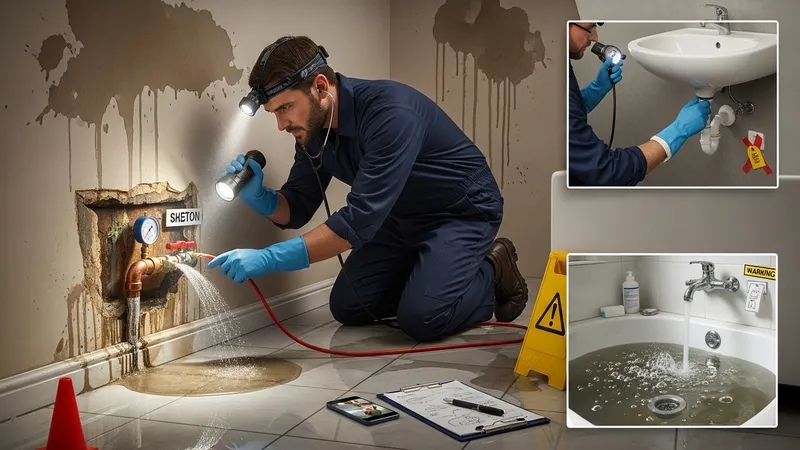
Leaking fixtures and joint failures are commonly encountered and may be visible or concealed behind walls and under floors. Plumbers may perform targeted tests—such as isolating sections of the system or using simple pressure checks—to determine whether a leak is active and to localize its general area. For drain-related issues, an initial inspection often includes running water through fixtures to observe flow, listening for gurgling sounds that indicate venting or partial blockages, and determining whether backups affect multiple points in the system.
Safety considerations are integrated into the assessment. Professionals often look for electrical outlets near wet areas, potential contamination from sewage-type overflows, and structural vulnerabilities that could worsen if water intrusion continues. Based on these findings, technicians may prioritize temporary isolation measures, arrange for auxiliary containment such as absorbent barriers, or recommend that electrical systems be isolated by a qualified electrician before proceeding with invasive diagnostics.
Assessment outcomes typically guide the choice of diagnostic tools and the scope of immediate intervention. A localized visible leak may allow for direct access and repair, while hidden leaks or systemic drain failures may prompt noninvasive diagnostics like thermal scanning or CCTV inspection. The assessment phase sets expectations for repair complexity and may indicate whether a short-term containment is sufficient pending a more comprehensive intervention.
Professional diagnostics often start with visual inspection and progress to specialized tools as required. Thermal imaging cameras may reveal temperature anomalies around piping, suggesting a hot or cold water leak, while moisture meters quantify saturation levels in building materials. Acoustic leak detectors are used where sound transmission can indicate pressurized flow inside concealments. These noninvasive methods can reduce the need for exploratory demolition by focusing access on areas most likely to yield meaningful findings.
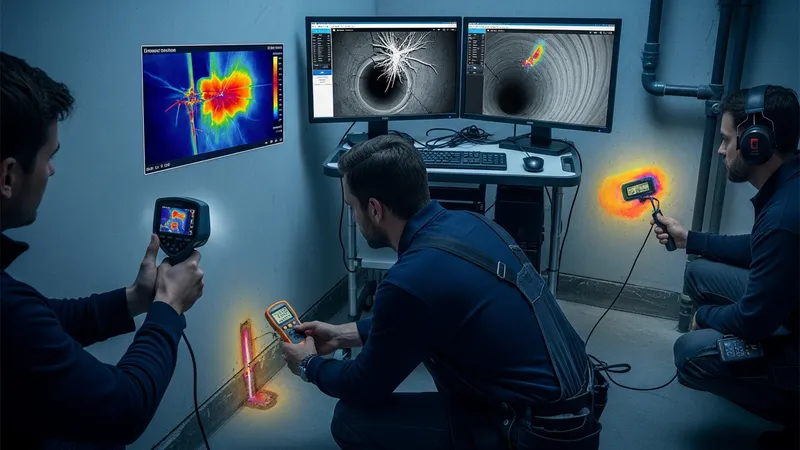
CCTV drain cameras are widely used to inspect the internal condition of drainage pipes. A camera run can identify cross-sectional blockages, root intrusions, collapsed sections, or offset joints. Video inspection helps determine whether cleaning, partial replacement, or relining is appropriate. In longer runs or municipal interfacing scenarios, camera surveys may be combined with locators that estimate depth and position relative to surface landmarks.
Pressure and flow testing can clarify whether systems maintain integrity under normal operating conditions. Controlled pressure tests may reveal slow leaks that are not immediately apparent, and flow measurements can indicate reduced capacity due to scaling or partial obstructions. When water quality is a concern, basic tests for turbidity, color, or odor are often performed to identify contamination that affects repair approach or worker safety considerations.
When diagnostics indicate concealed failures, minimally invasive exploratory techniques may be used. Small inspection ports, targeted access panels, or short exploratory openings can confirm findings from noninvasive tools before committing to larger repairs. These steps typically aim to minimize unnecessary disturbance while ensuring that repair plans are based on verifiable evidence about the fault location and mechanism.
Repair strategies in urgent situations often combine immediate temporary measures with longer-term fixes. Temporary measures may include isolating the affected section with shut-off valves, applying mechanical clamps to slow flow, or using epoxy bands and wraps that can seal small leaks until a permanent repair is arranged. These approaches are chosen to limit further damage and to provide time for diagnostics and material procurement when immediate replacement is not feasible.
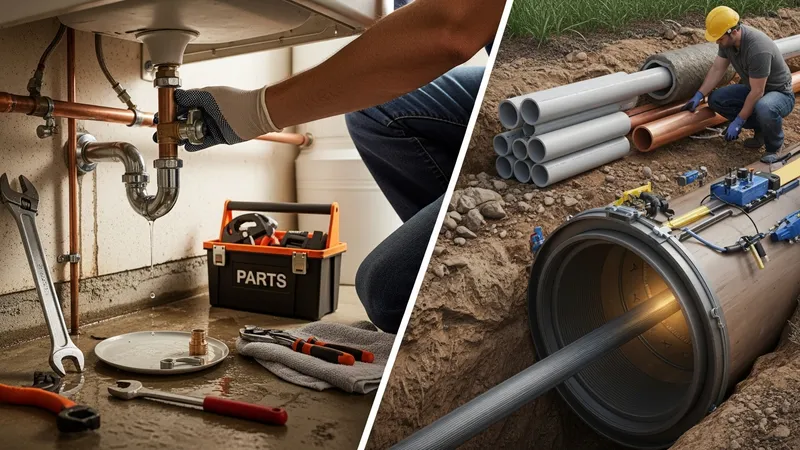
Permanently restoring pipe integrity can involve sectional replacement, full run replacement, or trenchless options such as cured-in-place pipe (CIPP) lining. Sectional replacement matches pipe type—such as copper, PEX, or PVC—to existing materials and system requirements. Trenchless relining may be considered where excavation would be disruptive; however, suitability depends on pipe condition, access points, and the nature of the defect. Material compatibility and code compliance are important considerations in selecting any permanent method.
For drain blockages, mechanical clearing with augers or snakes may suffice for localized obstructions, while hydro-jetting is often used for heavier buildup when pipe condition permits high-pressure cleaning. Following clearance, CCTV re-inspection helps confirm that the obstruction has been removed and checks for structural defects that may require future interventions. Where waste line contaminants are present, appropriate containment and disposal procedures are typically followed to control environmental exposure.
Valves, fittings, and ancillary fixtures are often replaced when they contribute to failure or when they do not meet current pressure or safety standards. Upgrading valves or access points can simplify future maintenance and reduce the likelihood of recurring urgent incidents. Decisions about component replacement are usually based on inspection evidence regarding corrosion, wear, and system compatibility rather than on speculative longevity estimates.
Several factors commonly influence the cost and complexity of urgent plumbing repairs: the extent of damage, accessibility of the affected components, required diagnostic procedures, material selection, and the need for specialized equipment. Labor intensity rises where structural openings, containment, or coordination with other trades is necessary. While specific cost figures vary widely by location and complexity, these categories are typical determinants of overall expense and scheduling considerations.
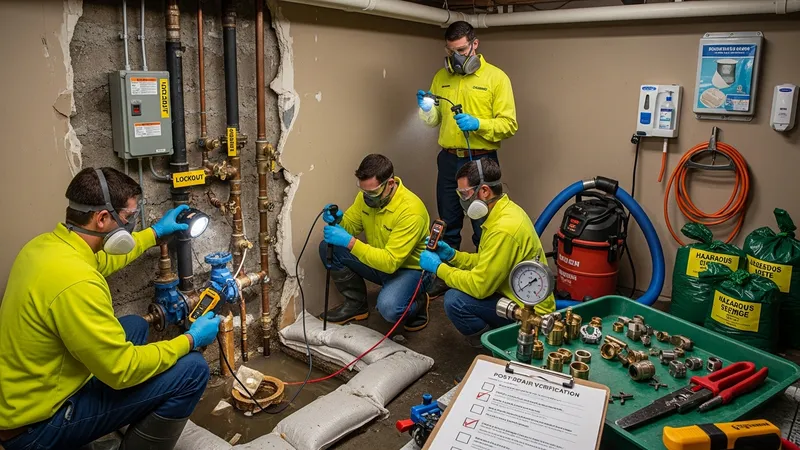
Safety practices are central throughout emergency response. Technicians often employ lockout procedures for water and electrical systems, use personal protective equipment appropriate to potential contamination, and follow local regulations for wastewater handling and disposal. When sewage or chemical contaminants are involved, additional precautions and decontamination steps may be applied to protect workers and occupants and to ensure regulatory compliance.
Post-repair verification commonly includes pressure testing, CCTV inspection, and functional checks of affected fixtures and drainage paths. Documentation of the repair scope, materials used, and test results creates a record for building managers and may be required for insurance or compliance purposes. Where temporary repairs were used, a schedule for follow-up assessment is often recommended to confirm long-term performance once full repairs are completed.
Environmental and maintenance considerations are also relevant after an urgent repair. Proper disposal of removed materials, attention to potential mold or finish damage in affected areas, and recommendations for monitoring—such as periodic visual checks or moisture measurements—help manage residual risk. The final aim of post-repair steps is to ensure that the system returns to safe, functional condition and that any remaining vulnerabilities are clearly identified for future attention.