
A first meeting with a lawyer about a large-vehicle crash is an early, focused review of facts that helps clarify legal pathways and practical steps. During this initial conversation, the attorney typically gathers a chronological description of the incident, identifies involved parties, and notes visible injuries or property damage. The meeting usually serves to determine which records and evidence will be relevant, outline possible procedural avenues, and set expectations about documentation needs and timing for follow-up information.
In practical terms, the initial discussion often covers who was present, where and when the event occurred, whether law-enforcement or regulatory reports exist, and whether any immediate preservation steps are needed for physical or electronic evidence. Confidentiality standards generally apply to the exchange, and the attorney may explain the scope of the early assessment without providing definitive legal outcomes. The goal is typically to establish what additional information will be required to evaluate potential claims or defenses.
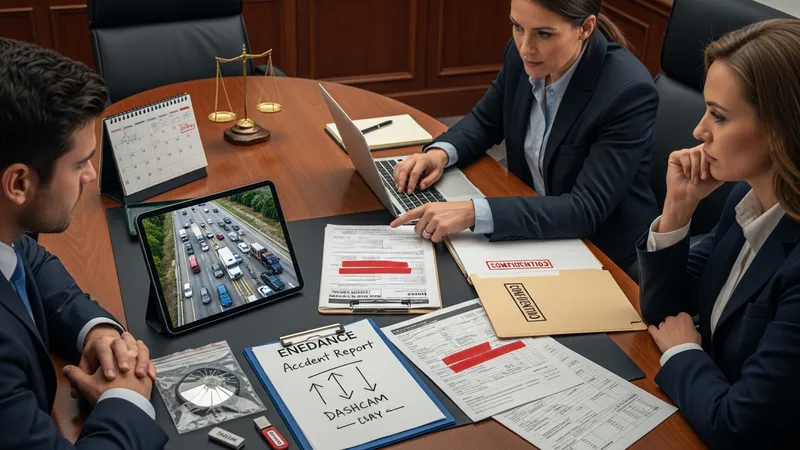
When assessing liability elements during the initial review, attorneys often consider factors such as vehicle weight and configuration, federal and local regulations that may apply to commercial drivers, and evidence of operator fatigue or improper maintenance. Records like driver qualification files, maintenance logs, and hours-of-service documentation can be particularly relevant in cases involving commercial carriers. The attorney may describe which of those records are usually sought and how they could influence preliminary legal theories, while avoiding definitive judgments at this stage.
Medical and economic documentation commonly shapes the early assessment of damages. Attorneys typically note that contemporaneous medical records, billing statements, and employer verification of work absence are informative for estimating impact. Photographs of injuries, treatment summaries, and diagnostic reports can help establish timelines and causation questions. The initial meeting may identify gaps in documentation and suggest what records could be gathered to support a clearer assessment.
Interactions with insurers and regulatory entities are often part of the early discussion. An attorney may explain the difference between reporting to an insurer and preserving evidence for potential legal claims, and how immediate notifications or recorded statements could affect later proceedings. The consultation can also cover timelines imposed by statutes of limitations in the relevant jurisdiction and why early preservation of evidence is commonly recommended as a precautionary matter.
The initial meeting frequently functions as a planning step that outlines likely investigative actions and administrative tasks that follow. Attorneys may describe potential next actions such as requesting records, interviewing witnesses, and obtaining expert reviews, clarifying that the specifics can vary based on the case facts. This planning helps set realistic expectations about timeframes and the types of professionals who might be involved. The next sections examine practical components and considerations in more detail.
At the opening of an early consultation, practitioners often focus on obtaining a clear, chronological account of the incident. Questions may explore the sequence of events, road and weather conditions, vehicle positions, and any immediate responses by emergency personnel. A structured narrative helps identify discrepancies among accounts and highlights which factual areas may need verification. Attorneys may also note the importance of corroborating claims through independent sources such as bystander statements or surveillance footage.

Identification of involved parties usually follows; this can include driver names, vehicle registration, carrier or employer entities, and any third parties such as cargo loaders or maintenance providers. Commercial-vehicle incidents may implicate additional actors like leasing companies or independent contractors. Clarifying these relationships early can guide subsequent record requests and inform which regulatory frameworks, such as commercial vehicle safety standards, could be pertinent.
Medical status and injury descriptions are another common topic. Attorneys often ask when and where medical care was sought, what diagnoses were made, and whether ongoing treatment is expected. Early notes may document initial symptoms and functional limitations, which can inform preservation of medical records and referrals for diagnostic testing. A measured assessment of anticipated documentation needs helps outline what medical evidence the attorney may later request.
Finally, the attorney often reviews any immediate factual evidence already gathered, such as photographs, police reports, witness contacts, or vehicle damage estimates. They may discuss evidence preservation steps that could be taken without directing specific actions, for example noting that physical items and electronic data can be time-sensitive. This portion of the meeting typically clarifies which items will be requested next and why they are considered useful for a preliminary evaluation.
Crash reports and law-enforcement records are frequently among the first items reviewed. These official documents often include basic collision geometry, cited violations, and involved party details. Attorneys may explain how such reports can be useful in establishing an initial factual framework and why obtaining certified copies could become part of an early evidence-gathering plan. The emphasis is usually on identifying discrepancies and areas where supplemental documentation may strengthen the factual record.

Driver logs, hours-of-service records, and electronic logging device (ELD) outputs often receive specific attention in commercial-vehicle matters. These records can indicate whether regulatory limits were exceeded or whether rest breaks were documented. Attorneys typically describe the relevance of these items as contextual evidence rather than as sole proof of fault, noting that interpretation commonly requires a combination of documents and corroborating testimony.
Vehicle inspection and maintenance records, including recent repairs or defect reports, are another common focus. Records that show overdue maintenance, unresolved mechanical issues, or failed inspections may be relevant to a negligence assessment. The initial meeting may outline which maintenance entries are commonly requested and why they may inform questions about vehicle condition and a carrier’s safety protocols.
Electronic data sources such as event data recorders (EDR), dashcam footage, and telematics can provide objective information about speed, braking, and vehicle dynamics in the moments before a collision. Attorneys may describe typical procedures for preserving and requesting such data, and note that access can vary by device, ownership, and retention policies. Early identification of potential electronic sources helps prioritize preservation steps when applicable.
Discussion of fee frameworks is often part of the initial consultation, presented in neutral terms. Common arrangements that may be described include contingency-fee agreements, hourly billing, and limited-scope engagements. Attorneys commonly explain that contingency percentages can vary by jurisdiction and case complexity and may outline which costs are typically advanced versus which are typically reimbursed at resolution. The purpose is usually to clarify administrative expectations rather than to finalize contractual terms.

Conflict-of-interest checks and client intake procedures are typical administrative topics. Attorneys generally verify whether any party to the matter is represented by the same firm or has relationships that could create conflicts. Intake procedures often also include collecting identifying information, obtaining consent to investigate records, and discussing confidentiality expectations. These steps are factual and procedural, aimed at ensuring appropriate representation considerations are observed.
Another administrative area often covered is case administration: how documents will be collected, how communications will be handled, and who within a firm may be involved in follow-up. Attorneys may describe typical timelines for responses to record requests and how logistical matters such as releases for medical records are managed. This conversation is commonly framed as setting mutual expectations for information flow and record handling rather than as instructions to a prospective client.
Billing of third-party costs and expert expenses is frequently addressed in general terms. Attorneys may explain that investigative costs, expert fees, and copying or filing expenses can be incurred and that different arrangements exist for advancing those costs. The initial meeting often clarifies whether such costs are advanced by a representative or retained from recoveries, with the understanding that practices vary and specific terms would be documented if representation proceeds.
Following the initial meeting, a variety of investigative steps may be undertaken and timelines can vary widely. Typical follow-up actions might include formal requests for police and regulatory records, preservation letters to carriers, interviews with witnesses, and consultations with technical or medical experts. These processes can take weeks to months depending on record availability and complexity. Attorneys usually describe such timelines as approximate and contingent on the responsiveness of third parties and the scope of necessary inquiries.
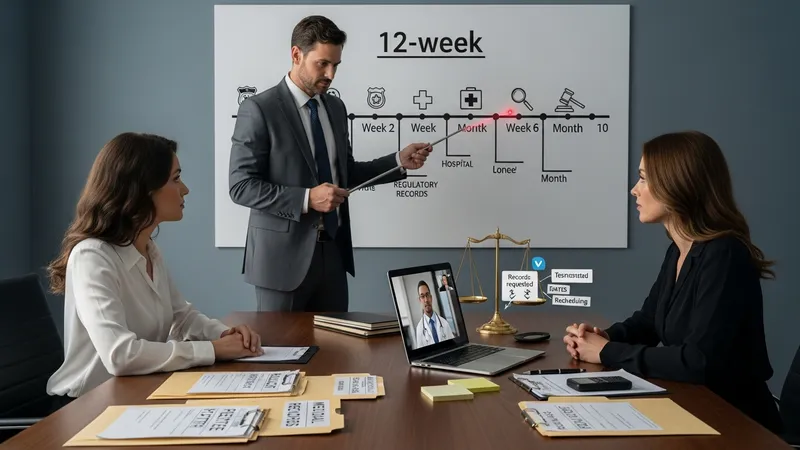
Medical treatment progression and documentation often influence subsequent scheduling and evidence needs. Continued care, diagnostic testing, and treatment plans may generate additional records that inform evaluations of recovery and damages. Attorneys commonly note that ongoing medical documentation can affect the timing of settlement discussions or decisions about when to seek further opinions, emphasizing that medical trajectories are inherently uncertain and vary case by case.
Claims with insurers and administrative filings may have their own procedural timelines and reporting requirements. The early consultation typically outlines how information exchanges with insurers and opposing parties often proceed and that negotiation or alternative-dispute-resolution processes may follow document exchanges. If litigation becomes necessary, the legal process can extend the overall timeline, sometimes substantially, and attorneys may describe these possibilities in broad terms without making predictions.
Finally, the consultation commonly concludes with an outline of anticipated next steps if representation proceeds, or with a suggested list of records to gather if the prospective client is continuing independently. Attorneys often recommend establishing a single point of contact for information flow and explain that periodic reassessments may be required as new evidence arrives. This forward-looking summary is typically presented as a planning tool rather than a commitment to specific outcomes.