
Workforce management software is a category of enterprise applications designed to coordinate staffing, attendance, and related operational processes. These systems typically combine scheduling, timekeeping, leave tracking, and forecasting functions into a unified interface so that managers can align staff availability with demand, monitor labor usage, and maintain records for payroll and regulatory purposes. The software may integrate with point-of-sale terminals, access control, or payroll engines to reduce duplicate data entry and to maintain a single source of workforce information for administrative and analytical use.
At a functional level, such solutions often include tools for creating and distributing schedules, recording hours worked, managing requests for time off, and estimating future staffing needs based on historical patterns. They may also provide compliance checks that reference local labor rules and configurable approvals for exceptions. Reporting modules commonly extract operational metrics—such as hours per role, planned versus actual coverage, and variance in labor costs—to support decision making rather than to drive automatic personnel actions.
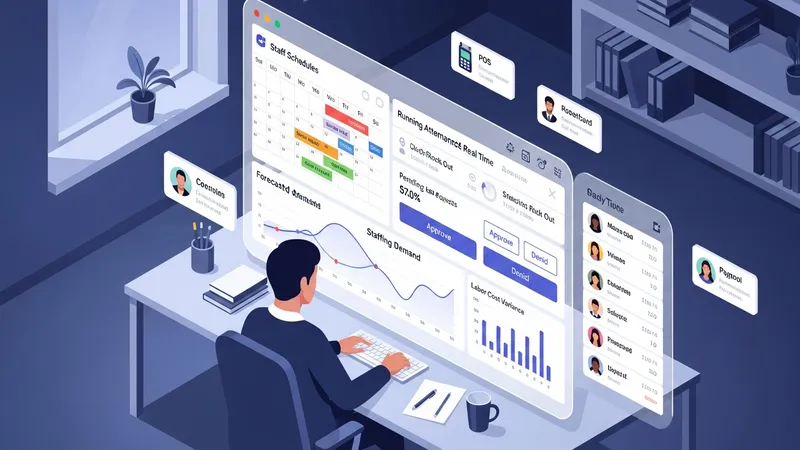
Comparative frameworks for these tools often separate capabilities into operational, administrative, and analytical tiers. Operational capabilities include rostering and real-time attendance; administrative capabilities cover time approvals, leave administration, and payroll interfaces; analytical capabilities provide dashboards and forecasting. Organizations may select combinations of these tiers to match scale and complexity: smaller operations often prioritize basic scheduling and attendance capture, while larger operations typically add advanced forecasting and rule-based compliance checks. Each capability set may require different levels of configuration and data hygiene to produce reliable outputs.
Integration considerations are commonly central to deployments because workforce systems typically need identity and payroll data to function as intended. Integration points often include HR information systems, payroll processors, and access control or point-of-sale systems where time stamps originate. Data mapping and consistent identifiers for employees and roles usually reduce reconciliation work. When integrating, teams frequently test end-to-end payroll runs and exception cases to ensure time capture flows correctly into downstream accounting or personnel records before full production use.
Rules and compliance features in these systems are frequently configurable to reflect local labor laws, collective bargaining terms, or company policies. Configurable rules may cover overtime thresholds, minimum rest periods between shifts, and eligibility for specific shift differentials. Because legal requirements vary by jurisdiction and may change, responsible users commonly review and update rule sets periodically; some vendors provide template rule libraries that can be adapted. Audit trails and exception reports are typically included so organizations can document decisions and corrections for regulatory review.
Data quality and governance often determine how useful workforce management outputs are in practice. Accurate role definitions, up-to-date employee status, and consistent time capture practices typically improve forecast reliability and reduce payroll disputes. Reporting accuracy often depends on clear policies for time rounding, break handling, and approval workflows. Organizations may adopt staging environments and sample datasets to validate logic and reporting before applying configurations to live operations, which can reduce downstream corrections and administrative overhead.
In summary, enterprise workforce coordination software brings together scheduling, timekeeping, leave administration, forecasting, and reporting functions to help organizations align staff with demand while maintaining administrative records. The modular nature of these systems means features may be adopted incrementally and configured to match operational complexity. The next sections examine practical components and considerations in more detail.
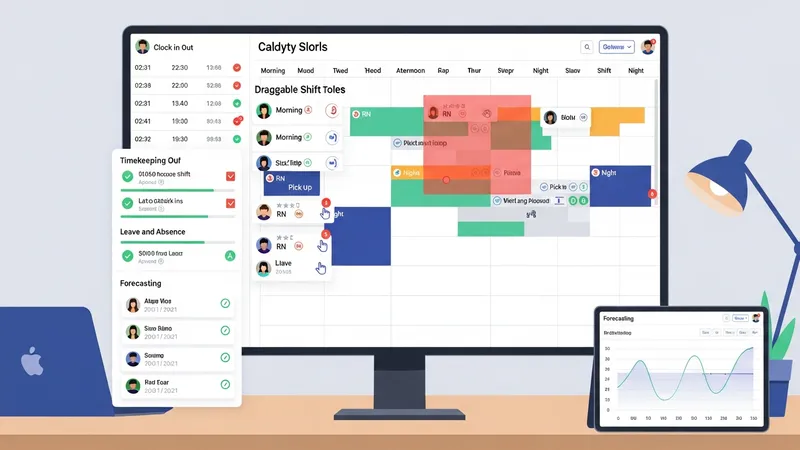
Feature sets in workforce management solutions typically fall into distinct categories that reflect operational and administrative needs. Scheduling features handle shift creation, coverage visualization, and swap or pick-up workflows. Timekeeping modules capture hours, manage exceptions, and support approval workflows. Leave and absence management tracks planned and unplanned time away, often tying into accrual engines. Forecasting and analytics analyze historical demand to project staffing needs. Reporting and compliance provide exportable records and configurable rule checks. Understanding these categories helps organizations map functional needs to available modules in a neutral, factual way.
Scheduling capabilities may include rules-based constraints such as minimum staffing levels, skill or certification requirements, and restrictions to prevent excessive consecutive shifts. Visualization tools can present coverage gaps and overlaps so planners can adjust rosters. Automated options may suggest shift assignments based on availability and qualification, but many organizations use these suggestions as a planning aid rather than automatic enforcement. The level of automation selected commonly depends on the predictability of demand and the degree of human oversight organizations prefer for staff allocation.
Time and attendance modules often integrate with diverse input sources including web clock-ins, hardware terminals, and mobile apps. These inputs typically require validation workflows to handle missed punches or discrepancies. Some systems include geofencing or device-based verification as optional inputs; such features are generally configurable and used according to organizational policies and privacy considerations. Export formats for payroll or accounting systems are frequently standardized to reduce manual reconciliation and to support accurate pay processing.
Reporting and analytics components usually provide operational and strategic outputs, with operational reports covering daily coverage and exception lists and strategic dashboards showing trend indicators. Forecasting models may use moving averages, weighted historical demand, or seasonality adjustments to produce staffing estimates. The transparency of forecasting assumptions and access to raw historical inputs often matters to planners who need to validate results. Many organizations combine system-generated forecasts with managerial judgment to create final staffing plans.
Scheduling and time-tracking are core operational layers that directly affect labor cost and service coverage. Scheduling modules create predictable rosters and may exhibit constraints for certifications, shift overlap, and contractual obligations. They often provide calendar views and conflict alerts. Time-tracking captures actual worked time, flags exceptions like missed punches or overtime, and stores approvals. Together, these components create a chain from planned coverage to recorded hours; quality at each stage reduces reconciliation needs and supports transparent payroll processing without implying guaranteed outcomes.
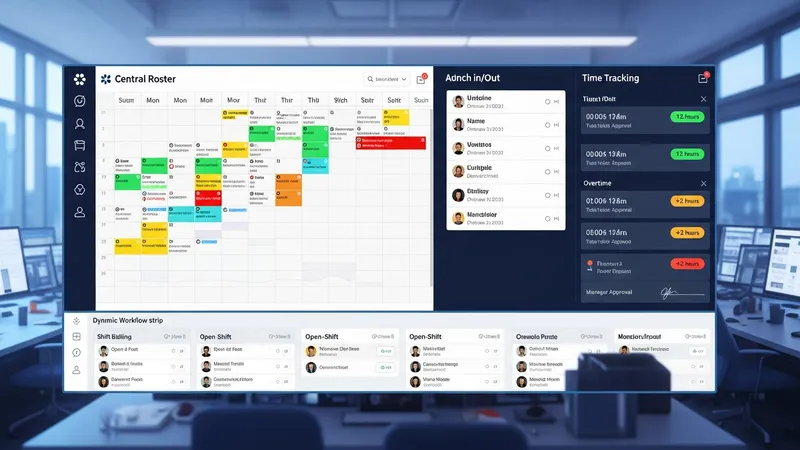
Shift bidding, swap workflows, and open shift posting are features some organizations use to increase flexibility. These workflows typically include approval gates and audit records so managers can maintain control over coverage while enabling staff participation. When implemented, tracking the volume of swaps and the frequency of open shift fills often informs policy adjustments. Data from scheduling operations may also feed into adherence metrics that measure how closely actual staffing aligns with planned coverage.
Time capture may involve rules for rounding, grace periods, and tardiness that influence payroll calculations. These rules are typically configurable so that organizations can reflect policy in automated calculations. Exception handling procedures—such as manager review of missed punches or retroactive edits—often require clear documentation and an audit trail to support internal controls and any regulatory inquiries. Integration with payroll systems usually necessitates standardized exports and a reconciliation step before final pay runs.
Mobile and remote access capabilities are increasingly common, allowing staff to view schedules, request leave, and record time from personal devices. Privacy and security considerations are typically addressed through authentication and device controls rather than assumed. Organizations often assess mobile feature sets for alignment with workforce demographics and for compliance with any location-based policies or contractual terms before full adoption. These considerations can influence rollout phasing and training plans.
Forecasting and analytics modules commonly turn historical operational data into forward-looking estimates and performance metrics. Forecasting approaches may include simple historical averages, seasonally adjusted models, or more complex predictive methods; each approach requires data cleanliness to be effective. Analytics dashboards typically show utilization, variance between scheduled and actual hours, and labor cost trends. Compliance functions overlay rule checks for overtime, rest periods, and record retention. Together, these functions support planning and regulatory documentation without replacing managerial judgment.
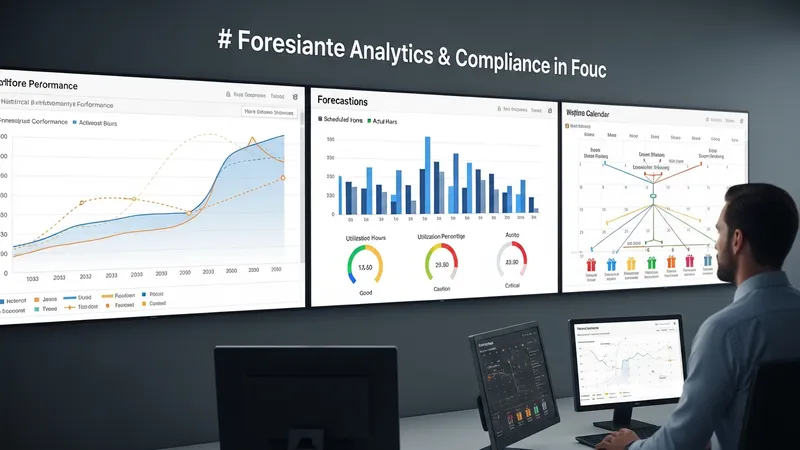
Forecast quality often depends on the granularity of historical data and the stability of demand patterns. Retail and hospitality may experience pronounced seasonality that forecasting models must accommodate, while other sectors may have more stable demand. Scenario planning is frequently used to compare staffing outcomes under differing assumptions about demand or absenteeism rates. Organizations commonly retain forecast histories to compare predicted versus actual outcomes and refine model parameters over time.
Analytics outputs also support performance monitoring, identifying areas where labor efficiency may be improved through training or process adjustments. Common metrics include hours per unit of output, coverage ratios, and overtime incidence by role. These metrics are generally used to inform managerial discussion rather than to drive automatic disciplinary actions; many organizations set thresholds for review and combine metrics with contextual information when evaluating performance.
Compliance features may include configurable alerts and exportable audit logs that document schedule assignments, approvals, and pay-affecting edits. Legal and contractual requirements vary by jurisdiction, so organizations typically maintain a process to review and update rule configurations periodically. Retention of time records and change histories is usually part of standard administrative controls to support potential audits or internal inquiries and to provide transparency for payroll reconciliation processes.
Successful implementation of workforce coordination software often involves phased rollouts, data cleansing, and stakeholder engagement. Initial pilots commonly focus on a limited set of sites or teams to validate configurations and integrations. Data mapping between HR records, role definitions, and time-capture sources is frequently necessary to ensure consistency. Training plans that explain approval workflows and exception handling are typically part of deployments to reduce early errors and to build confidence with end users without implying guaranteed adoption levels.

Integration points with HR information systems, payroll processors, and operational hardware require careful specification of data formats, identifiers, and reconciliation processes. Common pitfalls include inconsistent employee identifiers, missing historical records, or misaligned pay rules. Technical teams often create automated reconciliation reports and test payroll exports in a controlled environment before live payroll processing. Clear ownership of data correction procedures helps reduce the incidence of late payroll adjustments.
Scalability considerations include how the system handles increases in employee counts, additional locations, and more complex rule sets. Cloud-based deployments may offer elastic capacity, while on-premises installations may need planned resource upgrades. Performance testing under peak conditions—such as schedule publication or shift swap surges—can highlight bottlenecks. Organizations typically plan for periodic reviews of configurations and for mechanisms to handle growth without disrupting operational workflows.
Ongoing governance practices commonly assign responsibility for rule maintenance, reporting standards, and access controls. Periodic audits of configuration and usage help maintain alignment with organizational policies and legal requirements. Change management processes that document modifications to rules, integrations, or reporting structures usually reduce unexpected impacts. These administrative practices serve as complements to technical features and may influence long-term system value and reliability.