
Electronic data capture systems are software platforms used to collect, store, and manage data generated during clinical studies. These systems replace or supplement paper case report forms by providing structured electronic forms, a central database, and role-based user access. Typical EDC implementations include mechanisms for recording subject visits, entering laboratory and clinical measurements, and tracking protocol-defined assessments in a way that aims to improve traceability and reduce transcription errors compared with manual entry processes.
An EDC environment usually comprises form design tools, validation logic, query management, and reporting modules. It may support secure web access for sites and monitors, configurable user permissions, and export capabilities for statistical analysis. Implementations can vary by architecture (on-premises versus cloud-hosted), intended study phase, and the degree of integration with other clinical systems such as laboratory information or trial management tools.
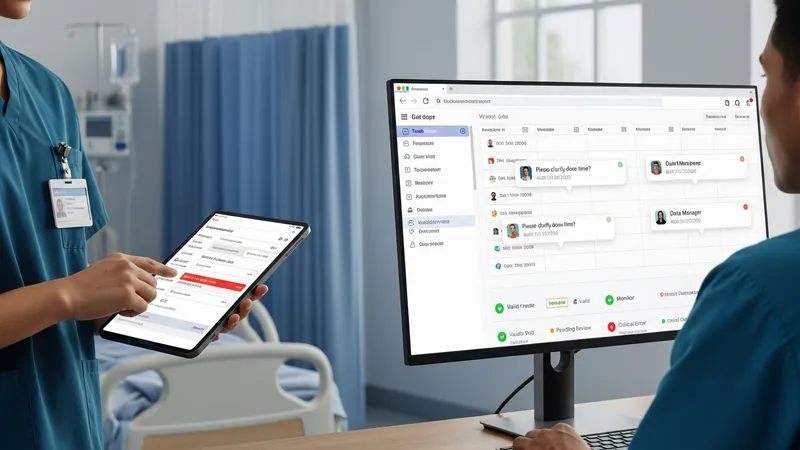
Data validation within an EDC may include real-time edit checks, range checks, and cross-field consistency rules. Such checks can identify implausible entries at the point of data entry and generate automated queries for site staff to resolve. Validation rules typically reflect protocol requirements and statistical expectations, and may be adjusted during the study as queries reveal patterns that require refinement. These mechanisms can often reduce downstream data-cleaning time, though they usually require thoughtful configuration and maintenance.
Study workflow management in an EDC can cover visit scheduling, electronic signatures, and task assignment. Randomization modules or integrations with interactive response technologies may be used to allocate subjects per protocol. Operational features often track monitoring activities and query resolutions, providing oversight for data completeness and timeliness. Workflow tools can also help coordinate multi-center studies by providing centralized views of enrollment status and outstanding data queries.
Regulatory compliance considerations often shape EDC design and operation. Systems may include immutable audit trails that record who changed a data value, when, and why, together with secure authentication and access controls. Adoption of industry standards for data structure and exchange, such as standardized metadata models, can help align trial datasets with regulatory and analysis expectations. Documentation of system validation and user training records commonly forms part of regulatory inspection materials.
Integration and interoperability are frequent topics when assessing EDC fit for a study. EDC systems may export data in standard formats or provide APIs for connection to electronic health records, laboratory systems, or clinical trial management systems. Mapping and transforming data to analysis-ready structures may be necessary, and planning for metadata, code lists, and provenance can reduce rework at the analysis stage. Technical and governance considerations often dictate the scope and timing of integrations.
In summary, electronic data capture systems serve as central platforms for structured clinical study data collection, validation, and management. They combine form design, data validation, workflow controls, and audit capabilities to support clinical operations and data quality. Subsequent sections examine practical components and considerations in more detail, including form design, validation practices, operational workflows, integration approaches, and closeout processes.
Electronic case report forms are the primary interface for structured data entry in many trials. eCRFs are typically designed to mirror protocol-defined data points and may incorporate conditional logic to show or hide fields based on prior responses. A well-specified data dictionary and standardized value lists often accompany eCRF design to ensure consistent coding and facilitate downstream mapping to analysis datasets. Considerations during design frequently include minimizing free-text fields, aligning variable names with analysis plans, and accounting for units and data types to reduce ambiguity.

Form design often proceeds through iterative review between clinical, data management, and statistical teams. Pilot testing or mock data entry can reveal usability issues and common error sources that are correctable before live use. Accessibility and device compatibility are practical aspects: some studies may permit site staff to use tablets, while others restrict entry to desktop browsers for consistency. Training materials and contemporaneous guidance within forms (for example, field-level help text) may reduce entry errors and speed onboarding for new users.
Managing longitudinal data and visit-based assessments usually requires clear visit windows and linkage between visit identifiers and subject schedules. eCRFs may include visit identifiers, target dates, and status flags to indicate completed versus outstanding assessments. Longitudinal datasets can often be exported with visit metadata to aid analysis and monitoring. When patient-reported outcomes are used, electronic capture interfaces may offer reminders and offline modes; planning for data synchronization and timestamp accuracy is generally advisable.
Design decisions may affect monitoring and data review activities that follow. Structured, well-documented eCRFs can make remote monitoring easier by presenting consistent fields for review and allowing monitors to focus on discrepancies flagged by edit checks. Nonetheless, sites and monitors often require clear instructions on how to document source data and reconcile entries between the EDC and source records. These operational details commonly appear in study-specific data management plans and site training materials.
Data validation strategies in EDC systems typically combine automated edit checks with manual review processes. Automated checks may include range validations, format checks, and cross-field logic that flag contradictory entries. Manual review often focuses on complex clinical assessments or values that require source verification. Query management workflows commonly route flagged items to site staff for clarification, and resolution status is tracked within the system to document review progress and timing.
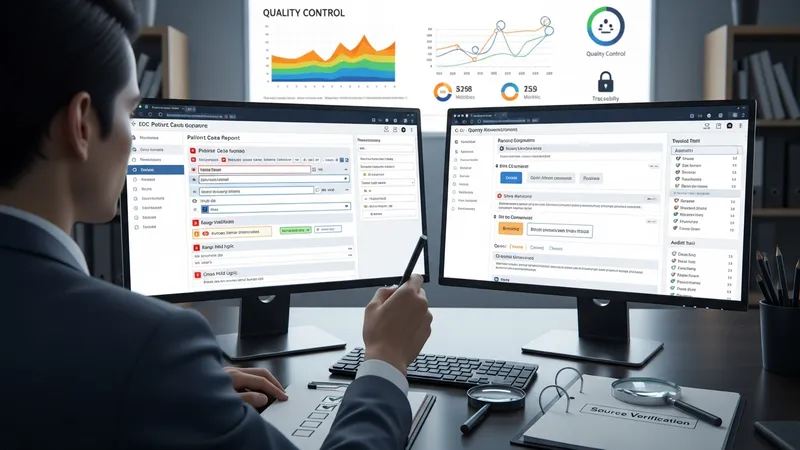
Quality control processes often use monitoring metrics and data listings to identify patterns that might indicate systematic issues such as misunderstanding of field definitions or equipment calibration differences. Periodic database reviews and centralized statistical monitoring may detect outliers or trends that warrant targeted source verification. These reviews can inform updates to edit checks and training materials, though changes during a live study usually follow a controlled process to maintain data integrity and traceability.
Audit trails in EDC platforms typically record who accessed or modified data, the timestamp of the change, and the prior and updated values. Such logs support accountability and may be requested during audits or inspections. Electronic signatures and access control measures further support compliance by tying actions to authenticated users. Documentation of system configuration and validation activities is commonly maintained to demonstrate that the system performs as intended for its specified use.
Handling sensitive data and privacy considerations often involves de-identification or pseudonymization approaches for analysis datasets. Role-based access controls and encryption of data in transit and at rest can help limit exposure of identifiable information. Data retention policies for trial records usually follow applicable regulations and sponsor policies, and decisions about the timing and format of archive exports may be planned well before study closeout to ensure long-term accessibility.
Workflow features in EDC systems often encompass visit scheduling, task lists, and notifications for outstanding data actions. These features can help sites and study teams track visit windows and outstanding queries, though actual usage patterns may vary by site capability and study complexity. Randomization modules or integrations with allocation systems may be embedded or linked, supporting blinded or open-label designs while maintaining necessary separation between randomization activities and data access for analysis.

Monitoring strategies that rely on EDC data commonly combine centralized statistical checks with targeted on-site or remote source data verification. Central monitors may review query metrics, data submission timeliness, and critical variable completeness to prioritize site contacts. Operational considerations include bandwidth for real-time monitoring, resource allocation for query resolution, and procedures for documenting deviations and their impact on the study database and analysis populations.
User roles and permissions are central to workflow governance. Typical role definitions separate data entry, data review, and database administration functions to maintain separation of duties. Training logs and competency assessments may be stored alongside user accounts to document who is authorized to perform specific actions. Change control procedures for form updates, validation rule changes, and system patches usually follow documented approval paths to preserve data integrity during the trial.
Performance metrics and operational reporting can aid study oversight by providing aggregated views of enrollment, query backlog, and data completeness. These reports may be scheduled or generated on demand and can inform resource planning for monitoring and data cleaning activities. When planning for multi-center trials, variability in site workflows and technical capabilities is often considered, and contingency plans for sites with limited connectivity or staffing are commonly discussed during study setup.
Integration between an EDC and other clinical systems often reduces duplicate entry and supports cohesive operational workflows. Common integrations include laboratory data transfers, clinical trial management system (CTMS) links, and connections to electronic patient-reported outcome platforms. Technical options range from batch file exports to real-time APIs; the chosen approach typically reflects study timelines, vendor capabilities, and data governance agreements. Planning for mapping, message formats, and error handling is usually advisable before go-live.
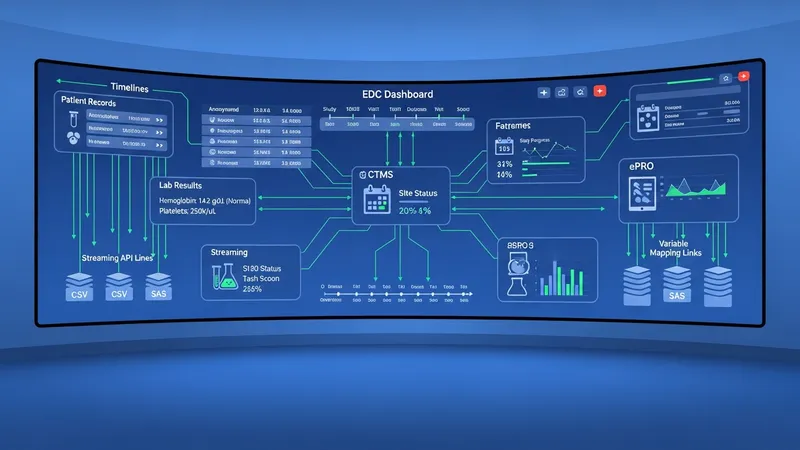
Data export and standardization practices often aim to produce analysis-ready datasets with clear provenance. Many teams map EDC variables to standardized models for analysis and regulatory submissions, and may use widely accepted metadata and dataset conventions to facilitate downstream work. Export formats can include SAS, CSV, or standardized clinical data interchange models; documentation of variable derivations and transformation steps is useful for reproducibility and audit purposes.
Closeout activities for an EDC generally include final data cleaning, query resolution, database lock procedures, and archive exports. Database lock is typically a controlled step that may involve sign-off from clinical, data management, and statistical personnel once the dataset meets predefined completeness and quality criteria. Archived data and system documentation are retained according to applicable policies and standards so that the trial record remains accessible for future review or regulatory inspection.
Long-term considerations may address data accessibility, retention periods, and the potential need for dataset reprocessing if analysis methods change. Preservation of metadata, audit logs, and system configuration notes can support later attempts to reproduce results or answer regulatory queries. Lessons learned about integrations, validation practices, and operational workflows may also inform the design of future studies and the selection of data capture approaches for different study types.