
Metal roofing refers to roof coverings made from metal panels or shingles that serve as the outer weather-resistant layer of a building. These systems are manufactured from a range of metals and are formed into different profiles designed to shed water, accommodate roof slope, and interface with flashing and ventilation elements. Metal roofing may be used on both low-slope and steep-slope roofs; specific panel profiles and fastening methods are selected to match structural conditions, local climate, and aesthetic preferences. The term encompasses materials, panel styles, coatings, and installation approaches that together determine performance and lifecycle characteristics.
Key aspects that define a metal roofing system include the base metal (for example steel, aluminum, copper, or zinc), the panel or shingle profile, the method used to secure panels to the roof deck, and surface treatments or coatings applied for corrosion resistance and reflectivity. Panels can be manufactured in continuous lengths or modular sections, and seams may be mechanically seamed, crimped, or fastened through the face. These components interact with roof underlayment, fasteners, flashing, and roof penetrations; design choices often aim to balance durability, maintenance needs, and thermal or acoustic performance.
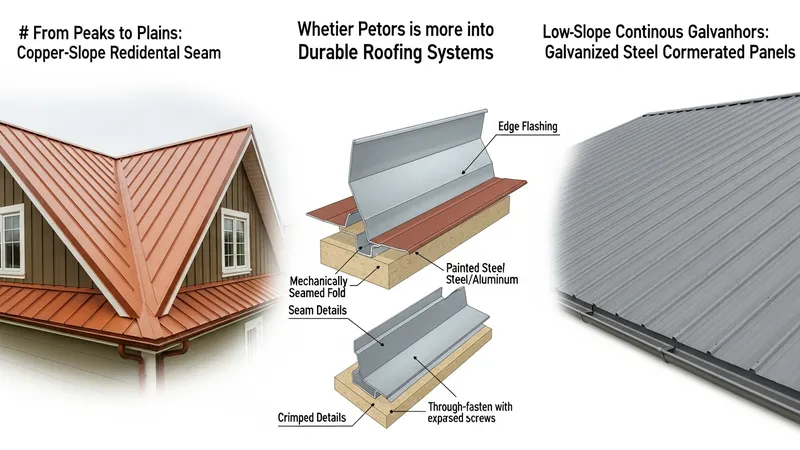
Steel is a widely used base metal and is often supplied in coated forms such as galvanized or galvalume to resist corrosion; it typically offers strong structural properties and cost-effectiveness. Aluminum is lighter and resists corrosion in coastal or saline environments; it may be selected where weight reduction is relevant. Copper and zinc are more corrosion-resistant in many environments and develop natural patinas over time, which can be desirable for certain architectural applications but often involves higher material costs. Choice of base metal may also influence fastener selection, panel attachment details, and expected maintenance patterns.
Surface coatings applied to metal roofing commonly include organic paint systems and inorganic metallic coatings. Fluoropolymer-based paints (for example, PVDF-type finishes) may be applied for improved color retention and resistance to chalking over time, while silicone-modified polyesters can be a lower-cost painted option. Metallic coatings such as zinc or zinc-aluminum alloys are applied at the mill to provide a sacrificial corrosion layer on steel substrates. Coating selection can affect thermal emissivity and solar reflectance, which may influence building energy performance when combined with insulation and ventilation strategies.
Panel profiles and attachment methods affect waterproofing and wind performance. Standing seam systems use interlocking seams and concealed clips that permit thermal movement, potentially reducing stress on fasteners. Through-fastened panels secure directly to the deck with exposed fasteners and rely on proper washer detail and overlap to manage leaks; these are often simpler to install. At penetrations and eaves, flashing details and sealant compatibility must be considered to manage water run-off and ice/snow conditions. Each profile and method may be more or less suitable depending on roof slope, wind exposure, and local precipitation patterns.
Thermal and acoustic performance of metal roofs may be influenced by substrate, underlayment, insulation, and ventilation rather than the metal alone. Reflective coatings and lighter colors can increase solar reflectance and reduce heat gain in warm climates, often affecting peak cooling loads. Conversely, insulation strategies and air barriers beneath the roof deck determine conductive heat transfer and condensation risk. Acoustic perception of rain or hail on a metal roof may vary; adding insulation or sound-damping layers can alter interior noise levels without changing exterior performance characteristics.
When assessing suitability, consider life-cycle factors such as expected service life of the base metal and coating, maintenance intervals for fastener checks and sealant renewal, and potential trade-offs between upfront material and installation costs versus longer-term durability. Metal roofing systems may be applied across residential, commercial, and industrial buildings; selection often reflects structural capacity, desired appearance, and climate considerations. The next sections examine practical components and considerations in more detail.
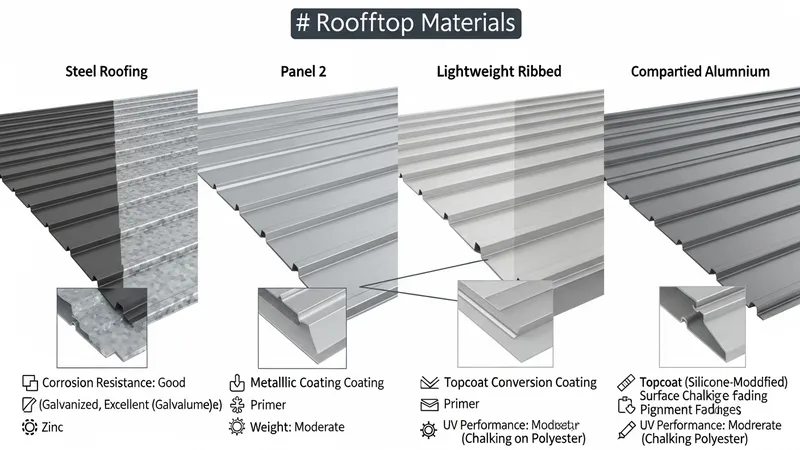
Base metals used for roofing—steel, aluminum, copper, and zinc—each present distinct corrosion and weight characteristics that influence selection. Steel is often provided with mill-applied coatings such as zinc (galvanized) or zinc-aluminum (galvalume) to improve corrosion resistance; these coatings may extend expected service life in many environments. Aluminum offers inherent corrosion resistance and a lower density, which can reduce structural loading. Copper and zinc are more corrosion-resistant and form protective films with age. Coating systems applied after forming include various organic paints and fluoropolymer finishes that may increase color stability and surface durability over time.
Coating type affects not only aesthetics but also weathering and thermal behavior. Organic paint systems (polyester, silicone-modified polyester, fluoropolymer) vary in UV resistance and chalking rates; fluoropolymer finishes often show lower fade rates under prolonged sun exposure compared with standard polyesters. Metallic coatings applied at the mill act as sacrificial barriers on steel. Reflective pigments and light colors can enhance solar reflectance and reduce surface temperatures, potentially affecting building energy flows. Considerations often include compatibility between metal substrate and coating chemistry to prevent premature degradation.
Edge and accessory components like flashing, trim, and fasteners must be selected with material compatibility in mind to avoid galvanic corrosion. For example, dissimilar metals in contact in wet environments may accelerate corrosion unless isolating materials are used. Fastener materials and coatings are equally important; stainless steel or coated fasteners are commonly paired with certain metals to reduce long-term corrosion risk. Sealants and underlayment choices also interact with coatings and metal substrates and may affect adhesion and longevity.
Practical considerations include anticipated maintenance cycles and the environment where the roof will be located; marine or industrial atmospheres may require specific alloys or thicker coatings. When evaluating materials, lifecycle considerations such as recyclability, repairability, and long-term aesthetic change (for example, patination of copper) may be relevant for design decisions. These factors often inform trade-offs between initial cost, weight, and expected maintenance needs.
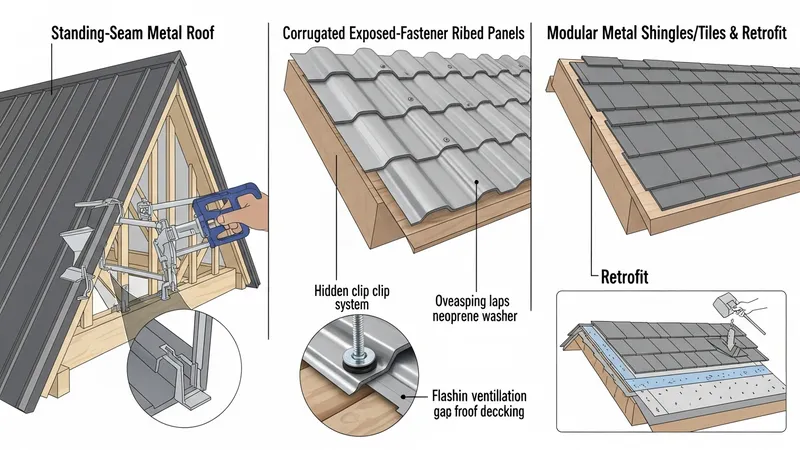
Panel styles commonly include standing seam, corrugated or exposed-fastener panels, and modular metal shingles or tiles. Standing seam panels have raised seams that interlock and conceal fasteners, and they often allow clips for thermal movement. Exposed-fastener panels are typically ribbed or corrugated and are attached with fasteners that pass through the panel; they tend to be simpler and quicker to install but may require more attention to sealing and washer performance. Metal shingles offer a modular aesthetic that may align with certain architectural styles while still providing the benefits of metal substrates.
Installation methods vary by profile and roof geometry. Standing seam systems often require precise panel layout, continuous or mechanical seaming, and clip attachment to purlins or decking. Exposed-fastener systems require appropriate fastener spacing, proper washers, and overlap to manage water infiltration. For retrofits, metal panels may be installed over certain existing roof coverings when allowed by local code and structural capacity; underlayment and ventilation strategies differ between new construction and retrofit contexts. Installation quality, including flashing and penetration detailing, typically has a strong influence on long-term performance.
Fastener selection and placement are important installation considerations. Fasteners may be wood screws, self-drilling screws, or through-bolts depending on substrate and profile; protective washers and compatible coatings reduce leak potential. For standing seam systems, concealed clips that attach to the deck allow thermal movement while keeping fasteners shielded. Attachment to cold-formed metal framing or wood substrate may require different fastener types. Proper torque, sealant compatibility, and fastener embedding depth are commonly cited as installation variables that affect the durability of the system.
Detailed flashing and transition work at eaves, ridges, valleys, chimneys, and penetrations often determine the system’s weather tightness. Integration with gutters, roof-edge trim, and snow-retention devices must be coordinated with panel layout and fastener locations to avoid conflicts. Installers may sequence work to manage panel expansion and contraction and to maintain continuous drainage planes. These procedural considerations can influence labor intensity and may affect comparative cost and timeline expectations for metal roof projects.
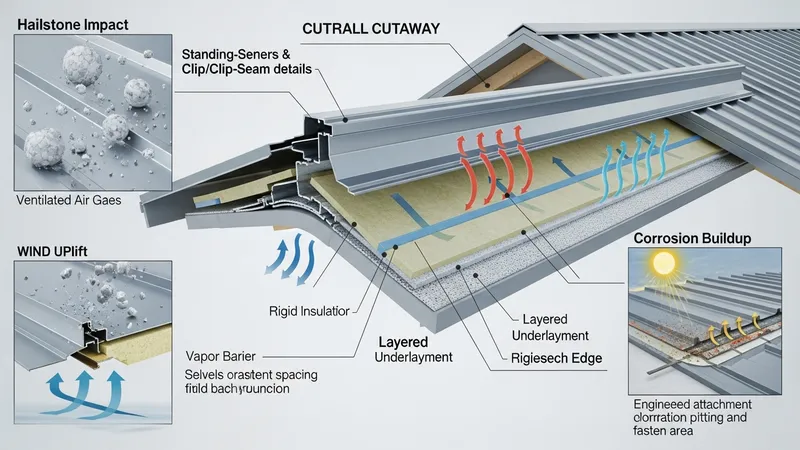
Metal roofing systems are often evaluated for durability in terms of resistance to corrosion, wind uplift, hail, and UV exposure. Corrosion resistance depends on base metal selection and coatings; thicker coatings and certain alloys typically perform better in corrosive environments. Wind resistance is a function of panel profile, seam and fastener design, and attachment spacing; some panel systems are engineered and tested for specified uplift ratings. Hail resistance varies by metal thickness (gauge) and substrate support; metal may dent under impact but is less likely to allow water penetration if deformations do not breach seams or fasteners.
Thermal performance of metal roofs is influenced more by insulation, underlayment, and ventilation than by the metal alone. Reflective coatings and lighter colors may increase solar reflectance and reduce heat absorption on sunny days, which can affect interior cooling demand in warm climates. Conversely, metal roofs with high emissivity may radiate heat effectively at night. Condensation control is a consideration for uninsulated metal roofs; vapor barriers, proper ventilation, and thermal breaks can reduce condensation risk where interior humidity is present.
Weatherproofing details such as seam configuration, sealants, and flashing complexity play a central role in long-term leak prevention. For sloped roofs in wet climates, panel overlap and continuous seams help shed water and limit reliance on sealants. In cold climates, attention to eave protection and ice-dam mitigation is often relevant to prevent water backup under panels. Regular inspections after major storms or seasonal transitions may identify fastener issues or sealant deterioration that can be addressed before leaks escalate.
Lifecycle assessments may consider repairability and recyclability; many metal roofing materials are recyclable at end of life, and localized repairs of panels or flashing are often feasible without full replacement. Cost-benefit considerations typically weigh material and installation costs against anticipated service life, maintenance needs, and potential energy effects when combined with appropriate insulation and ventilation strategies. These performance attributes are often considered together when planning a roof system for a specific building and climate.
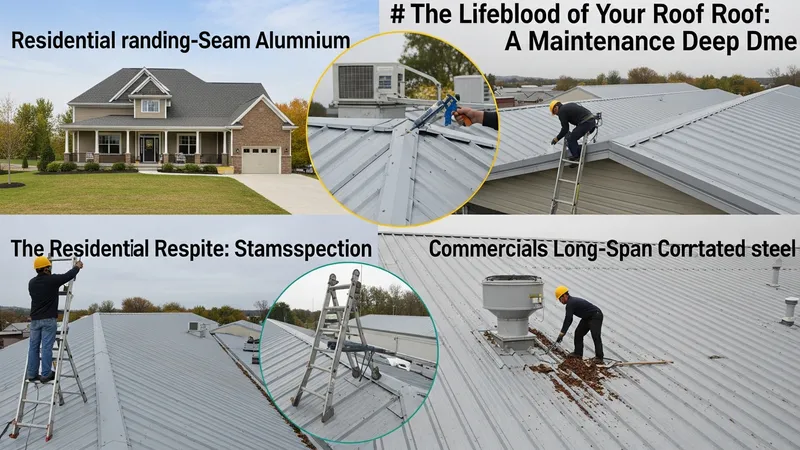
Metal roofing is used across residential, commercial, and industrial applications. Residential use often emphasizes appearance, weight, and compatibility with roof pitch, whereas commercial and industrial applications may prioritize economy, ease of installation, and long panel lengths. Agricultural buildings commonly use corrugated or through-fastened panels for simple coverage. Architectural uses may favor copper, zinc, or custom-finished panels for visual effect and patina development. Selection typically considers structural load capacity, insulation requirements, and local climate conditions.
Maintenance needs for metal roofs commonly include periodic inspection of fasteners and sealants, assessment of coating condition, and clearing of debris from gutters and eaves. Areas where different metals contact each other or where sealants age may require attention to prevent corrosion or leaks. Surface cleaning and touch-up painting may be performed to address localized coating damage. Maintenance intervals and specific actions often depend on the base metal, coating system, and environmental exposure, and they may influence anticipated lifecycle costs.
Cost factors include material type, panel profile, coating specification, roof complexity, and local labor rates. Metal roofs can range widely in installed cost depending on gauge, finish, and attachment method; for example, heavier-gauge metals and specialty alloys generally cost more than lighter gauges or standard painted steel. Roof geometry, penetrations, and accessory requirements (ridge caps, flashings, trim) increase installation labor and materials. Long-term cost considerations often include expected service life and projected maintenance rather than initial outlay alone.
When evaluating metal roofing for a specific project, typical considerations include structural load capacity, desired aesthetic, expected exposure conditions, and maintenance capacity. Specifying appropriate underlayment, compatible fasteners and flashings, and coatings chosen for the local environment may influence long-term performance. These factors together help inform design decisions and allow stakeholders to weigh trade-offs among weight, durability, appearance, and lifecycle costs.
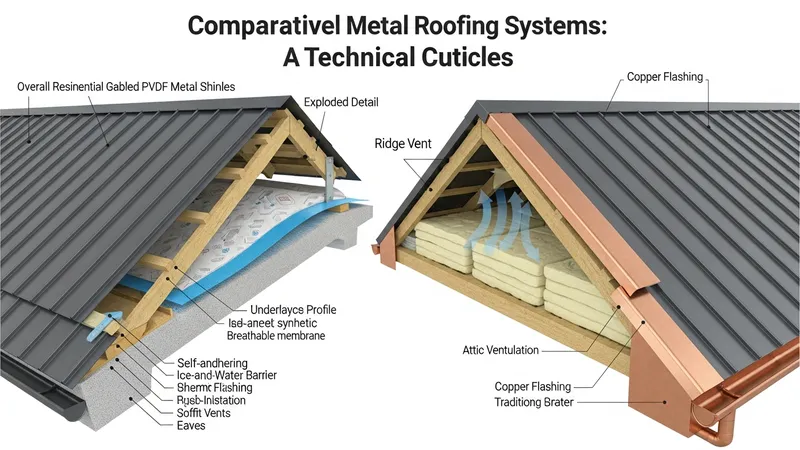
This article described the main components that define metal roofing systems: base metals, panel profiles, attachment methods, coatings, and accessory details. It outlined common examples such as standing seam panels, corrugated panels, and metal shingles, and examined how material selection and coating types can influence corrosion resistance, thermal behavior, and aesthetic change over time. Considerations like flashing detail, fastener compatibility, and underlayment play a strong role in weather resistance and maintenance needs. These interactions often guide choices for residential, commercial, and industrial applications.
Durability and energy performance depend on a combination of material properties, coatings, insulation, ventilation, and installation quality. Practical planning often involves assessing climate exposure, structural capacity, and maintenance expectations rather than relying on a single characteristic. Cost analysis commonly balances initial material and installation expenses against anticipated service life and maintenance. Readers interested in more technical specifications, code references, or climate-specific guidance may examine manufacturer data sheets, local building codes, and industry standards to inform design decisions.
By focusing on material attributes, panel styles, attachment methods, and maintenance considerations, designers and building owners can evaluate how metal roofing may align with functional and aesthetic goals. Further sections or resources typically cover product-specific technical data, tested wind or hail ratings, and detailed flashing diagrams for particular profiles. Continued review of the technical aspects can support informed planning for specific building conditions and performance expectations.
Overall, metal roofing combines a variety of materials and detailing options that may suit many building types; careful consideration of the interactions among materials, coatings, and installation methods can help align system characteristics with project objectives. End users or specifiers often consult technical documents and local code guidance for project-specific decisions. This concludes the five-page overview on metal roofing materials, styles, and applications explained.