
Assessing roofing systems for damage involves recognizing common failure modes and the early indicators that a roof may be losing its ability to shed water, resist wind, or support loads. This process typically includes visual checks at the roof surface and in the attic, attention to visible materials such as shingles and flashing, and observation of building interior signs like ceiling stains. Understanding the typical progression of problems—small defects that can widen over time—helps frame inspection priorities and informs decisions about appropriate corrective measures without implying a single fixed solution.
Early detection often focuses on a combination of surface-level observations and diagnostic testing. Surface observations can reveal loose, missing, or curled shingles, rusted or displaced flashing, and debris accumulation in valleys and drains. Diagnostic approaches may include measuring moisture beneath roof membranes, thermographic imaging to show temperature differentials that suggest wet areas, and routine attic inspections to spot insulation or ventilation issues. These approaches are complementary and may be applied together to form a clearer picture of roof condition and likely causes of visible symptoms.
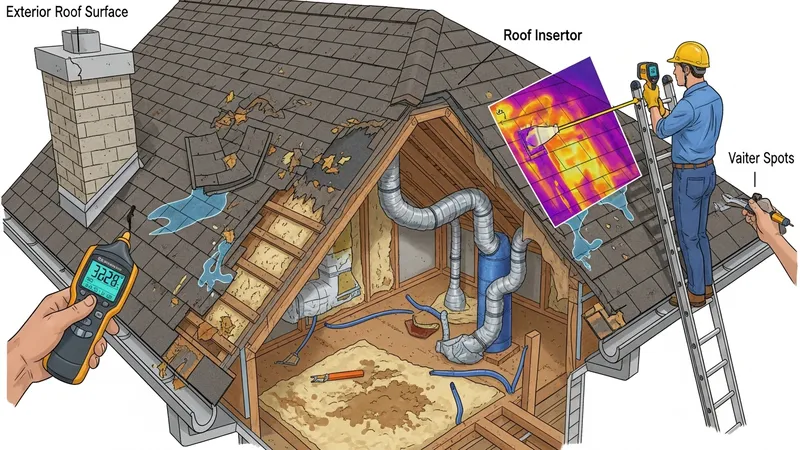
Comparing inspection approaches shows they often serve different roles. Visual inspections typically identify obvious defects such as missing shingles or damaged flashing and can be conducted seasonally. Infrared thermography may be used when visual signs are absent but moisture is suspected; it can highlight temperature differences that often correlate with wet areas beneath roofing layers. Moisture meters and attic inspections provide point verification of wetness and can help determine whether staining on ceilings is active leakage or historical. Together, these methods can form a layered diagnostic strategy without claiming uniform applicability across all roof types.
Many common roofing problems follow recognizable patterns. For example, shingle deterioration can progress from granule loss to cracking and eventual displacement, while flashing failures often originate at penetrations such as vents and chimneys. Ponding water can accelerate membrane breakdown on low-slope roofs and may coincide with clogged drains or insufficient slope. Ventilation deficiencies can lead to condensation in attics, which typically shows as dark stains or insulation compaction. Not every visible symptom indicates immediate structural failure, but patterns of change over time may point to accelerating deterioration that could warrant targeted intervention.
Inspection frequency and documentation are practical considerations that may affect long-term outcomes. Regular seasonal checks—after winter and late summer, for instance—can reveal storm-related damage or progressive wear. Recording findings with photographs and dated notes helps establish trends, such as recurring leaks at the same location or gradual shingle uplift. Documentation can also support decisions about repair scope, whether spot repairs of flashing and shingles or broader membrane replacement. These records may be useful for facility managers and homeowners seeking to monitor changes objectively rather than relying on single observations.
Material type and roof age often influence the kinds of warning signs that appear. Asphalt shingles may show curled edges and granule loss as they age, while metal roofs can present corrosion or seam separation. Built-up and single-ply membranes on low-slope roofs tend to reveal issues as blisters, punctures, or seam failures. Recognizing typical failure modes by material can guide inspectors toward the most likely sources of leaks or damage, though combination roofs and layered assemblies may require multiple diagnostic techniques to identify concealed deterioration accurately.
In summary, a structured approach to roof assessment combines surface observation, targeted diagnostics, and consistent documentation to identify common problems and early warning signs. Visual inspections, infrared imaging, and moisture metering each provide different kinds of evidence that may be used together to form a clearer assessment. By noting patterns such as shingle degradation, flashing displacement, ponding, and attic condensation, observers can prioritize areas for closer investigation. The next sections examine practical components and considerations in more detail.
Shingle-related defects often begin with superficial signs such as granule loss, cracking, or edge lifting; over time these may permit water infiltration beneath the shingle layer. Flashing issues frequently show as displaced or corroded metal at penetrations, which can create concentrated leak points. On low-slope roofs, ponding or membrane blisters may appear where drainage is inadequate. Structural warning signs such as sagging rooflines or localized deck deflection can indicate compromised substrate or timber rot. Observers typically note the material-specific signs first and then use targeted inspection methods to establish whether those signs reflect active or historical problems.
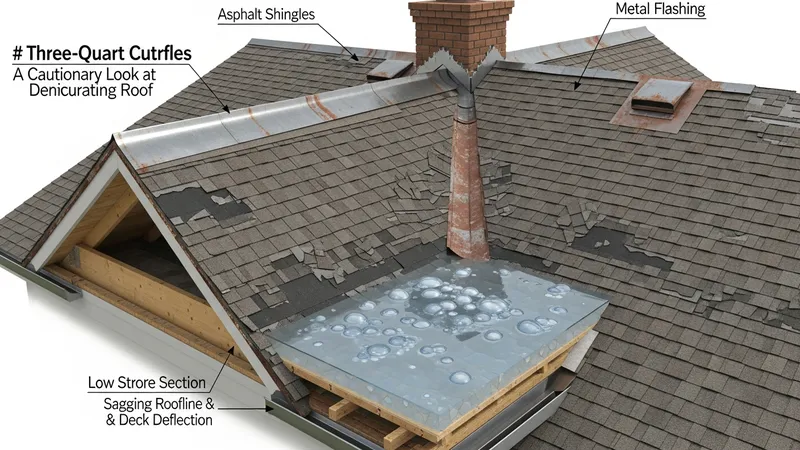
Surface debris and drainage obstructions can accelerate many defects by retaining moisture against roofing materials. Leaves and organic matter in gutters and valleys often block flow and increase the likelihood of ice dam formation in cold climates, which can back up water under eaves. Similarly, tree overhang can abrade surfaces and drop branches that damage membranes or shingles. While these are often secondary contributors rather than primary failures, their presence usually correlates with more rapid visible deterioration and may guide preventive maintenance priorities without implying that removal alone resolves all underlying issues.
Regular attic inspections complement exterior observations by revealing internal manifestations of roof problems. Dark stains on rafters, compressed or wet insulation, and active condensation are typical attic indicators that moisture has penetrated the roof assembly. In many cases, attic signs help distinguish between surface-level staining caused by past events and ongoing leakage. When attic findings are combined with exterior anomalies—such as gaps in flashing or cracked shingles—they can narrow the potential source to a specific roof area for further diagnostic testing, such as moisture metering or small-access probes.
Material aging and environmental exposure patterns often shape the defect profile for a given roof. Ultraviolet exposure, freeze-thaw cycles, and thermal movement can all contribute to progressive deterioration at joints and exposed edges. For example, repeated thermal cycling may loosen fasteners and split sealants, which typically leads to seam or penetration failures. Understanding these common pathways of degradation helps observers interpret isolated signs—such as a single lifted shingle—as potentially indicative of broader, environmentally driven processes rather than an isolated manufacturing defect.
Visual inspections are foundational and often the first step after notable weather events or during scheduled maintenance. Inspectors typically walk perimeter areas and use binoculars or close-up roof access to assess shingles, flashing, gutters, and rooftop penetrations. Photo documentation and descriptive notes help establish whether observed damage aligns with common problem patterns, such as wind-lifted shingles near ridge lines or missing granules concentrated on lower slopes. Visual findings commonly determine whether more specialized diagnostics—like moisture meters or thermography—are warranted to locate concealed issues.
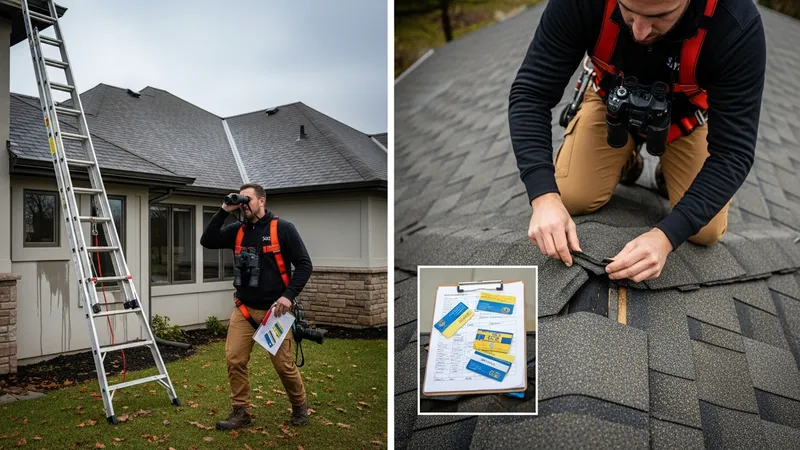
Infrared thermography is commonly used where visual signs are limited but moisture intrusion is suspected, particularly on large or complex roofs. Thermographic imaging may reveal temperature anomalies that correspond with wet insulation or trapped moisture beneath roofing layers, since wet areas often store and release heat differently than dry areas. This method typically requires calm, stable weather conditions and experienced interpretation, as thermal differentials can arise from factors other than water, such as material thickness or insulation gaps. It is generally one component of a broader diagnostic approach.
Moisture meters and small-access probes provide point confirmation after non-invasive methods suggest a suspect area. These tools measure moisture content in deck materials, insulation, and roofing substrates and can help determine whether a stain indicates active leakage. In many cases, attic access paired with moisture readings clarifies whether ceiling discoloration is from current infiltration or prior events. Combining these measurements with exterior observations, such as failed flashing near the stain, enhances the confidence in locating the most likely source without presuming a single cause from one indicator alone.
When inspection results are ambiguous, targeted destructive testing or controlled removal of localized roofing material may be necessary to confirm the condition of underlying layers. These invasive checks are typically limited to small sections and performed to clarify the extent of hidden deterioration, such as rot in roof decking or delamination in membrane systems. Such tests usually follow non-invasive diagnostics and visual findings and are used selectively to reduce unnecessary disturbance while improving the accuracy of the assessment and informing appropriate scope of corrective work.
Scheduled maintenance routines often include gutter cleaning, clearing debris from valleys, and inspecting flashings and seals to limit secondary contributors to roof damage. These activities may slow the progression of common defects by preventing water accumulation and reducing mechanical abrasion. Regular checks of attic ventilation and insulation levels can also address moisture-related problems by reducing condensation risk. Maintenance intervals commonly vary with climate and roof material; many observers suggest seasonal reviews but adapt frequency based on observed rates of change rather than a fixed universal schedule.
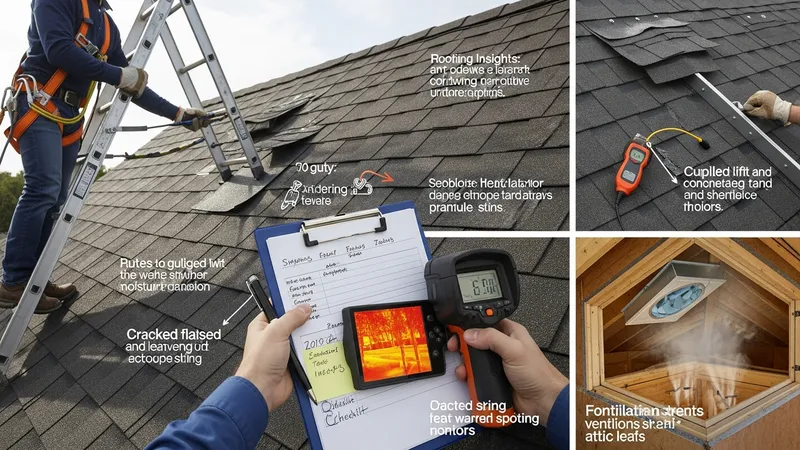
Recordkeeping and condition monitoring can make early warning signs more actionable by revealing trends such as recurring leaks at the same location or progressive shingle lift after storms. Photographic records, dated notes, and simple checklists often serve as an objective baseline for comparison over time. For example, noticing incremental granule loss concentrated on one slope over multiple seasons may suggest accelerated wear in that area, prompting closer inspection with moisture meters or targeted infrared surveys to determine if underlying layers are affected.
Addressing minor issues early can reduce the likelihood of more extensive deterioration, although responses should be guided by diagnostic findings rather than assumptions. For instance, replacing small sections of failed flashing or re-securing loose shingles in localized areas may resolve active leaks when underlying decking and insulation remain dry and sound. Conversely, when moisture meters and attic inspections indicate wet substrate or rot, more extensive measures may be needed. Decisions on repair scale typically rely on combining surface observations with diagnostic data to assess the true condition.
Environmental and site-specific factors are important to monitor as part of routine care. Proximity to trees, prevailing wind directions, and roof slope can influence the rate and type of wear an assembly experiences. For example, steep slopes may shed debris more readily but can show wind-related shingle damage; conversely, low slopes may be more susceptible to ponding and membrane wear. Noting these conditions alongside inspection findings helps prioritize monitoring and maintenance tasks that directly relate to the early warning signs previously observed.
Material type, age, and installation quality often influence both the manifestation of early warning signs and the options for repair. Different materials commonly exhibit different initial symptoms—shingles may crack or lose granules, metal may show corrosion or seam separation, and membranes may blister or puncture. Age-related degradation can make materials more susceptible to weathering and mechanical damage, so assessing the likely remaining service life of components alongside present symptoms helps determine whether localized repair or more extensive rehabilitation may be appropriate, described here as consideration rather than recommendation.
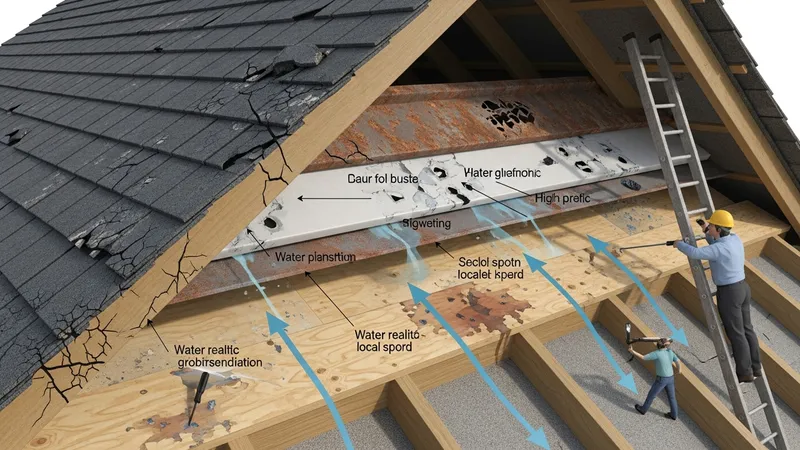
Structural factors under the roofing materials can affect observed warning signs and repair needs. Decking condition, roof slope, and underlying framing integrity influence how water moves through the assembly and where damage concentrates. For example, sagging or soft spots in decking often accompany prolonged moisture exposure and may indicate the need for substrate replacement rather than superficial patching. Inspectors typically evaluate these structural indicators through attic access, selective probing, or localized removal to determine the extent of deterioration beneath visible signs.
Climate and seasonal exposure patterns can accelerate specific failure modes and should be considered when interpreting warning signs. Freeze-thaw cycles may exacerbate cracking in brittle materials, intense sunlight can accelerate coating and sealant breakdown, and frequent storms may cause repeated wind uplift or impact damage. Accounting for these environmental influences helps clarify whether observed defects are likely isolated events or part of an ongoing stress pattern, which in turn informs the choice of diagnostic follow-up and potential repair scope.
Cost and resource considerations are often part of planning corrective actions but should be informed by accurate condition assessment rather than assumptions. Diagnostic tools and staged inspection methods can reduce uncertainty about the extent of hidden damage, potentially avoiding unnecessary wide-area interventions. Conversely, when diagnostics indicate widespread substrate wetting or structural compromise, more comprehensive actions may be required. Presenting data from inspections—photos, moisture readings, and thermographic images—can help stakeholders understand the condition objectively without implying specific procurement steps or recommending vendors.