
The concept presented here refers to a unified approach to protecting users, devices, and data across contemporary workplace environments. It combines multiple security functions — such as device-level defenses, email filtering, cloud application monitoring, identity verification, threat detection, and data controls — into a single operational view. The goal is to reduce gaps that appear when each control is operated independently, so security teams can see incidents and policy states across endpoints, mail systems, collaboration tools, and identity platforms in a coordinated way. Integration may help streamline incident handling and policy enforcement across distributed work environments.
In practical terms, integrated protection often means shared telemetry, correlated alerts, and centralized policy administration so that signals from one control can inform actions in another. For example, an anomalous login might prompt automated endpoint isolation recommendations or tighter email filtering for the affected account. Integration can also enable consistent data-loss prevention rules across cloud storage and email. While implementations vary by vendor and customer needs, common design aims include visibility across layers, prioritized detection outputs, and consolidated administration interfaces to reduce operational complexity.

Integrated platforms may aggregate telemetry from these components and apply analytics to detect multi-stage attacks. For instance, automated correlation can link a suspicious attachment delivered by email to later anomalous endpoint activity, which may help reduce mean time to detection. Architectures frequently include a data lake or event bus to centralize logs and a detection engine that can apply rules or machine learning models. Teams often adopt layered policies that combine preventive controls, detection analytics, and automated or manual response workflows so that alerts carry contextual information about affected assets and users.
Identity protection commonly forms a core pillar alongside device and email controls. Identity solutions can include multifactor authentication, adaptive access policies, and identity threat detection that flags credential abuse or lateral movement. When identity signals integrate with endpoint and cloud controls, an observed risky sign-in can trigger session restrictions or require additional verification. Organizations may also use identity-aware microsegmentation to limit resource access. These linkages typically require careful policy mapping and role definitions so automated responses do not inadvertently disrupt legitimate business activity.
Data security and governance are often addressed through a combination of classification, loss-prevention policies, and encryption. Integrated approaches may apply consistent labels and DLP policies across email, endpoint file storage, and cloud drives so that sensitive content is subject to the same handling rules wherever it resides. Metadata and file access logs can be centralized for auditing and incident response. Such coordination can assist legal and compliance teams in establishing retention and access controls and in supporting investigations with consolidated evidence of file movement or exfiltration attempts.
Centralized management consoles and reporting dashboards typically aim to reduce task duplication by offering a single pane of glass for policy configuration, incident triage, and compliance reporting. Centralization may also support role-based administration, where different teams can have tailored views and permissions. However, integration projects often require planning for data flows, API mappings, and change-control to maintain stable operations. Interoperability with existing security information and event management (SIEM) systems or orchestration tools can be part of the design to reuse established workflows and preserve institutional knowledge.
In summary, the described approach emphasizes coordinated controls across endpoints, email, cloud applications, identity systems, and data governance to support modern workplaces. Integration often reduces manual correlation work and can surface multi-channel attack patterns more clearly, while requiring deliberate policy design and operational processes. The next sections examine practical components and considerations in more detail.
Understanding component types helps clarify how integrated protection is assembled. Core components commonly include endpoint protection that monitors device activity and applies containment, email and collaboration security that inspects inbound and outbound messages and links, cloud access monitoring to discover and control application usage, identity services that govern authentication and access, and data protection that enforces handling rules. Each component typically contributes telemetry and enforcement capabilities. When these components exchange context, detection fidelity may increase because events are evaluated with information about the user, device posture, and data sensitivity.
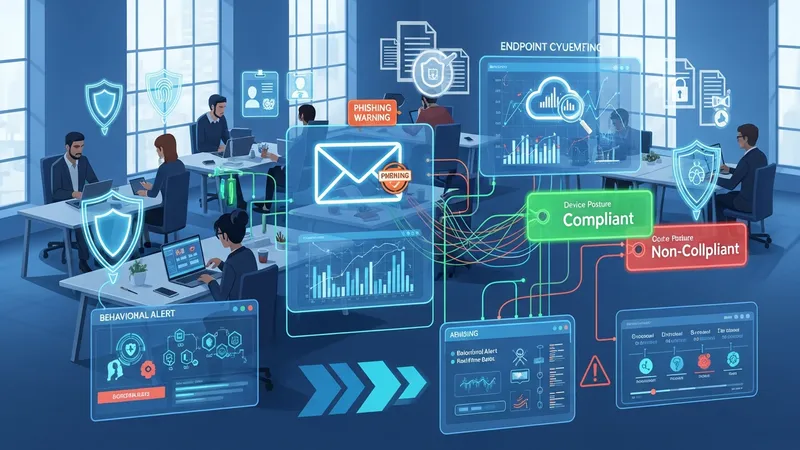
Endpoint capabilities often combine antivirus-style prevention with behavioral and forensic telemetry that supports investigation. Email controls focus on message hygiene and phishing defenses, while cloud monitoring tracks application usage and permission configurations. Identity components supply contextual signals such as recent authentication patterns and device compliance state. Data controls tag and protect information through labeling and encryption. Together these components form layers where prevention, detection, and response mechanisms can coordinate to address threats that span multiple channels.
Integration among components may be achieved through APIs, event streaming, or native platform connectors. Data normalization and timestamp alignment are operational considerations to ensure correlated events are meaningful. Security teams may prioritize which telemetry to centralize based on incident criticality and storage costs. When building or evaluating an integrated solution, organizations often examine how easily the components can share indicators, whether policies can be propagated across services, and how incident data is presented for triage and reporting.
Operational roles and processes also interact with component design. For example, a detection from endpoint telemetry may generate a severity-tagged alert for SOC analysts, who can view related email and identity events in the same incident record. Playbooks may indicate when automated actions are appropriate versus when analyst review is required. These procedural connections are part of component planning because integrated controls are effective only if response workflows and responsibilities are clearly defined and tested.
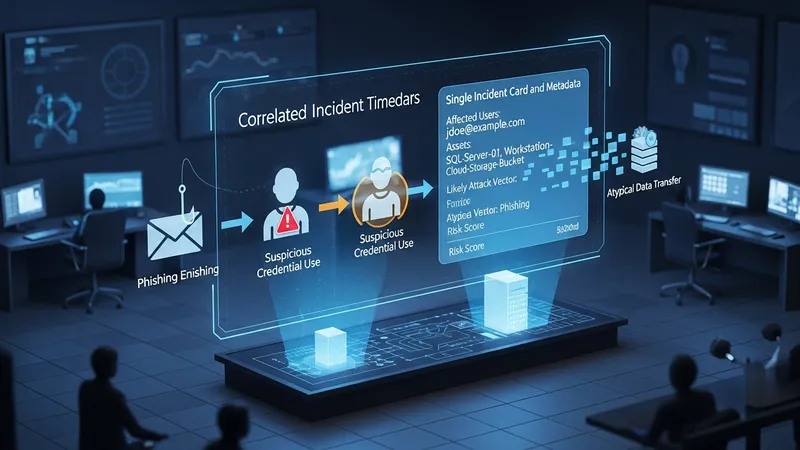
Detection and correlation are central to converting disparate telemetry into actionable incidents. Integrated systems often apply rules-based correlation, statistical anomaly detection, and machine-learned models to identify sequences of events that suggest compromise. For example, a sequence combining a phishing email, subsequent suspicious credential use, and atypical data transfer may be correlated into a single incident. The correlation layer typically assigns contextual metadata such as affected users, assets, and likely attack vectors to help prioritize response activities and reduce alert fatigue by grouping related events.
Response strategies within integrated platforms may include automated containment actions, guided remediation steps for analysts, and case management features that preserve forensic data. Automated responses can range from account lockdown or token revocation to endpoint isolation and blocking of malicious URLs. These automated actions often require configurable thresholds and safeguards to avoid disrupting legitimate operations. Many organizations adopt a mix of automated containment for high-confidence detections and analyst-driven actions for complex or ambiguous incidents.
Investigation workflows rely on retained telemetry and linked evidence across components. A cohesive incident record that includes email headers, file hashes, authentication logs, and process trees can shorten investigation time. Data retention policies and log centralization are therefore pragmatic considerations; teams balance forensic needs against storage costs and privacy requirements. Integrations with ticketing and case-management systems often streamline handoffs between security and IT operations or legal and compliance functions during incident handling.
Metrics for detection and response in integrated environments may include mean time to detection (MTTD), mean time to containment (MTTC), and the rate of correlated incidents versus independent alerts. These metrics can help teams evaluate whether integration reduces duplicated work or improves prioritization. However, measuring improvements typically requires baseline data and consistent definitions for alert categorization and incident closure to ensure comparisons over time remain meaningful.
Data protection and identity controls are complementary areas within integrated security. Identity controls address who is accessing resources and under what conditions, using techniques such as multifactor authentication, conditional access, and session monitoring. Data protection focuses on classifying, labeling, and enforcing handling rules for sensitive content across endpoints, email, and cloud storage. When identity signals inform data policies, access can be adapted based on user risk, device posture, or location to reduce exposure of sensitive assets while maintaining business workflows.
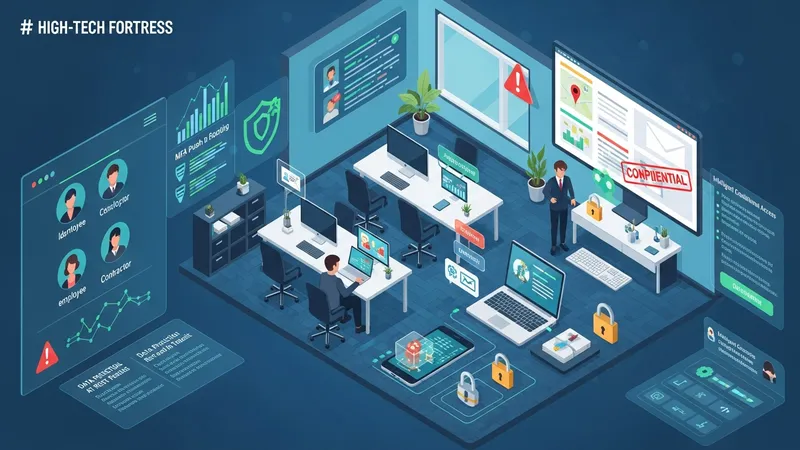
Common implementations map data classification to access and sharing controls so that labeled content triggers specific restrictions or encryption. For example, a file tagged as confidential may be blocked from sharing with external domains or require additional authentication for download. Identity-aware policies may throttle session capabilities or require step-up authentication for risky requests. These combined controls generally aim to limit unnecessary data exposure and to provide audit trails for compliance and incident review.
Integration challenges often include consistent classification across disparate storage systems and maintaining synchronized identity attributes across directories and cloud providers. Organizations typically use connectors and automated scanning to discover sensitive content and to apply labels consistently. Identity synchronization and governance processes help ensure that user attributes used in policy decisions are current, reducing false positives and avoiding overly restrictive access that could impede productivity.
Privacy and legal considerations shape how data protection and identity information are stored and used. Role-based access to logs, data minimization practices, and data retention schedules are common governance controls. Security teams often work with legal and compliance stakeholders to define acceptable retention and to ensure that monitoring practices align with applicable laws and internal policies. Clear documentation of these practices supports auditability and helps balance security monitoring with privacy obligations.
Deployment planning for integrated protection typically addresses architecture, interoperability, and phased adoption. Organizations often begin with high-value assets or high-risk user groups to limit scope while verifying policy effectiveness. Integration points may include connectors to identity providers, mail systems, cloud platforms, and endpoint management tools. Successful deployments commonly document data flows, expected alert volumes, and vendor API limitations to avoid surprises during scale-up. Pilot phases can reveal tuning needs for detection rules and help refine incident response playbooks before broader rollout.
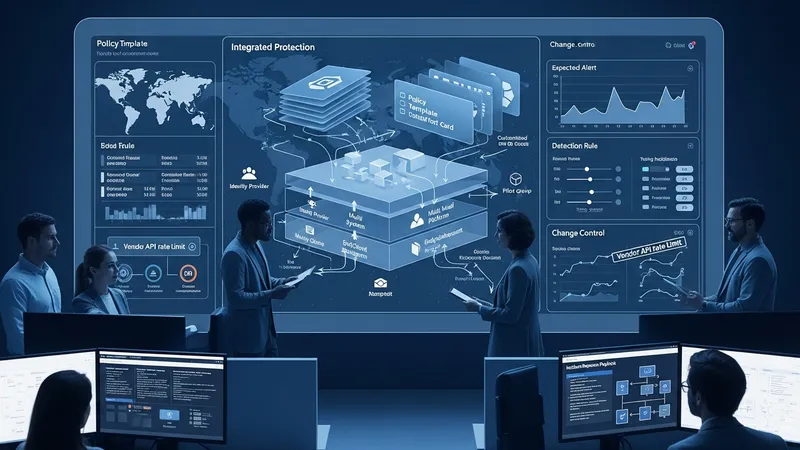
Management considerations encompass policy lifecycle, role assignments, and change control. Centralized policy templates may be applied and then fine-tuned for specific teams or locations. Role-based administration helps separate duties — for example, allowing policy authors to propose changes while requiring approvals from governance teams. Change-control procedures and staged rollouts reduce the risk of disruptive policy errors. Regular reviews of policy efficacy and incident trends can inform incremental adjustments to detection thresholds and containment actions.
Operational readiness includes training, runbooks, and exercises that validate the end-to-end incident handling path. Tabletop exercises and simulated incidents may surface gaps in automation, notification paths, or escalation procedures. Cross-team coordination with IT, legal, and business unit owners is important so that containment measures are aligned with operational needs. Documentation that captures expected behaviors for automated responses and manual interventions reduces ambiguity during actual incidents.
Ongoing evaluation often considers integration maintenance such as connector updates, API changes, and telemetry quality. Monitoring quotas, log retention costs, and alert tuning are recurring tasks to keep the integrated environment effective and sustainable. Periodic audits of configurations and alignment with compliance requirements help ensure that the integrated controls continue to support organizational risk management objectives without introducing unnecessary operational overhead.