
Combining several outstanding balances into a single loan involves replacing multiple repayment schedules with one consolidated obligation that typically has a single monthly installment. This approach centralizes outstanding balances such as credit balances, store accounts, and unsecured instalment debts into one structured repayment plan under a single creditor or repayment arrangement. The consolidated loan may be secured or unsecured, and it can carry different repayment lengths and interest calculations than the original obligations.
Consolidation generally changes how interest accrues, how payments are applied, and which fees are charged. Some consolidation options convert revolving balances into fixed-term instalments, while others use a credit facility secured by an asset. The process often involves closing or leaving open the original accounts depending on the consolidation method chosen, and the new single payment replaces multiple due dates and amounts.
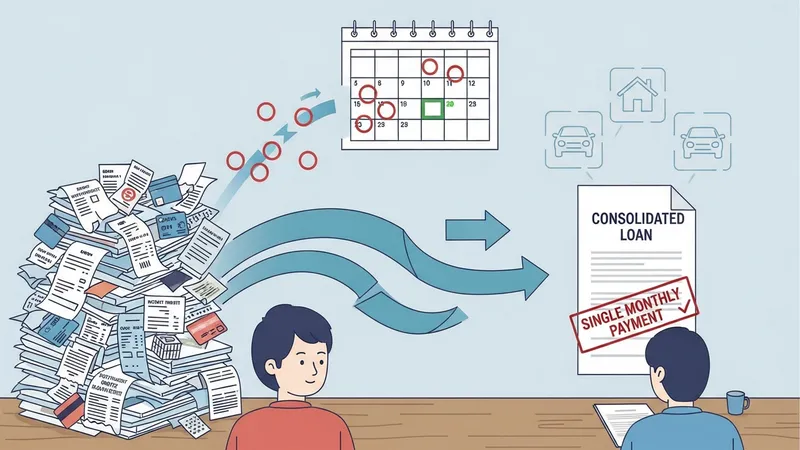
Different consolidation routes may change the effective cost and repayment timing. For example, moving revolving balances into a fixed-term instalment can produce predictable monthly obligations but may extend the repayment horizon, which could increase total interest paid over time. Conversely, using a secured facility may reduce periodic interest rates but can attach a secured interest to an asset, which is an important trade-off to consider. Readers should view these options as alternative methods for centralising repayment rather than as uniform solutions.
Fees and introductory incentives can affect the near-term and long-term costs of consolidation. Promotional low-rate periods on revolving accounts may last a limited time, and balance transfer or origination fees can offset initial savings. Secured loans may involve closing costs or appraisal fees, while non-profit arrangements typically include administrative fees that vary by provider. When estimating comparative cost, it can be helpful to consider both the stated rate and any up-front or ongoing charges that may change the overall expense profile.
Eligibility criteria often differ by consolidation method and by lender or agency. Unsecured personal loans typically require assessment of credit history, income stability, and repayment capacity. Balance transfer options generally depend on available credit limits and account standing. Secured loans may accept lower credit profiles in exchange for collateral. Non-profit plans usually require documentation of income and expenses and rely on creditor participation in negotiated terms. These eligibility differences can influence which consolidation approach is feasible for an individual.
Potential limitations commonly include the risk of extending repayment durations, which can increase total interest paid even when monthly instalments fall, and the possibility that original accounts remain open and available for new borrowing unless explicitly closed. Consolidation may also affect credit-reporting items such as the mix of accounts and utilisation ratios, which can influence credit profile metrics. Each method carries trade-offs related to cost, flexibility, and risk that merit careful review.
In summary, centralising multiple obligations into one structured loan or plan aims to simplify repayment logistics and may change cost, risk, and eligibility factors. Different methods—revolving balance transfers, unsecured instalment loans, secured facilities, and managed payment plans—offer varied combinations of predictability, cost, and collateral considerations. The next sections examine practical components and considerations in more detail.
Consolidation can be delivered through several loan structures that influence repayment predictability and cost. Fixed-term instalment loans convert a set of outstanding balances into a loan with a defined term and regular principal-plus-interest payments, offering predictability in when the debt will be repaid. Revolving credit transfers maintain variable cycles and require ongoing management to avoid new revolving balances. Secured formats may offer longer terms and lower nominal rates but introduce collateral-related considerations. Understanding the structural differences helps assess how each option aligns with cash-flow and risk preferences.
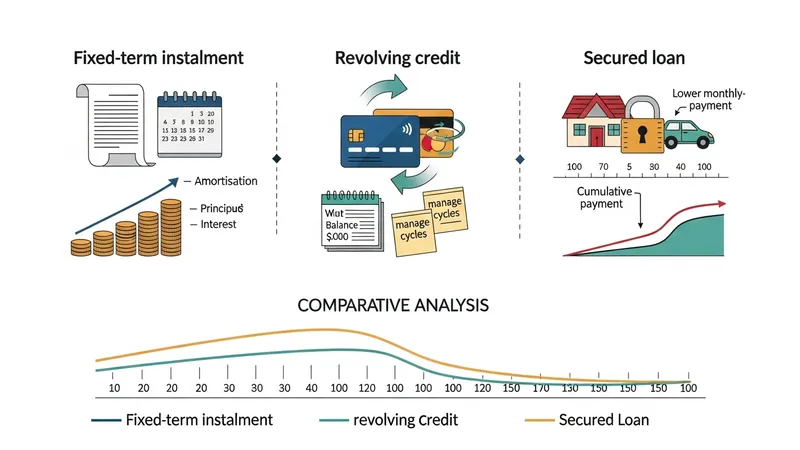
Amortisation schedules differ by structure and directly affect how much of each instalment reduces principal versus paying interest. Fixed-term amortising loans typically shift more payment toward principal over time, while revolving structures can permit minimum payments that prolong balances. Secured loans with longer terms may produce lower monthly instalments but can result in higher cumulative interest if the term extends substantially. Evaluating sample amortisation scenarios may help illustrate potential outcomes without assuming any single result.
Loan documentation and contract terms often specify prepayment, default, and refinance conditions that influence long-term flexibility. Some lenders permit additional payments without penalty, which may shorten the term and reduce total interest; others include prepayment fees. Default provisions can vary and may be more consequential for secured arrangements. It is informative to compare contractual terms across providers, focusing on repayment schedule mechanics, prepayment treatment, and late-payment consequences rather than relying only on headline rate figures.
Insider considerations include reviewing whether consolidation will close or leave open original accounts, since open accounts may affect ongoing available credit and utilisation calculations. Another practical detail is whether the consolidation loan requires mandatory payment allocation rules or allows borrower discretion for extra payments. These elements can affect both short-term cash-flow planning and longer-term repayment outcomes; assessing them can clarify which structure aligns with a borrower’s repayment objectives.
Interest rates applied to consolidation options can be fixed or variable and may vary substantially across lenders and product types. Fixed rates provide stable periodic cost expectations, while variable rates can change with market indices and influence monthly instalments over time. Promotional introductory rates on certain revolving options may be low for a limited period before reverting to a standard rate. It is helpful to consider both the initial rate and likely future adjustments when comparing cost scenarios.
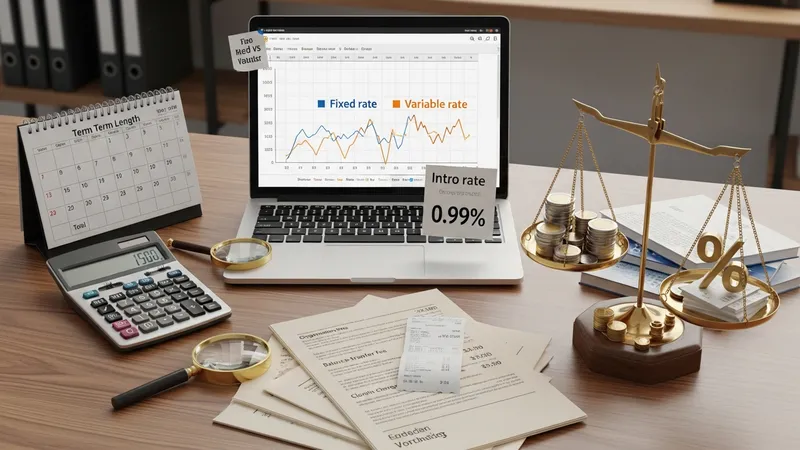
Beyond nominal interest rates, fees alter the effective cost of consolidation. Common fee types include origination or balance-transfer fees, closing costs on secured loans, and administrative charges for managed plans. These fees can offset apparent rate advantages, especially when balances are relatively small or when the promotional period is limited. A practical way to assess trade-offs is to project total payments across typical term lengths while including all known fees to see how they affect cumulative cost.
Another cost factor is term length: shorter terms may increase monthly instalments but often reduce cumulative interest, whereas longer terms can lower periodic burden while increasing total interest paid. Secured arrangements sometimes permit longer terms and lower nominal rates, which may or may not lower total cost depending on the rate spread and fees. It is useful to compare sample repayment schedules across term and rate combinations to estimate plausible differences in total repayment obligations.
As a consideration rather than instruction, plan for incidental costs such as late-payment penalties and potential costs of switching strategies mid-term. If a promotional rate expires, a borrower may need to reassess whether to refinance or to increase payments to limit interest accrual. These practical points may affect the apparent attractiveness of different consolidation routes and often influence the real-world cost outcome.
Eligibility for consolidation pathways typically hinges on factors such as credit history, income verification, and the presence of collateral for secured formats. Lenders often review repayment capacity and may request pay stubs, bank statements, or tax documents. For balance transfers, available unused credit limits and account standing are central. Non-profit arrangements may assess household budgets and creditor participation tendencies. These requirements can influence which consolidation approach a person is able to pursue.

Credit reporting effects may vary: converting multiple open revolving accounts into a single instalment loan can change the credit mix and utilisation ratios, which are elements commonly used by credit-scoring models. Closing accounts or reducing available revolving limits may raise utilisation metrics or shorten average account age, while successful timely repayment of a consolidated loan may demonstrate payment history strength over time. These shifts can have nuanced impacts on credit profiles that typically depend on individual circumstances.
Insider details to consider include the timeline for documentation processing and how long outstanding balances are settled with original creditors. Some lenders may pay creditors directly upon funding, which can reduce the time accounts remain outstanding, while others may require borrower coordination. Additionally, when a consolidation plan involves creditor negotiation, acceptance is not guaranteed and may take several weeks. Anticipating these timelines can reduce surprises during the consolidation process.
Another practical consideration is the potential for revised lending terms if income or credit conditions change during the application process. Prequalification tools that indicate likely rates and amounts without a full credit inquiry may help estimate options with less immediate impact on credit reports, but such tools vary by provider. These procedural details often matter in selecting the most appropriate route among the consolidation alternatives already outlined.
After consolidation, ongoing management often determines whether the approach achieves intended simplification and cost objectives. Regular budgeting to meet the single payment on time typically reduces missed-payment risk compared with managing many due dates. However, behavioural factors such as renewed use of closed or open revolving accounts can reintroduce balances. Monitoring account statements and employing automated payments as a personal organisational measure may help maintain consistent repayment patterns, stated here as a consideration rather than instruction.
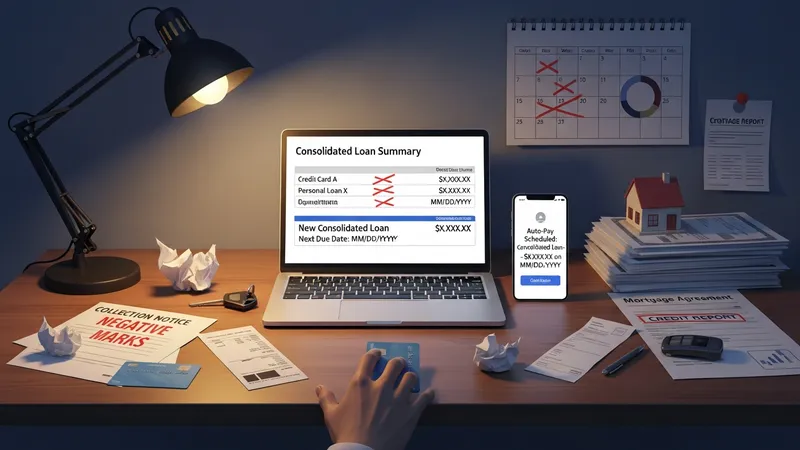
Risks associated with secured consolidation options include potential loss of the asset used as collateral if payments are missed and default rules are enforced. This risk profile differs from unsecured options, where the primary consequences are typically credit-reporting items and collection activity. Evaluating the relative risk of secured versus unsecured approaches is a central consideration when comparing methods introduced earlier, and it may affect longer-term financial planning.
Insider-level tips framed as considerations include tracking the effective annual cost that accounts for fees and interest, maintaining records of original account closures or settlements, and periodically reviewing the consolidated account’s amortisation to confirm expected progress. It can also be informative to reassess consolidation outcomes after key milestones—such as six or twelve months—to judge whether the single-payment arrangement meets intended cash-flow and cost objectives.
Finally, follow-up considerations may include the potential need to renegotiate terms or refinance if financial circumstances change. Market conditions and personal credit profiles can shift, and those changes may enable different options later on. Ongoing monitoring of personal finances and staying informed about available non-promotional alternatives may help ensure that a consolidation strategy remains aligned with current circumstances rather than becoming a fixed decision without periodic review.