
Long-term business loans provide multi-year financing intended to support capital investments, real estate purchases, large equipment, or business expansion. These loans usually have maturities that extend beyond short-term credit, include structured repayment schedules, and may involve collateral or personal guarantees. Lenders assess borrower profiles with a focus on ongoing ability to service debt over the full term, so underwriting emphasizes both historical performance and forward-looking cash flow estimates. This article addresses the core eligibility factors and the common application steps a business may encounter when seeking long-term financing.
Long-term facilities differ from short-term credit in amortization patterns, underwriting depth, and documentation requirements. Interest treatment, covenants, and security interests can vary by lender type and by whether the loan is secured by specific assets. Businesses can expect a staged review that often includes credit assessment, financial analysis, valuation of collateral, and legal review. Understanding the typical elements that lenders examine can help managers prepare accurate documentation and realistic timelines for decision-making.

Eligibility criteria commonly include business operating history, creditworthiness, and financial performance. Lenders often look for a track record of revenue generation, positive operating cash flow, and predictable expense structures. For many commercial bank term loans, a business may be expected to have multiple years of operations and stable revenue trends. For asset-secured financing, lenders may place greater weight on the recoverable value of collateral and less weight on short operating histories, though borrower credit still typically matters.
Credit and character assessments can involve both business and owner credit profiles where personal guarantees are customary. A lender may review credit bureau reports, outstanding obligations, and payment patterns to evaluate default risk. In some long-term arrangements, owners with stronger personal credit histories may secure more favorable underwriting terms. Conversely, weaker credit histories can lead to additional covenants, higher pricing, or requirements for increased collateral coverage.
Financial documentation typically required in long-term loan underwriting may include audited or reviewed financial statements, tax returns, accounts receivable and payable aging reports, and multi-year cash flow projections. Lenders often request documentation that allows them to model debt service coverage ratios and stress-test cash flows against slower growth scenarios. For real estate or equipment-secured loans, appraisal reports and proof of ownership or title documentation are commonly part of the package.
Loan terms and repayment structure influence total financing cost and operational flexibility. Interest may be fixed or variable, and amortization schedules can be fully amortizing, interest-only for a period, or include balloon payments at maturity. Fees, prepayment provisions, and covenant conditions can affect cash flow and refinancing options later. Businesses should expect lenders to negotiate terms that reflect assessed risk, collateral quality, and market conditions at the time of underwriting.
In summary, long-term business lending is an extended underwriting process that balances borrower credit, operational history, collateral, and cash flow projections. Typical eligibility components include evidence of sustained revenue, adequate documentation, and acceptable credit profiles; application steps often require staged submissions and third-party reports. The next sections examine practical components and considerations in more detail.
Creditworthiness and operating history are central eligibility components for long-term lending. Lenders commonly review both business credit records and owner or guarantor credit profiles when evaluating default risk. Many lenders may expect a business to have two to three years of consistent operating history, though programs that rely on asset collateral can sometimes accommodate shorter histories. Consistent revenue streams and demonstrated ability to cover operating expenses tend to be favorable signals. When personal guarantees are requested, an owner’s credit strength can materially influence the lender’s view and the terms offered.

Revenue and cash flow quality are evaluated through historical statements and projections. Lenders typically calculate debt service coverage ratios, which compare available operating cash flow to required principal and interest payments; a higher ratio may indicate stronger capacity to service long-term obligations. Seasonal variability, concentration of customers, and contract stability are often examined because they affect predictability of cash flows. Businesses with diversified customers and recurring contracts commonly present clearer repayment profiles, which may be reflected in underwriting outcomes.
Collateral and security interests affect eligibility and acceptable pricing. Asset-backed loans secured by real estate or equipment may allow lenders to extend credit where unsecured underwriting would not, because collateral provides a recovery path. Lenders often assess liquidation value, maintenance status of assets, and legal clarity of title. Where collateral coverage is limited, lenders may require supplemental measures such as additional guarantees, escrow arrangements, or stricter covenants to offset perceived risk over the loan term.
Other qualitative eligibility factors can include management experience, industry characteristics, and regulatory risks. Lenders often consider the team’s track record, industry cyclicality, and exposure to regulatory or technological disruption when pricing and structuring long-term loans. For newer businesses or those in higher-volatility sectors, lenders may request stronger collateral, more conservative covenants, or periodic financial reporting to monitor evolving risk across the loan’s life.
Assembling a complete documentation package typically speeds underwriting for long-term loans. Common elements include recent financial statements (audited or reviewed where available), tax returns, bank statements, organizational documents, material contracts, and ownership disclosures. Lenders may also request cash flow forecasts for the loan term that illustrate projected sources and uses. Third-party items such as appraisals, environmental assessments for real estate, and equipment valuations may be required depending on the collateral type. Providing clear, consistent records often reduces back-and-forth during due diligence.

The application process often proceeds through initial inquiry, submission of key documents, lender due diligence, and legal review. Initial prequalification may be based on high-level metrics like revenue ranges and collateral types, but full underwriting commonly involves deeper financial analysis and verification. Typical timelines can vary widely by lender type: institutional banks and government-backed programs may take weeks to months, while specialist asset lenders might complete reviews more quickly. Anticipating these timelines helps businesses plan financing and operational milestones.
Financial projections and supporting assumptions are an important part of the application. Lenders may request sensitivity analyses that show how debt service would be impacted under lower revenue or higher interest-rate scenarios. Providing transparent assumptions about growth rates, cost trends, and capital expenditure needs enables underwriters to assess sustainability of repayment across the loan term. Conservative projections that acknowledge downside scenarios often receive clearer consideration than overly optimistic forecasts without supporting evidence.
Legal and compliance steps can include title searches, security filings, and the drafting of loan agreements and covenants. Security instruments vary by asset: mortgages for real estate, chattel mortgages or security agreements for equipment, and assignments for certain receivables. Borrowers should anticipate negotiations over covenant language and the scope of permitted actions. Because these legal elements directly affect future flexibility, they commonly represent substantive parts of the final loan documentation and the timeline to funding.
Loan pricing and repayment structure are core determinants of long-term affordability. Interest rates may be fixed or variable and often reflect perceived credit risk, collateral quality, and prevailing market conditions. Amortization schedules determine monthly or periodic payment amounts and can significantly affect cash flow: longer amortizations reduce periodic payments but may increase total interest paid. Some long-term loans include initial interest-only periods or balloon payments at maturity; each structure has different implications for liquidity and refinancing risk.
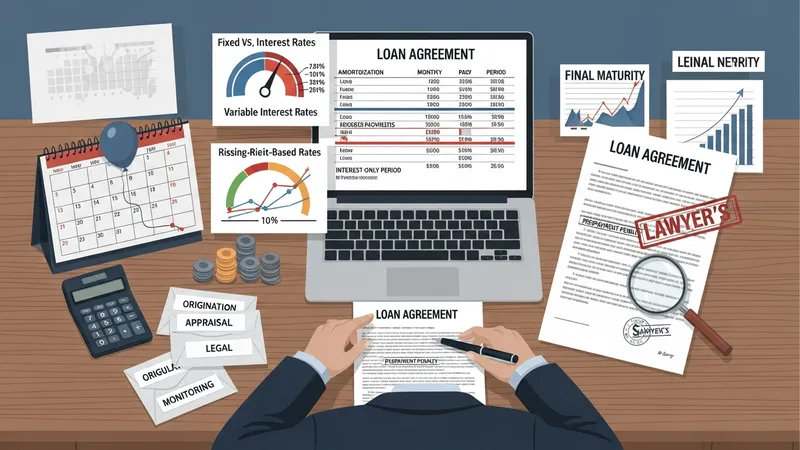
Fees and ancillary costs also influence total financing expense. Lenders may charge origination fees, appraisal fees, legal fees, and ongoing monitoring fees. Prepayment provisions and penalties can affect the flexibility to refinance if market conditions improve. When estimating the cost of long-term financing, businesses may factor in both scheduled interest and the likely duration-dependent fees, recognizing that some charges are one-time while others recur across the loan’s life.
Covenants and reporting requirements are common in long-term credit agreements. Financial covenants may require maintaining minimum liquidity levels, maximum leverage ratios, or minimum debt service coverage; breach of covenants can trigger remedial actions or default. Lenders can request periodic financial statements, budgets, or asset inspections to ensure ongoing compliance. Understanding these operational obligations is important because they influence management decision-making and the administrative burden of maintaining the loan.
Refinancing and exit strategies are considerations throughout the loan term. Businesses often assess whether projected cash flow improvements, asset appreciation, or changes in interest rates could enable earlier refinancing on different terms. Conversely, adverse shifts in performance can complicate refinancing and increase the importance of covenant flexibility and contingency planning. Evaluating repayment scenarios and potential refinancing paths provides context for selecting appropriate terms at origination.
Lenders conduct ongoing evaluation through periodic reporting and performance monitoring. Long-term loans typically include scheduled financial reporting such as quarterly statements, annual audited accounts, and compliance certificates to verify covenant adherence. Lenders may also perform site visits or asset inspections for collateral that can deteriorate, like heavy equipment. These monitoring activities are intended to detect early signs of cash flow stress and to preserve value in secured assets, rather than to intrude on operations.

Risk management provisions in long-term agreements often include events of default, notification obligations, and remedial steps. Examples of typical triggers include insolvency events, material misrepresentation, or breach of covenants. When covenants are at risk of violation, lenders and borrowers may negotiate waivers or amendments; such arrangements typically involve documentation and sometimes adjusted pricing. Treating covenants as active management items, and maintaining open communication with lenders, may reduce the likelihood of escalation.
Ongoing compliance can also involve insurance, tax, and regulatory obligations tied to collateral or project activities. Lenders commonly require borrowers to maintain adequate insurance coverage on secured assets and to remain current on tax and licensing obligations. Failure to maintain these obligations can affect the lender’s security position and may lead to enforcement steps. Maintaining organized records and proactively addressing administrative obligations tends to support smoother long-term lender relationships.
Finally, long-term loan relationships often evolve through periodic reviews, renegotiations, or restructurings as business conditions change. Economic shifts, changes in industry dynamics, or significant capital events can prompt formal discussions about modifying terms or pursuing partial refinancing. Approaching lender relationships with documented forecasts and transparent communication may facilitate constructive restructuring conversations if circumstances change during the loan term.