
Treatments that deliver radioactive isotopes to target cells can produce treatment-related adverse effects that affect multiple organ systems. When an isotope such as lutetium-177 is used in a radioligand approach, the therapeutic radiation is intended to concentrate in certain tissues while other tissues may receive incidental exposure. The effects experienced by patients and observed by caregivers can include changes in blood counts, transient organ-function alterations, and short-term symptoms such as nausea or fatigue. Understanding the typical patterns of these responses helps with monitoring and supportive care planning.
Clinical teams commonly track laboratory values and symptoms before, during, and after each administration to detect changes that may require intervention or altered timing of further doses. The timing and severity of effects can vary with the specific agent, cumulative dose, prior therapies, and the patient’s baseline health. Caregivers often play a central role in observing symptom onset, communicating concerns to the clinical team, and supporting adherence to radiation-safety instructions provided by treating centers.

Hematologic effects are among the frequently monitored outcomes after radioligand administrations. Decreases in blood cell counts can occur because bone marrow receives some radiation dose during systemic therapy; the degree and timing can depend on cumulative exposure and prior treatments that affected marrow reserve. Typical monitoring schedules often include baseline counts, short-interval checks several weeks after dosing, and periodic assessments for months thereafter. Clinicians may interpret trends relative to baseline to decide on supportive interventions or adjustments to future treatment intervals.
Renal and hepatic measurements may reflect how the radioligand is cleared and how non-target tissues respond. Many centers obtain baseline renal function tests and repeat these at intervals aligned with treatment cycles to detect changes early. Methods described in clinical literature for protecting kidneys during some peptide-based radioligand therapies include amino acid co-infusions or hydration protocols; such measures are documented as potential protective strategies in some settings but their use varies by regimen and institutional protocol.
Acute symptoms reported in association with radioligand therapy frequently include transient nausea and generalized fatigue. These symptoms often present within hours to days after an administration and may lessen over a short period. Pain flares in preexisting lesions and mild mouth or gastrointestinal irritation have been described in various reports. Symptom management typically emphasizes individualized assessment and may include standard supportive treatments; caregivers often help monitor symptom patterns and report changes that could influence clinical follow-up.
Radiation-safety considerations relate to the fact that patients briefly carry a small amount of radioactive material after systemic administration. Clinical teams provide instructions on minimizing close prolonged contact with vulnerable individuals, handling of bodily fluids, and disposal of contaminated materials in the short term. Follow-up schedules commonly combine symptom review, laboratory monitoring, and imaging as appropriate to assess both effect on disease and treatment-related effects. Caregivers usually receive guidance on what to watch for and when to contact the care team.
In summary, patients receiving lutetium-177–based treatments may experience a range of laboratory and symptom changes that call for organized monitoring and communication between patients, caregivers, and clinical teams. Hematologic, renal, and hepatic assessments, together with symptom tracking and radiation-safety guidance, form the basis of routine surveillance. The next sections examine practical components and considerations in more detail.
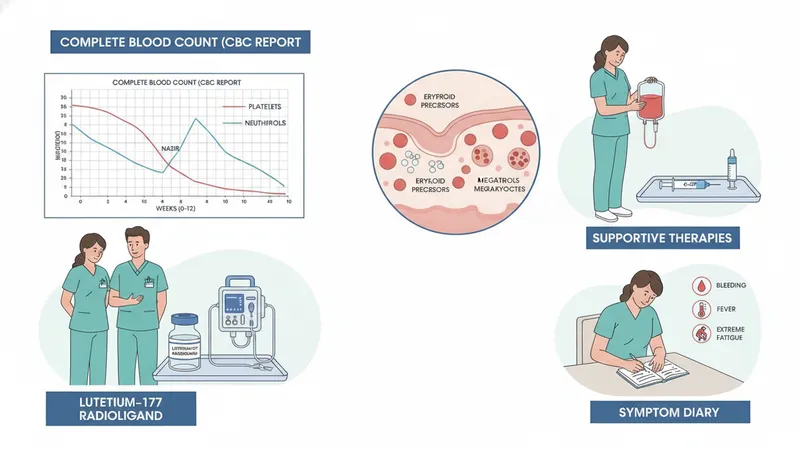
Bone marrow exposure can lead to reductions in one or more blood cell lines after systemic radioligand therapy. Decreases in platelets, neutrophils, and hemoglobin may develop over several weeks and sometimes peak within one to three months, though timing varies across studies and individual cases. Baseline marrow reserve, prior cytotoxic or radiation treatments, and cumulative radioactive dose can influence susceptibility. Monitoring schedules often include a baseline complete blood count (CBC), short-interval CBCs after each administration, and periodic checks during follow-up to detect delayed cytopenias.
When trends show falling counts, clinicians may consider pauses in additional dosing or supportive measures tailored to the specific deficit. Options described in clinical practice include transfusions for symptomatic anemia or thrombocytopenia and growth-factor support for prolonged neutropenia; these interventions are clinical decisions made case by case. Caregivers can help by recording bleeding, fever, or extreme fatigue and communicating these signs promptly to the treatment team to inform assessment and potential interventions.
Monitoring frequency may be intensified for patients with prior marrow compromise or those receiving multiple cycles within a short timeframe. Some institutions schedule CBCs weekly for the first month after an infusion and then extend intervals as counts recover, while other programs use less frequent checks guided by observed patterns. The overarching aim of surveillance is to identify clinically meaningful declines and allow the care team to weigh the benefits and risks of continued dosing in a measured way.
Clinical reports often describe a spectrum of hematologic effects rather than uniform patterns; therefore, interpretation of laboratory changes is contextual. Age, comorbidities, and concurrent therapies influence baseline values and recovery capacity. Clear documentation of baseline results helps differentiate treatment-related changes from other causes such as nutritional deficits, infection, or chronic conditions. Ongoing communication between patients, caregivers, and clinicians supports timely recognition and appropriate response.
The kidneys and liver may be involved in the clearance and metabolism of radioligands, so tracking renal and hepatic laboratory values is a common element of post-treatment surveillance. Creatinine and estimated glomerular filtration rate (eGFR) are typical markers used to assess renal function, while alanine aminotransferase (ALT), aspartate aminotransferase (AST), and bilirubin can reflect hepatic status. Changes in these parameters can be subtle or more pronounced depending on cumulative exposure, preexisting organ impairment, and concomitant medications that affect organ function.

Protective measures described in clinical literature for reducing renal uptake during certain peptide-based radioligand protocols include amino acid infusions and aggressive hydration; these are procedural choices that vary by treatment protocol and institutional practice. Such measures are presented in reports as methods that may reduce renal dose in some contexts, but their use depends on the specific agent and clinical judgment. Caregivers involved in treatment sessions may observe and report tolerability of any adjunctive infusions or hydration regimens.
Timing of renal and hepatic testing often aligns with treatment cycles: a baseline panel before the first administration, short-interval checks when clinically indicated, and periodic assessments during follow-up. Detecting early shifts in organ function enables clinicians to adjust dosing schedules or consider alternative supportive strategies. For patients with preexisting moderate to severe kidney or liver impairment, care teams commonly document baseline stability and discuss monitoring expectations more frequently.
Interpretation of organ-function changes requires attention to potential confounding factors such as dehydration, intercurrent illness, or interacting medications. A trend of slowly rising creatinine or transient enzyme elevations may prompt repeat testing and clinical correlation rather than immediate attribution to therapy alone. Caregivers who track fluid intake, medication changes, and symptoms like jaundice or reduced urine output can provide useful context for these assessments.
Patients may experience acute and subacute symptoms following administration that commonly include nausea, fatigue, and localized discomfort. Nausea often occurs within hours to a day and can be transient; fatigue can begin during the first week and persist for varying durations. Some individuals report temporary increases in pain at sites of known disease, sometimes described as a pain flare. Symptom onset and severity typically vary by individual and by the specifics of the treatment protocol.

Management of acute symptoms in clinical settings commonly relies on established supportive-care approaches used for other systemic therapies. Antiemetics, short-term analgesics, and adjustments in daily activity are described in practice documents as potential components of symptom control, subject to clinician evaluation. Caregivers frequently assist patients in tracking the timing, intensity, and triggers of symptoms so the health team can tailor recommendations during follow-up contacts.
Hydration, rest, and gradual return to activity are often advised as general supportive measures when fatigue or mild gastrointestinal symptoms occur; such advice is usually individualized by clinicians. Nutrition changes, small frequent meals, and attention to fluid balance may help alleviate mild nausea. Documentation of symptom patterns across treatment cycles helps clinicians assess tolerability and consider whether additional supportive resources are needed for subsequent administrations.
When symptoms are more pronounced or persistent, clinicians may evaluate other causes such as infection, medication interactions, or disease progression. Caregivers can facilitate timely assessment by reporting red-flag signs such as high fever, severe or uncontrolled pain, bleeding, or signs of dehydration. These observational roles contribute to safe monitoring and appropriate escalation when clinically indicated.
After systemic administration of a radioactive agent, patients typically receive institution-specific guidance on short-term radiation precautions; these instructions aim to limit close, prolonged contact with pregnant people and very young children for a defined interval and address handling of bodily fluids. The duration of precautions depends on the administered activity and local protocols, and clinic staff usually provide written and verbal instructions tailored to each treatment episode. Caregivers are often instructed on practical measures to reduce unnecessary exposure while supporting the patient.

Follow-up commonly combines clinical review, laboratory monitoring, and periodic imaging to assess both therapeutic effect and potential delayed treatment-related effects. Imaging schedules and laboratory intervals vary by protocol and by the clinical context, but common practice includes evaluations several weeks to months after therapy and then at regular intervals informed by disease behavior. Long-term monitoring may continue for months to years to detect late effects and to assess sustained response in disease-targeted imaging.
Discussion of long-term risks in clinical literature emphasizes that many late effects are infrequent and that individual risk depends on cumulative dose, prior therapies, and baseline health. Possible delayed effects that have been described include prolonged cytopenias or rare secondary effects; these are typically framed as potential considerations rather than expected outcomes. Maintenance of comprehensive medical records and clear communication with primary care and specialty teams supports coordinated long-term surveillance.
Caregivers play a continuing role in observing changes over time, maintaining appointment adherence, and helping to communicate symptoms or functional changes to the care team. Clear documentation of baseline status, treatment dates, and follow-up results helps both patients and clinicians interpret late changes in context. Ongoing dialogue with the treating center allows adjustments to monitoring cadence based on observed recovery patterns and evolving clinical needs.