
Cancer immunotherapy refers to treatments that engage or modify the immune system to recognize and act against malignant cells. Rather than relying solely on cytotoxic agents, these approaches seek to direct immune components—such as T cells, antibodies, and antigen-presenting cells—toward tumor-associated molecules. Targeted treatment approaches within immunotherapy can include cellular therapies that modify immune cells outside the body, antibody-based agents that bind tumor-associated proteins, and vaccine-like strategies intended to prime immune recognition. Each approach aims to increase specificity of the immune response and to limit collateral effects on non-malignant tissues, while acknowledging that responses and risks vary by tumor type and patient context.
These targeted immunotherapy modalities often differ in mechanism, timing, and logistical requirements. Some require complex laboratory manipulation of patient cells, others depend on systemic administration of engineered proteins, and several rely on molecular assays to identify suitable targets. Decisions about which modality may be appropriate typically consider tumor antigen expression patterns, prior treatments, patient comorbidities, and the balance of potential benefits and toxicities. Research and clinical practice increasingly emphasize biomarker-driven selection and combination strategies to address heterogeneous tumor biology and adaptive immune resistance mechanisms.
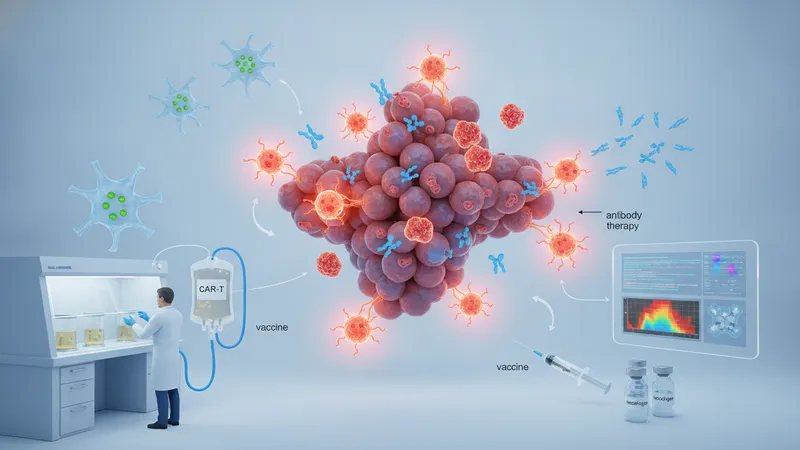
Comparative aspects of these modalities often relate to specificity, manufacturability, and time to administration. For example, systemic antibody therapies can typically be produced at scale and administered without individualized cell manufacturing, while adoptive cell therapies may require weeks of ex vivo processing and specialized centers for infusion. Checkpoint inhibitors may induce durable responses in a subset of patients but often require biomarker assessment to estimate likelihood of benefit. Vaccines and neoantigen approaches can be personalized but typically involve sequencing and bioinformatic workflows to identify candidate targets prior to formulation.
Mechanistic distinctions influence toxicity profiles and monitoring needs. Immune-related adverse events associated with checkpoint modulation commonly affect endocrine organs, skin, and the gastrointestinal tract and may require immunosuppressive management. Cellular therapies such as CAR T can be associated with acute inflammatory syndromes and neurologic effects that often require institution-level protocols and critical care resources. Bispecific antibodies may induce cytokine-mediated effects with differing onset and intensity depending on target engagement and pharmacokinetics.
Biomarker and tumor profiling play increasing roles in treatment selection but also have limitations. Commonly used assays include immunohistochemical detection of antigen expression, next-generation sequencing panels that estimate tumor mutational burden, and multiplex immunoprofiling that characterizes tumor-infiltrating lymphocytes. These measures may correlate with response probabilities in some settings but are not determinative for every patient or cancer type. Analytical variability, sampling bias, and evolving threshold definitions mean that profiling results are typically integrated with clinical judgment and trial evidence.
Practical considerations for implementing targeted immunotherapies often include logistical, regulatory, and reimbursement factors. Cellular therapies require manufacturing capacity, shipping logistics, and monitoring infrastructures, while antibody-based approaches involve drug supply and infusion capacity. Clinical trial landscapes also influence access to novel combinations and next-generation constructs. Cost, availability of specialized centers, and multidisciplinary coordination typically affect which modalities are feasible in particular clinical contexts.
In summary, targeted immune-based treatments encompass a range of techniques—from checkpoint modulation and engineered cellular products to antibodies and vaccines—each with distinct mechanisms, profiles, and practical requirements. Selection and sequencing commonly rely on tumor profiling, clinical history, and available infrastructure, and outcomes may vary according to these factors. The next sections examine practical components and considerations in more detail.
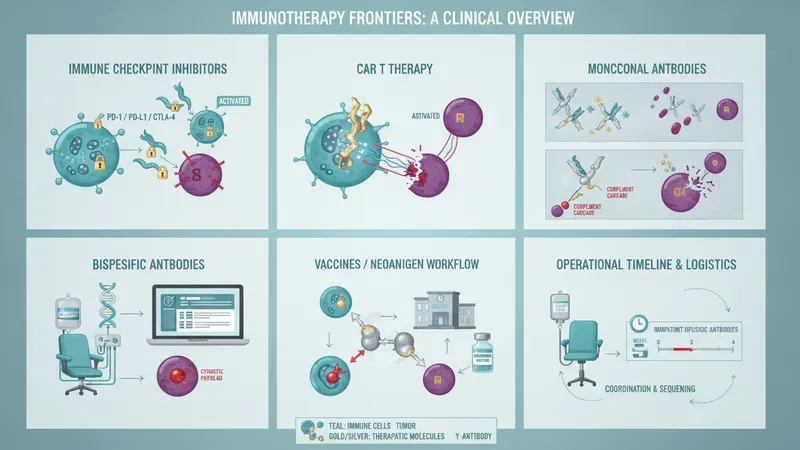
Immune checkpoint inhibitors act by disrupting inhibitory signals that limit T-cell activity; commonly studied targets include PD-1, PD-L1, and CTLA-4. CAR T-cell therapies create synthetic receptors that combine an antigen-binding domain with intracellular signaling motifs, enabling redirected cytotoxicity against cells expressing the target antigen. Monoclonal antibodies may function through direct blockade, immune-mediated cytotoxicity, or delivery of cytotoxic payloads when conjugated. Bispecific antibodies connect cytotoxic lymphocytes to tumor cells via dual binding domains. Vaccines and neoantigen strategies present tumor-related peptides to antigen-presenting cells, aiming to prime adaptive responses. Each category therefore exploits distinct steps of immune recognition and effector function.
These categories often differ in lead time to treatment and in coordination needs. Systemically administered antibodies may be available for immediate outpatient infusion, while autologous CAR T-cell processes typically include leukapheresis, manufacturing windows measured in weeks, and coordination with bridging therapies. Vaccine or neoantigen workflows involve sequencing, epitope selection, and formulation timelines that can vary substantially. Bispecific formats can be engineered for different half-lives and dosing schedules. Understanding these operational differences may help clinicians and institutions plan sequencing and supportive care.
Clinical contexts where one category may be favored often relate to tumor antigen expression and prior therapies. Cancers expressing lineage-restricted antigens or high levels of a target may be candidates for antigen-directed cellular therapies or antibody-drug conjugates, whereas tumors with higher mutational burdens can sometimes be more responsive to checkpoint modulation, potentially due to increased neoantigen load. However, these are probabilistic associations: responses can occur outside expected patterns, and predictive biomarkers remain an active area of study to refine selection.
From a research perspective, modular engineering and platform technologies are enabling variant constructs across categories. For example, CAR designs include costimulatory domains that can modify persistence and function; bispecific platforms vary in valency and geometry; vaccine technologies use peptide, RNA, or viral platforms with different manufacturing and immunogenicity considerations. These technical distinctions are driving iterative clinical testing to determine which design parameters correlate with durable antitumor activity and manageable safety profiles.

Tumor and immune profiling are central to selecting targeted immunotherapies and may include genomic, proteomic, and cellular assays. Commonly reported measures include PD-L1 expression by immunohistochemistry, microsatellite instability (MSI) status, tumor mutational burden estimated from sequencing panels, and assessments of tumor-infiltrating lymphocytes or gene expression signatures. These metrics often provide probabilistic information: for example, higher mutational burden may correlate with increased likelihood of response to checkpoint inhibitors in some cancers, but it is not universally predictive. Integrating multiple assays can sometimes offer a more nuanced view of tumor-immune dynamics.
Practical profiling workflows typically begin with tissue sampling and may incorporate circulating tumor DNA or peripheral immune assays as adjuncts. Next-generation sequencing panels can report actionable mutations and provide estimates of mutational burden; immunohistochemistry can localize protein expression within the tumor microenvironment. Considerations include sample adequacy, turnaround time, and analytic sensitivity. Profiles may change over time or following prior therapies, so repeat sampling is sometimes informative when making subsequent treatment decisions.
Limitations and variability in biomarker use should be acknowledged. Different assays and laboratories may use distinct thresholds or methodologies, leading to potential discordance. Tumor heterogeneity and sampling bias can result in under- or overestimation of target expression. Regulatory approvals and guideline recommendations for specific biomarkers vary by cancer type, which can affect insurance coverage and access. Clinicians often interpret biomarker results in the context of clinical presentation, prior responses, and available evidence from trials.
Emerging approaches seek to expand the biomarker toolkit with multiplex spatial profiling, single-cell sequencing, and neoantigen prediction algorithms. These methods aim to map immune cell distributions and functional states more precisely and to identify personalized vaccine targets or potential CAR targets with reduced off-tumor expression. While promising, these techniques often require specialized laboratory infrastructure and remain under evaluation for routine clinical implementation. Continued research attempts to validate which biomarkers most reliably inform specific targeted immunotherapy choices.
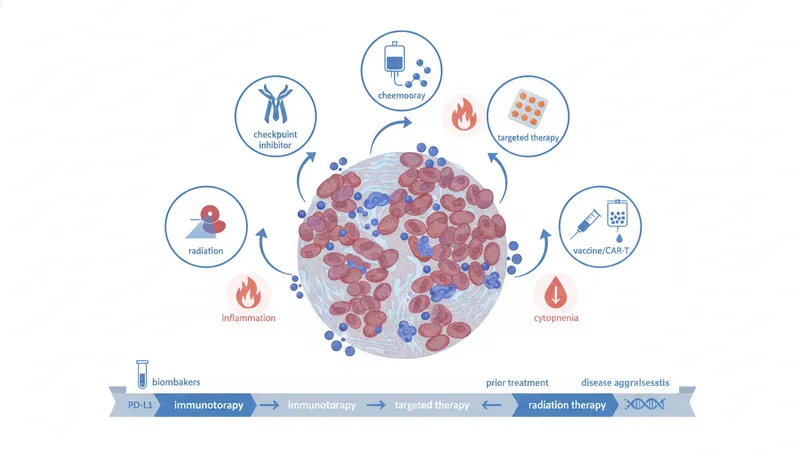
Combining targeted immunotherapies with other modalities is a common strategy to enhance antitumor effects or overcome resistance. Typical combinations studied include checkpoint inhibitors with cytotoxic chemotherapy, targeted small-molecule inhibitors, radiation therapy, or other immunotherapies such as vaccines or cellular products. The rationale may include increasing tumor antigen release, modulating the tumor microenvironment to be more permissive to immune cell infiltration, or targeting complementary immune pathways. Clinical trial data often inform which sequences and combinations are feasible and how toxicity profiles change when agents are combined.
Sequencing choices—whether to use immunotherapy first, follow with targeted agents, or administer concomitantly—may depend on disease aggressiveness, prior treatments, and biomarker status. For some cancers, induction with chemotherapy may be used to reduce disease burden before introducing immunotherapy, whereas in other contexts early use of checkpoint inhibitors may be preferred if biomarkers suggest potential benefit. Timing decisions should consider expected onset of action for each modality and the capacity to manage overlapping adverse events, such as immune-mediated inflammation combined with cytopenias from chemotherapy.
Safety considerations are central to combination strategies because additive or synergistic toxicities can emerge. For instance, combining checkpoint inhibitors with certain targeted agents has in some trials increased rates of hepatic or pulmonary toxicity. Clinical studies typically employ phase I dose-escalation designs to establish tolerable regimens and monitoring protocols. Institutions planning to offer complex combinations may need multidisciplinary pathways for early recognition and management of immune-related events, including standardized steroid-use algorithms and escalation criteria.
Ongoing trials are exploring rational combinations based on preclinical mechanisms, such as pairing checkpoint inhibitors with therapies that increase antigen presentation or reduce suppressive myeloid cell populations. Adaptive trial designs and biomarker-stratified cohorts are increasingly used to identify subsets of patients who may derive benefit from specific combinations. As evidence accumulates, clinicians and researchers aim to refine sequencing frameworks that balance efficacy signals with manageable safety and logistical considerations.

Monitoring during targeted immunotherapies commonly includes clinical assessments, laboratory tests, and imaging to evaluate response and to detect adverse events. Immune-related toxicities can present in diverse organ systems and at variable intervals; clinicians often use standardized grading scales to guide interventions. For cellular therapies, monitoring plans may include frequent early assessments for inflammatory syndromes and neurologic evaluations. Imaging-based response criteria may be adapted for immunotherapies to account for phenomena such as pseudoprogression, where apparent initial growth reflects immune infiltration rather than tumor growth.
Safety management emphasizes early recognition and evidence-based interventions, typically starting with immunosuppression for moderate to severe immune-mediated effects. Protocols vary by modality and toxicity type; for example, endocrinopathies may require hormone replacement while inflammatory pneumonitis could require corticosteroids and treatment interruption. Institutions implementing advanced immunotherapies may maintain multidisciplinary teams including oncology, immunology, endocrinology, and critical care specialists to respond to complex events. Patient education about symptom reporting is also a common component of monitoring strategies.
Research developments continue to explore next-generation constructs and new targets. Examples include engineered cellular therapies with safety switches, bispecifics designed to reduce systemic cytokine release, and personalized neoantigen vaccines guided by tumor sequencing. Preclinical and early-phase clinical studies often assess altered designs intended to improve tumor infiltration, persistence, or antigen sensitivity. Parallel work on predictive biomarkers and real-world outcome registries aims to refine patient selection and long-term safety surveillance.
In summary, implementing targeted immunotherapies involves coordinated monitoring, readiness to manage immune-related toxicities, and attention to evolving evidence from ongoing research. Clinicians and researchers typically integrate trial data, biomarker information, and practical logistics when selecting and sequencing approaches. Continued study is needed to clarify optimal combinations, long-term outcomes, and reliable predictive markers that can guide individualized treatment strategies.