
Some non-small cell lung cancers (NSCLC) carry alterations in the BRAF gene that affect cell signaling pathways involved in growth and survival. These alterations include the V600E substitution and other non-V600 variants; their presence can influence which systemic therapies are considered and how clinicians monitor for response. The concept behind this overview is to explain molecular testing, therapeutic classes, monitoring approaches, and supportive care strategies relevant to NSCLC cases with BRAF pathway involvement, using measured, evidence-informed language.
Identification of a BRAF alteration typically begins with tumor genotyping from tissue or circulating tumor DNA. Results may inform targeted therapy choices, potential combination strategies, and eligibility for clinical trials. Treatment planning commonly integrates targeted agents, immunotherapy, chemotherapy, or combinations, and may consider prior therapies, performance status, and coexisting genomic features. The following list highlights representative classes or methods that are commonly referenced in clinical management.
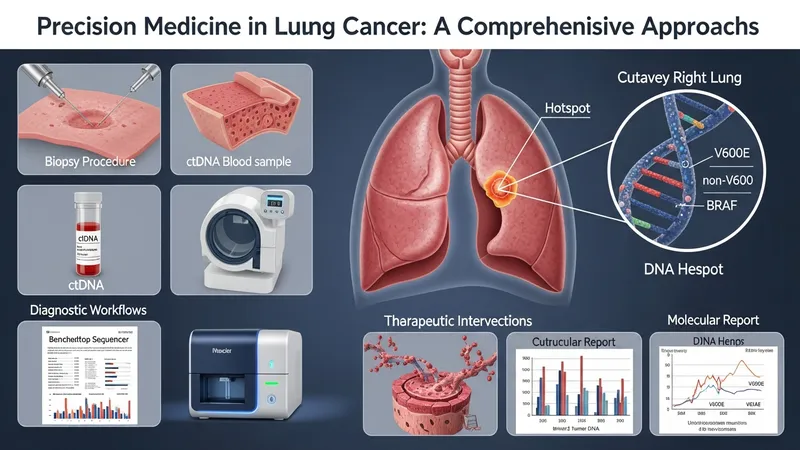
Molecular testing processes may use next-generation sequencing (NGS) panels that screen multiple genes simultaneously, or targeted assays focused on specific variants. Tissue biopsy remains a standard source for testing, though plasma-based assays for circulating tumor DNA are increasingly used when tissue is limited. Turnaround times for testing can vary by laboratory; clinicians may balance the need for timely systemic therapy with the value of comprehensive genomic data. Reporting typically distinguishes activating alterations from variants of uncertain significance to guide therapeutic considerations.
Targeted therapy combinations directed at BRAF V600E alterations operate by inhibiting different points in the MAPK pathway; MEK inhibition alongside BRAF inhibition may reduce feedback reactivation and extend the period of disease control in some patients. Non-V600 BRAF variants may have different signaling behavior and may not respond similarly to the same drug combinations. Safety profiles often include class-specific effects that are monitored clinically, and drug selection may be influenced by prior therapies, comorbidities, and potential drug–drug interactions.
Immune checkpoint inhibitors act by altering host immune responses to tumor cells and have demonstrated activity across subsets of NSCLC. When an oncogenic driver such as a BRAF alteration is present, response rates to immunotherapy can be variable; PD-L1 expression and tumor mutational burden are among factors that may correlate with activity but do not guarantee outcomes. Clinicians often consider sequential or combined approaches—such as adding chemotherapy to immunotherapy—while weighing expected benefits and risks for an individual patient.
Chemotherapy remains a component of treatment sequencing for many patients and can be combined with other systemic agents. For non-squamous NSCLC, a platinum-based doublet with pemetrexed is often used in first-line regimens when targeted agents are not indicated, or combined with immunotherapy where evidence supports that approach. The choice and order of therapies may be influenced by symptom burden, need for rapid disease control, and access to targeted agents or trials; decisions typically reflect multidisciplinary assessment rather than prescriptive rules.
In summary, management of NSCLC that harbors BRAF pathway alterations involves coordinated use of molecular testing, consideration of targeted BRAF/MEK combinations for specific variants, an assessment of immunotherapy suitability, and appropriate use of chemotherapy and supportive care. Each component may affect subsequent options and monitoring strategies. The next sections examine practical components and considerations in more detail.
Molecular testing is the foundation for identifying BRAF alterations and other actionable genomic changes. Next-generation sequencing panels that include BRAF alongside EGFR, ALK, ROS1, and others are often used to provide a comprehensive genomic profile from a single assay. Liquid biopsy using circulating tumor DNA can supplement tissue testing, particularly when tissue quantity is insufficient or when repeat sampling is not feasible. Laboratories typically report allele frequency and variant classification; clinicians may interpret those data alongside histology, staging, and prior therapy exposure to inform treatment planning.

Sampling quality affects test sensitivity. Core biopsies and surgical specimens generally offer higher tumor cellularity than small cytology samples, which can influence the ability to detect low-frequency variants. Turnaround times for results can vary from days to a few weeks depending on the assay and laboratory; when immediate systemic therapy is necessary, clinicians may proceed with empiric options while awaiting comprehensive results. Confirmatory testing or orthogonal methods are sometimes used if initial results are ambiguous or unexpected.
Variant interpretation distinguishes V600E-type substitutions from non-V600 BRAF changes, as these groups often have different therapeutic implications. V600E is a kinase-activating substitution frequently associated with sensitivity to certain BRAF/MEK inhibitor combinations, whereas some non-V600 variants may signal through alternative mechanisms or coexist with other driver events. Reporting usually indicates clinical relevance tiers so that multidisciplinary teams can prioritize management options and potential trial enrollment.
Considerations for equitable testing access include insurance coverage, referral pathways, and institutional protocols. In many centers, reflex testing from diagnosis of advanced non-squamous NSCLC is implemented to reduce delays. Clinicians and patients may consult lists of accredited laboratories or institutional molecular tumor boards for interpretation. These practical elements shape how molecular data are integrated into individualized treatment planning and follow-up strategies.
Targeted approaches focus on inhibiting aberrant signaling caused by specific BRAF variants. For kinase-activating V600 substitutions, combined inhibition of BRAF and MEK may be used to achieve pathway suppression and clinical disease control in many reported series. The magnitude and duration of benefit often vary across patients; resistance mechanisms such as secondary MAPK pathway reactivation or bypass signaling can emerge and influence subsequent choices. Selection of targeted therapy typically follows molecular confirmation and assessment of prior treatments, organ function, and concomitant medications.

Clinical evidence supporting BRAF-directed combinations derives from phase II and real-world studies that have evaluated response rates, progression patterns, and safety profiles. Adverse effects commonly reported with this class may include fever, cutaneous events, and laboratory abnormalities that require monitoring and management. Dose adjustments or treatment interruptions are sometimes needed to manage toxicity, and baseline evaluations aim to identify contraindications. Multidisciplinary coordination helps balance potential benefits with expected side effect profiles.
Non-V600 BRAF alterations may not respond to the same inhibitors used for V600E; in such cases, alternative approaches or enrollment in clinical trials that explore novel agents or combinations can be considered. Resistance to targeted therapy can present clinically as radiographic progression or symptomatic change, and rebiopsy or circulating tumor DNA assays may help characterize mechanisms. Sequential systemic strategies may alternate targeted agents with other modalities based on evolving biology and clinical status.
Access to targeted agents can be influenced by regulatory approvals, reimbursement policies, and institutional formularies, which vary by region and over time. Where approved options exist, multidisciplinary review often integrates expected benefits, tolerability, and patient preferences. In settings without approved agents for a particular variant, clinical trials may provide access to investigational therapies and additional diagnostic characterization.
Immune checkpoint inhibitors that target PD-1 or PD-L1 have established roles in many NSCLC treatment pathways, either alone or combined with chemotherapy. When a BRAF-activating driver is present, the comparative activity of immunotherapy can be heterogeneous; PD-L1 expression and tumor mutational burden have been studied as correlates but are not definitive predictors. Clinicians often consider prior systemic therapies, symptom control needs, and comorbid conditions when deciding whether to use immunotherapy-based regimens before or after targeted agents.

Chemotherapy remains a mainstay for immediate disease control in many clinical scenarios. Platinum-based doublets such as carboplatin plus pemetrexed are frequently used for non-squamous histology, sometimes in combination with an immune checkpoint inhibitor where evidence supports the approach. The sequencing of chemotherapy relative to targeted therapy depends on the urgency of therapy initiation, molecular results availability, and the anticipated response speed required to manage symptoms or organ dysfunction.
Combination regimens (immunotherapy plus chemotherapy) can offer broader activity in unselected populations, but the interplay between targeted agents and immunotherapy requires caution due to overlapping toxicities and limited prospective data for some sequences. Timing considerations include potential immune-related adverse events that might complicate later targeted therapy, or prior targeted therapy effects that could influence immune response; these aspects are often discussed in multidisciplinary tumor boards.
Practical execution of treatment plans includes baseline assessments for organ function, vaccination status discussions relevant to immune suppression risk, and proactive management of expected side effects such as cytopenias, fatigue, or immune-mediated events. Supportive measures and regular clinical review help maintain therapy tolerability and inform decisions about switching or combining modalities as disease biology and patient status evolve.
Response monitoring typically combines radiographic imaging at scheduled intervals and clinical assessment of symptoms. Imaging modalities such as CT or PET/CT are commonly used to evaluate tumor burden changes; intervals often reflect the therapeutic context, for example every 6–12 weeks during active systemic therapy, though schedules may be individualized. Circulating tumor DNA assays are increasingly applied to detect molecular responses or emerging resistance earlier than imaging in some reports, but their interpretation requires integration with clinical and radiographic data.

Supportive care addresses symptom management, treatment-related toxicities, and quality-of-life concerns. Common supportive measures include antiemetics for chemotherapy-associated nausea, fever management protocols for targeted-agent–associated pyrexia, and endocrine or dermatologic interventions for immune-related events. Early involvement of palliative care specialists can assist with complex symptom control and advance care planning, viewed as an integral component rather than a last resort in many care models.
Clinical trials remain an important avenue for access to novel agents, combination strategies, and biomarker-driven approaches. Trials may explore new targeted inhibitors, combinations with immunotherapy, or strategies to overcome resistance. Eligibility criteria commonly include specific molecular features, prior therapy exposures, and performance status. Multidisciplinary teams and institutional trial offices can provide information on available studies and logistical considerations for participation, without implying suitability for every patient.
Overall, an integrated approach to monitoring, side-effect management, and consideration of research options supports informed, individualized care. Regular reassessment of disease status, tolerance, and patient goals can guide adjustments in therapy and supportive interventions. Readers may consult subsequent clinical resources or multidisciplinary teams for specific implementation details, recognizing that the therapeutic landscape continues to evolve with emerging evidence.