
A business bank account is a financial account offered by banking institutions to hold and manage funds used for commercial activities. Such accounts are structured to separate personal finances from business-related inflows and outflows, record transactions for accounting and tax purposes, and provide services adapted to business needs. Typical distinctions among accounts include transaction-focused checking facilities, interest-bearing deposit options, and specialist merchant or escrow arrangements that handle customer payments and settlements.
Key elements of these accounts often include transaction limits, payment processing access, debit or card facilities, online and mobile interfaces, and optional cash management tools. Fees and charge models can vary by service tier and transaction volume, and eligibility criteria generally reference legal business status, identification documentation, and sometimes financial history. Institutions may also require documentation specific to the entity type, such as partnership agreements or corporate registry details.

Feature comparisons often focus on monthly maintenance and per-transaction charges, which can vary with account type and usage. For example, a transaction-focused account may include a set number of free electronic transfers per month and charge for excess items, while savings-style accounts may limit withdrawals but offer modest interest. Fee schedules may also include charges for returned items, cash handling, international transfers, and additional services such as overdraft facilities or automated payroll functions. Businesses often weigh the frequency of transactions versus the cost structure when selecting an account type.
Eligibility criteria typically reference the legal form of the enterprise, required identity and formation documents, and the presence of authorised signatories. Sole proprietors usually need personal identification and registration proof, while corporations or limited liability entities may need articles of incorporation, tax identification, and resolution documents naming authorised representatives. Some banks may perform credit or anti-money-laundering checks that can affect account opening timelines. Understanding documentation requirements ahead of time can often streamline the onboarding process.
Account opening procedures commonly involve submitting documentation, completing mandated forms, and verifying identity for all owners and controllers. Institutions may offer in-branch, online, or hybrid onboarding flows; online processes can be faster for straightforward cases but may still require mailed or in-person verification for certain entity types. Time to activation may vary from same-day for simple sole-proprietor accounts to several business days for complex corporate structures that require additional checks. Businesses should plan for possible identity and compliance reviews when scheduling financial operations.
Transaction and payment services available with business accounts typically include electronic transfers (ACH or equivalent), direct debits, wire transfers, bulk payment files for payroll, and integrations with card processing services. Online and mobile banking interfaces often support account reconciliation, export of transactions in common formats, and configurable user access levels. Security features such as dual approval for large transfers, token-based authentication, and activity alerts are frequently offered to mitigate operational and fraud risks.
Comparing account options often requires reviewing both fixed and variable costs: maintenance fees, transaction fees, cash deposit or withdrawal charges, and fees for ancillary services such as merchant processing or account reconciliation tools. Interest and balance considerations may affect where surplus funds are held; some businesses maintain a primary transaction account and a separate interest-bearing deposit to segregate working capital. Decision frameworks frequently weigh administrative convenience, transaction volume, monthly cost, and available integrations.
In summary, business banking products are designed to address practical needs of managing commercial funds, providing transactional services, and facilitating payments with controls and record-keeping that align with legal and accounting requirements. Fees and eligibility rules vary and can influence the choice of account type and provider; anticipated transaction patterns and documentation readiness often shape the onboarding experience. The next sections examine practical components and considerations in more detail.
Business account types may include transactional checking, savings or deposit accounts, merchant or payment processing arrangements, and specialised cash management facilities. Transactional accounts typically prioritise frequent deposits and withdrawals and may provide immediate access through debit cards and electronic transfers. Deposit accounts may limit transaction frequency in exchange for modest interest accrual. Merchant-related accounts connect sales channels to settlement processes and can include chargeback handling. When evaluating features, organisations often map expected cashflow patterns and payment methods to the account’s transaction allowances and service set.
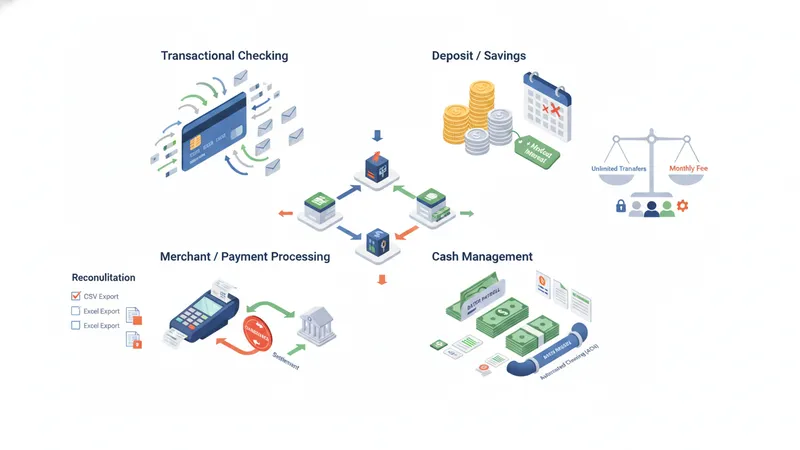
Feature trade-offs often involve accessibility versus cost. Accounts that permit unlimited electronic transfers and free deposits may carry higher monthly maintenance fees, while low- or no-fee accounts may impose per-transaction charges beyond a modest allowance. Other feature areas include multi-user access controls, reconciliation tools, export formats compatible with accounting software, and batch payment capabilities for payroll or supplier payments. Considerations may include whether the account supports automated clearing systems commonly used in the region and whether card acceptance or integrated invoicing is offered.
Operational details such as cut-off times for same-day transfers, settlement periods for card payments, and limits on cash deposits can affect cashflow management. Some institutions provide tiered plans where features expand with a higher fee, which may suit businesses with growing transaction volumes. In assessing options, reviewing sample fee schedules and service level descriptions may clarify which account type aligns with typical monthly inflows and outflows and the administrative effort required to reconcile transactions.
Many businesses weigh the convenience of a single provider offering both transactional and merchant services against the flexibility of using specialist providers for particular functions, such as third-party payment gateways. Choosing an account type can also influence how surplus funds are managed—separating working capital into a deposit account may support short-term interest generation while keeping liquidity accessible. These considerations may guide the selection of an account that balances operational needs with predictable cost patterns.
Fee structures for business accounts usually combine fixed monthly or annual maintenance charges with variable fees tied to transaction volumes and specific services. Common charges include per-transaction fees for electronic transfers, fees for returned or dishonoured items, cash handling fees, and charges for international wires. Some providers may offer a number of free transactions within a plan, with incremental fees applied beyond that allowance. Understanding the interaction between included services and incremental fees can help organisations estimate recurring cost exposure based on projected activity.
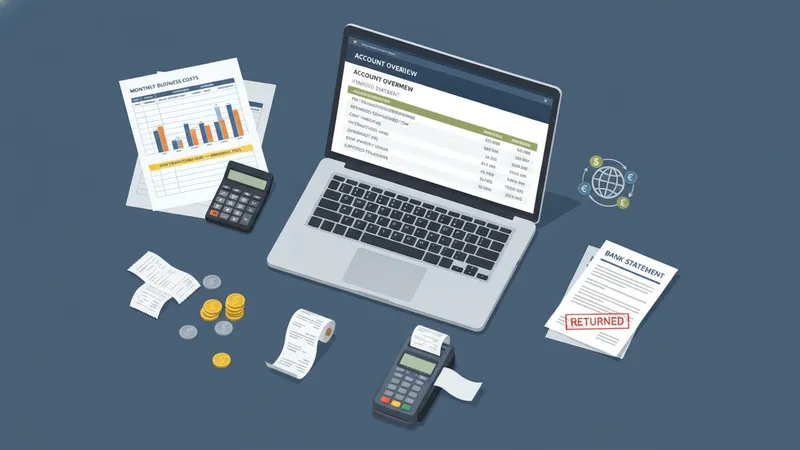
Additional service fees can apply for features such as overdraft facilities, stop payments, account statements by mail, or expedited transfers. Merchant processing often has its own fee schedule separate from the core business account, including per-transaction processing fees and settlement pricing. Businesses that frequently accept card payments should consider combined cost profiles for both the merchant arrangement and the linked transaction account. Fee transparency and the availability of itemised statements may assist in budget forecasting and cost allocation.
Some accounts may provide fee waivers or reduced charges when minimum balance thresholds are maintained, while others use tiered pricing that scales with transaction levels. These arrangements may benefit entities with predictable balances or seasonally fluctuating volumes. It may often be useful to model a few months of typical transactions against published fee schedules to estimate annualised costs. This analysis can highlight whether a seemingly low-fee account will remain economical at the business’s operational scale or whether another configuration is preferable.
When comparing charges, consider ancillary operational costs that arise from account limitations, such as time spent reconciling transactions, fees associated with returning deposits, or costs for additional user access. Some providers include integration tools or APIs that reduce manual work, which can be a factor in total cost of ownership even if they carry separate fees. These functional and financial trade-offs often guide decisions about which fee structure aligns with administrative capacity and transaction patterns.
Eligibility for a business account typically depends on the entity’s legal status and the documentation provided. Common requirements include government-issued identification for owners and authorised signatories, proof of business registration or formation, tax identification numbers, and documentation that clarifies ownership structures—such as partnership agreements or corporate resolutions. Lenders and banks may also request recent utility bills or registered office evidence to verify addresses. For some entity types, certified copies of formation documents may be required.

Compliance checks such as anti-money-laundering and beneficial ownership verification are frequently part of the onboarding process and may affect processing time. Financial institutions may ask for information on expected account activity, typical monthly inflows, and the source of funds to satisfy due diligence requirements. For entities operating in regulated sectors, additional licensing or permits may be requested. Preparing complete and accurate documentation in advance can typically reduce delays during account opening.
Account opening pathways vary: in-branch appointments, fully digital onboarding, and hybrid models are commonly available. Digital onboarding may require electronic identity verification and uploads of documents, and may include video or biometric steps in some jurisdictions. Corporate entities may need authorised representatives to present themselves in person for certain certifications. Understanding the provider’s onboarding workflow and required attestations may help set realistic timelines for when the account becomes operational.
When planning the opening, consider how signatory structures and access levels will be established. Multi-signature requirements, delegated limits for certain users, and segregation of duties are administrative choices that can be set at onboarding time and adjusted later. Clear documentation of authorised persons and regularly updating records as personnel change can reduce operational friction and support compliance with institutional policies.
Security features for business accounts often include multi-factor authentication for online access, role-based permissions for multiple users, transaction approval workflows, and activity alerts. Larger transfers may be subject to additional authentication steps or dual approval requirements. These controls can mitigate the risk of unauthorised transactions and support internal governance. When reviewing accounts, assess which security controls are built into the bank’s platform and which require external tools or manual processes to implement.

Integrations with accounting software, payroll systems, and payment gateways can reduce manual reconciliation and administrative overhead. Providers may supply APIs, file-upload capabilities for bulk payments, or built-in connectors to common bookkeeping platforms. The availability and format of exported transaction data (CSV, OFX, or other standards) can affect how easily records are imported into financial systems. Consideration of these technical interfaces may be relevant when estimating implementation effort and ongoing maintenance.
Comparing account options may involve weighing the combined effects of features, fees, security, and integration capabilities rather than single metrics. For example, an account with higher monthly fees may simplify operations through integrated payment acceptance and built-in reconciliation tools, which can reduce internal processing time. Conversely, a lower-fee account paired with third-party integrations may be more cost-effective for businesses with in-house technical capacity. Evaluations often factor in expected transaction volumes, staff resources, and the importance of automated workflows.
When concluding an assessment, organisations frequently document a short list of functional requirements and projected transaction scenarios to compare providers on comparable terms. Considering potential growth and how account limits or pricing tiers scale with volume may also be informative. These measured comparisons, framed as considerations rather than directives, can assist decision-makers in selecting an account structure that aligns with operational needs and controls while keeping administration predictable.