
Collaborative workspaces bring people together in shared physical and virtual environments to support regular communication, coordinated work, and the exchange of ideas. In a Hong Kong context, these environments include managed co‑working venues, university labs, incubator floors and company-run collaboration zones. The physical layout, booking systems, and facilitation methods in these settings are designed to lower barriers to interaction and to provide a mix of private and communal areas where short conversations and focused sessions can occur without formal scheduling.
Such shared environments typically combine spatial design, technology services and operational rules that influence how teams communicate and prototype ideas. Features often present in Hong Kong spaces include flexible desk types (hot desks, dedicated desks, private offices), reservable meeting rooms, whiteboard or prototyping areas, and event programming that brings different users together. Management practices—such as community managers or set hours for open brainstorming—can affect the frequency and quality of informal exchanges between occupants.
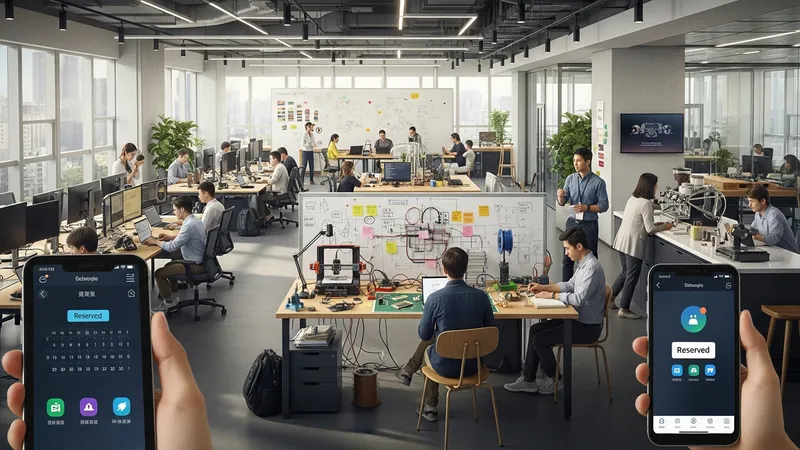
In Hong Kong’s dense urban context, proximity and mixed‑use buildings influence how collaborative settings are organised. Shared spaces often cluster in business districts such as Central, Admiralty and Kowloon East where rental pressures are higher; as a result, operators design for compact, multi‑function configuration and frequent turnover of users. Spatial strategies that encourage chance encounters—short circulation paths, visible communal tables, and adjacent event areas—may increase the number of informal exchanges that lead to collaborative activity. Designers and managers typically balance those elements against the need for quiet, focused zones to avoid distractive cross‑traffic.
Technology choices commonly found in Hong Kong shared environments may include integrated Wi‑Fi with visitor networks, cloud printing services, room scheduling displays and access control systems that support flexible use. These systems can generate anonymised usage data that operators and corporate tenants use to understand peak times, room utilisation and membership behaviour. When interpreted with care, such analytics may help managers adjust layout, opening hours or programming to better support collaboration without compromising privacy under local regulations.
Programming and facilitation are additional levers used to cultivate communication and innovation. Regular workshops, demonstration days and short mentoring sessions are often scheduled to expose different user groups to one another; event frequency and themes vary by operator and typically reflect local sector focus (for example, fintech events in Central or hardware demo days near manufacturing hubs in New Territories). In Hong Kong, partnerships between private operators and public support agencies also shape programming, which may influence who attends and the kinds of projects that receive attention.
Costs and membership frameworks in Hong Kong tend to be tiered and flexible to reflect varied user needs. Common models include day passes, monthly hot‑desk memberships, dedicated desks and private office leases; price ranges are typically influenced by location, serviced amenities and contract length. Operational expenses—rent, utilities, staff, cleaning and event facilitation—are the main cost drivers. Transparent reporting of these factors is often used by operators and corporate tenants to assess fiscal sustainability and to align space offerings with intended collaboration outcomes.
Measurement approaches seen in Hong Kong shared environments include simple usage metrics, user surveys, and tracking of collaborative outputs such as pilot projects or partnerships that emerge from the space. These indicators may be used cautiously to evaluate whether a workspace is supporting communication and early‑stage innovation activity; correlation does not imply causation, and many stakeholders treat such measures as one input among several when judging effectiveness. The next sections examine practical components and considerations in more detail.
Hong Kong hosts a range of collaborative workspace configurations that reflect diverse user needs. Co‑working venues provide flexible access options from hourly passes to monthly memberships, often concentrated in neighbourhoods like Sheung Wan, Central and Kowloon East. Incubators and accelerators—run by universities or public agencies—tend to combine desk space with mentorship and prototype facilities and may operate under selection processes. Corporate collaboration hubs within owned or leased office floors are another model; these are designed to bring internal teams together for focused projects and may be adjacent to public co‑working areas to facilitate external engagement.
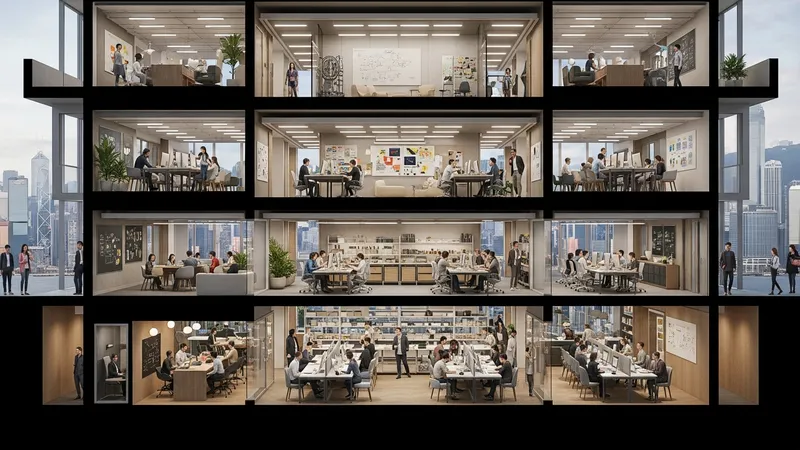
Physical size and layout vary from compact, high‑density floors to multi‑storey innovation centres. While co‑working floors may prioritise flexible desks and meeting rooms, incubator facilities in Hong Kong often include maker spaces, basic tooling, or lab benches depending on sector focus. Pricing structures typically reflect these differences: a basic hot‑desk in Hong Kong city centres may typically range from HK$1,500–HK$4,000 per month, whereas dedicated desks or private offices can commonly range from HK$5,000–HK$25,000 per month in central locations. These ranges are indicative rather than definitive.
User mix influences collaboration dynamics. In Hong Kong, venues that attract a combination of early‑stage startups, freelancers and corporate teams may see a higher incidence of cross‑sector interactions than single‑sector sites. Conversely, theme‑focused incubators (for example, biotech or creative industries) may prioritise specialised equipment and mentorship over high‑density desk sharing. Operators and hosts commonly consider how scheduling and membership rules will affect serendipitous encounters when designing occupancy plans.
Operationally, many Hong Kong spaces use online booking and access control to manage mixed occupancy, and they may offer tiered services such as mail handling, event support and meeting room packages. Landlord and building constraints, including fire safety and tenancy regulations, affect how operators can configure communal areas and open events. These constraints shape choices about circulation, maximum room capacities and the location of communal amenities, which in turn influence patterns of interaction and co‑working behaviour.
Spatial arrangement is a primary factor shaping interaction. In Hong Kong, where floor area per person can be limited, designers often use modular furniture, visual sightlines and multi‑purpose zones to create opportunities for brief exchanges without requiring large volumes of space. Shared kitchens, central circulation corridors with seating, and semi‑enclosed brainstorming nooks may encourage short, frequent conversations that can lead to project collaboration. Acoustic treatments and zoning are typically added to balance openness with the need for focus.
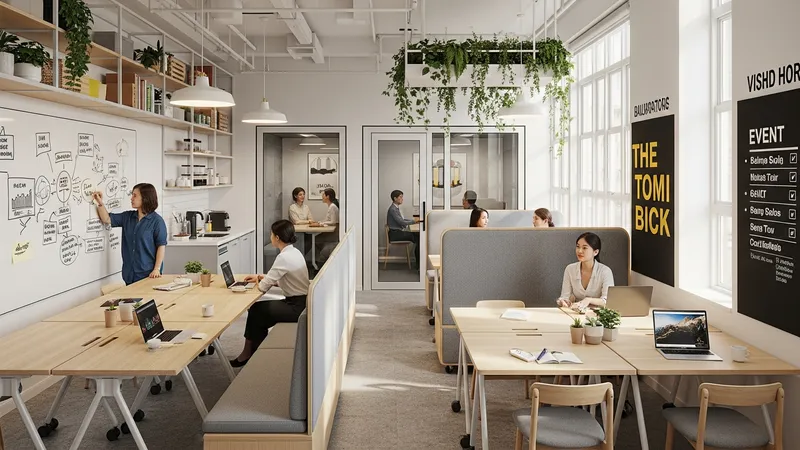
Visibility and cues for participation are practical design strategies used locally. Clear signage, visible activity boards and centrally positioned event noticeboards help unfamiliar occupants identify ongoing projects and potential collaborators. Whiteboard walls and writable surfaces positioned near meeting rooms or communal tables serve as low‑effort prompts for spontaneous ideation. In Hong Kong buildings, designers often integrate natural light, compact meeting pods and vertical storage to make small areas feel more usable for group interactions.
Technology integration supports communication in multiple ways. Room booking displays, unified videoconferencing equipment and shared file repositories help distributed teams coordinate use of physical space and maintain continuity with remote colleagues. Hong Kong operators frequently provide stable, managed Wi‑Fi and basic A/V setups in meeting rooms; some larger innovation centres offer prototyping equipment and lab infrastructure. Choice of technology typically balances cost, maintenance and user expectations for reliability.
Programming and facilitation are design complements. Physical layouts that allow for pop‑up events, demo tables and short presentation areas can be used to schedule low‑friction activities that introduce users to one another. Designers and community staff in Hong Kong often plan for different scales of interaction—brief encounters, scheduled workshops and multi‑day engagements—so that the space supports both incidental communication and deeper collaborative work without extensive reconfiguration.
Rent and location are key operational determinants in Hong Kong. Central business districts carry higher rental premiums, which typically translate into higher membership fees or denser layouts to maintain viability. Operators often balance price and service by offering a range of products—day passes, hot desks, dedicated desks and private offices—with differing access and amenity levels. Utility costs, cleaning, reception staffing and event facilitation also contribute to total operating expenditure and are commonly modelled into membership pricing.
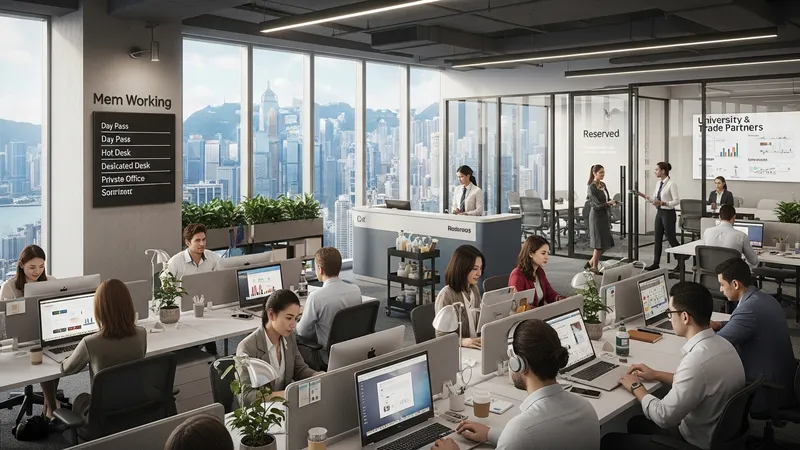
Staffing and community management roles influence how communication and innovation are encouraged. Community managers who curate introductions, schedule programming and moderate events may enhance collaboration frequency, but they also represent a recurring cost. In Hong Kong, some operators use part‑time facilitators or leverage partnerships with local universities and trade organisations to reduce staffing expenses while maintaining access to specialised expertise and networks.
Compliance and building regulations affect how operators can run events and reconfigure space. Fire services, tenancy agreements and building management rules commonly restrict maximum occupancies, noise levels, and the placement of certain equipment. Operators in Hong Kong typically work with building management and local authorities to ensure safe use, which can add lead time and cost to programming and renovations. Awareness of these constraints is an operational consideration when planning collaborative activities.
Financial modelling for shared spaces often includes sensitivity scenarios for occupancy, membership churn and event income. Operators and corporate hosts frequently track utilisation metrics to inform pricing and investment in amenities. For users and hosts in Hong Kong, transparent reporting of space policies, costs and usage patterns may help align expectations and sustain a mix of short‑term visitors and longer‑term occupants needed to support ongoing communication and innovation activities.
Measurement approaches in Hong Kong shared spaces commonly combine quantitative and qualitative indicators. Quantitative metrics include occupancy rates, meeting‑room utilisation and event attendance; qualitative inputs may be collected via periodic surveys, interviews and case studies that capture perceived value and examples of collaboration. Operators and institutional hosts frequently treat these measures as signals rather than proof, using them to adapt programming and layout rather than to make definitive causal claims about innovation outcomes.
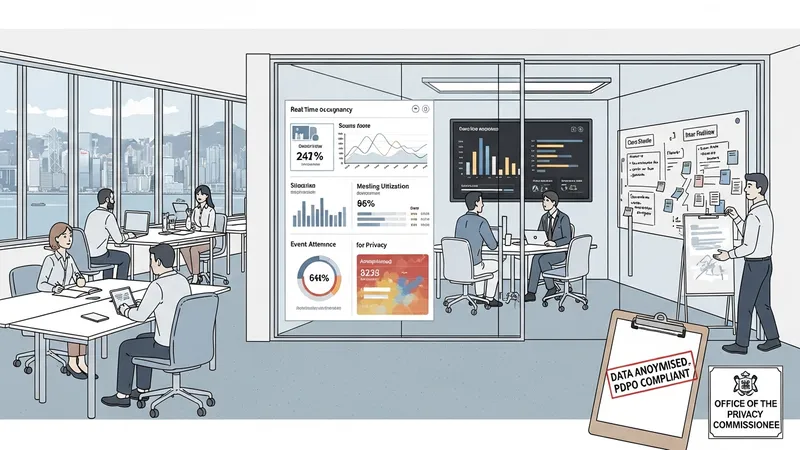
Data privacy and governance are relevant considerations when collecting usage information. In Hong Kong, the Personal Data (Privacy) Ordinance overseen by the Office of the Privacy Commissioner requires appropriate handling of personal data; operators therefore often anonymise or aggregate usage metrics before analysis. This practice helps balance the need for insight into interaction patterns with legal and ethical obligations regarding participant data.
Outcome tracing for innovation can include tracking project milestones, pilot deployments, partnership formation and follow‑on funding where applicable. Incubators and innovation centres in Hong Kong sometimes maintain alumni tracking systems to understand longer‑term impacts, recognising that many collaborative effects emerge over months or years. Such tracking typically requires consent and clear definitions of what constitutes a collaborative outcome.
Continuous improvement practices used in Hong Kong venues often rely on iterative feedback loops: collect simple usage and satisfaction data, pilot small changes to programming or layout, and reassess. Operators and hosts commonly use these cycles to refine the mix of open and private space, adjust event styles and update technology offerings. Ongoing, measured adjustments may support more consistent patterns of communication and increase the likelihood that collaborative interactions lead to tangible innovation activity.