
Dental and vision insurance for small business owners describes benefit options that cover routine and restorative oral care and eye care services for employees. These insurance arrangements may be offered as employer-sponsored group plans, voluntary individual products that employees purchase through payroll, or standalone individual policies secured outside the workplace. Key considerations typically include the types of services covered (preventive, basic, major for dental; exams, lenses, frames for vision), cost-sharing mechanics, provider networks, enrollment rules, and how coverage interacts with other employee benefits.
When evaluating dental and vision insurance, small business owners often weigh plan design against budget, workforce needs, and administrative capacity. Plan choices can influence employee access to preferred providers and the predictability of out-of-pocket costs. Some plans emphasize preventive care with low or no copayments, while others structure benefits around annual maximums, waiting periods, or staged coverage for major services. Understanding these structural elements may help owners match plan features to typical employee utilization patterns without prescriptive recommendations.

Coverage structures for dental and vision plans often use categorical tiers such as preventive, basic, and major dental services, and routine exams versus corrective lenses in vision plans. Preventive dental care commonly includes exams, cleanings, and simple X-rays; basic and major categories may include fillings, root canals, crowns, and prosthodontics, often subject to waiting periods or staged benefit percentages. Vision benefits typically separate diagnostic services (eye exams) from elective products (frames, lenses, contacts), with dollar allowances or discounts. Understanding these tiers can clarify which services are likely to be covered and under what cost-sharing terms.
Cost-sharing elements—premiums, deductibles, copayments, and annual or lifetime maximums—can influence both employer budgeting and employee out-of-pocket exposure. Employers may pay a portion of premiums for group plans and set employee payroll contributions; voluntary plans can transfer most premium costs to employees. Deductibles may apply to certain dental services but are less common for routine vision exams. Some dental plans apply percentage-based coverage (for example, preventive at near-full coverage, major services at a lower percentage) and may include annual maximum benefit limits that cap insurer payouts.
Provider network design is an important operational consideration. Some dental plans use a preferred provider organization (PPO) model that allows access to a broader range of dentists with varying reimbursement rates, while dental health maintenance organizations (DHMO) or managed care networks may restrict choices but offer lower cost-sharing. Vision plans often rely on national vision networks or local optical providers with set fee schedules or product allowances. Network size, out-of-network reimbursement levels, and ease of locating in-network providers can affect employee satisfaction and utilization.
Administrative factors such as enrollment windows, eligibility rules, waiting periods, and claim processing times may affect the practical value of dental and vision offerings. Small employers often face trade-offs between simpler plan administration and more flexible coverage options. Pre-enrollment communication about benefits, provider directories, and typical cost responsibilities may help employees make informed use of their coverage. The next sections examine practical components and considerations in more detail.
Dental and vision coverage types typically fall into identifiable tiers that small business owners can compare for cost and scope. For dental, tiers often include preventive services (cleanings, exams), basic restorative services (fillings, simple extractions), and major restorative services (crowns, bridges, implants in some plans). Vision coverage commonly separates diagnostic exams from corrective products like lenses and frames, sometimes offering allowances for standard lens types and tiered pricing for premium lens options. Awareness of these categories may help align benefit design with expected employee needs.
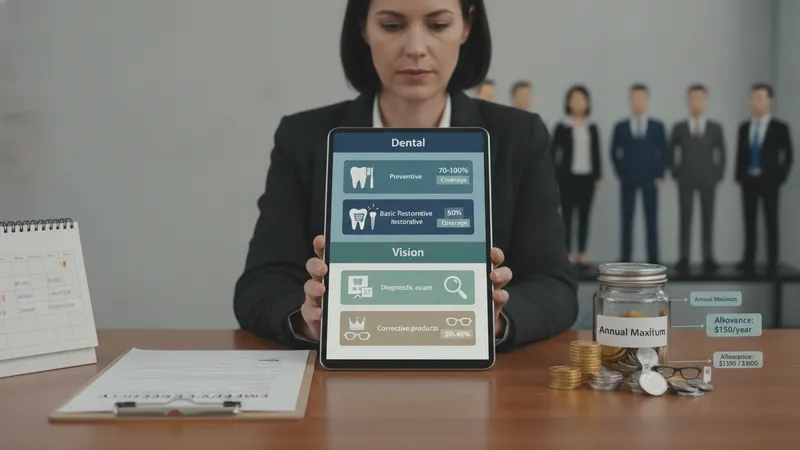
Waiting periods and staged coverage can apply across tiers, especially for major dental services; these rules commonly mean that certain benefits become available only after an initial enrollment period. Annual maximums for dental coverage may cap insurer payments and can affect the level of protection for costly procedures. Vision plans may limit frame or lens allowances to an interval such as every 12 or 24 months. Small employers should consider how these structural features could influence utilization patterns among employees.
Plan documentation often includes example scenarios or fee schedules that illustrate how coverage applies in practice. Reviewing sample benefit grids that show percentage coverage by service tier, deductible applicability, and timing can clarify expectations. For vision benefits, sample allowances and co-insurance levels for contact lenses versus eyeglasses can indicate the relative value of options. These examples may assist employers in communicating realistic expectations to employees without implying guarantees about individual out-of-pocket amounts.
Comparing tiered designs across multiple plan options can reveal trade-offs between premium cost and breadth of covered services. A plan emphasizing preventive coverage with higher employer contribution may reduce routine care barriers, while plans with higher premiums but broader major service coverage may mitigate financial exposure for costly procedures. Such trade-offs often reflect organizational priorities and budget constraints and may influence long-term employee satisfaction with the benefits package.
Premiums represent the recurring cost to maintain dental and vision policies and may be split between employer and employee in group offerings. Employers typically determine contribution levels as a fixed share or fixed dollar amount toward premiums. Deductibles, where used, require insured individuals to pay a specified amount before certain coverages begin; these are more common for non-preventive dental services. Copayments or coinsurance may apply to exams, procedures, or materials in both dental and vision plans. Recognizing how each element interacts can illuminate likely monthly and annual expenses for both parties.
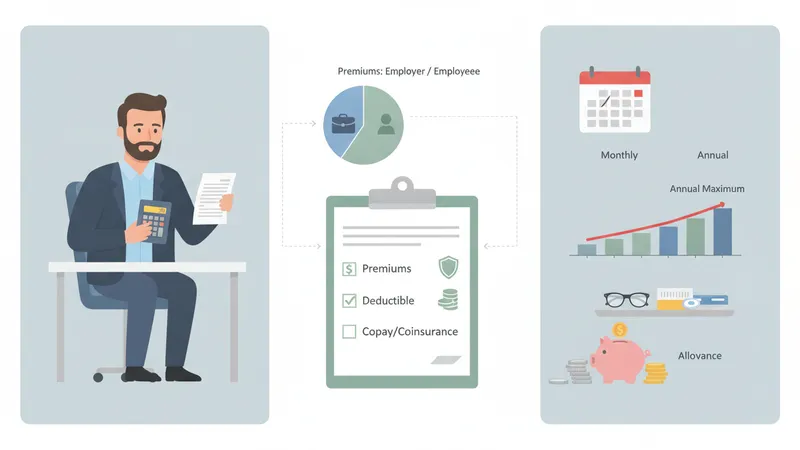
Annual maximums for dental plans are another cost-limiting factor to consider; once the plan’s maximum is reached, insured individuals may be responsible for additional costs. Vision plans may use annual allowances instead of maximums for frames or contact lenses. Some employers choose to fund a larger share of premiums for preventive services and leave higher-cost procedures to employee cost-sharing, which may help manage short-term budget planning while maintaining baseline care access. These approaches may align with organizational objectives such as workforce health maintenance or cost containment.
Cost variability across geographic regions and provider networks can influence realized premiums and out-of-pocket charges. In areas with higher provider fees, insurers’ negotiated rates and tiers can affect premium levels. Employers might consider the impact of network breadth on expected claims and premiums, since broader networks can increase access but may affect premium pricing. Small employers often weigh cost predictability and administrative simplicity against the desire to offer comprehensive coverage when evaluating plan options.
When estimating budget impacts, employers may model typical utilization scenarios—such as a workforce average of preventive visits per year or anticipated rates of major dental procedures—to approximate expected costs. These models may help forecast premium trends and employee contribution levels over time. However, such projections are inherently uncertain and should be presented as illustrative rather than definitive, with attention to how plan design features could change utilization and cost distributions.
Provider networks determine where employees can receive covered services and at what reimbursement levels. Dental PPO networks typically allow visiting in-network or out-of-network providers, with higher patient cost-sharing for out-of-network care; dental DHMOs often require members to select a primary provider within a narrower network and may impose service referral rules. Vision networks usually list participating optical retailers and ophthalmologists or optometrists. The ease of finding in-network providers and the geographic distribution of network members are practical considerations for dispersed or rural workforces.

Network reimbursement structures and negotiated fees can affect employee costs and provider participation. In-network negotiated rates usually result in lower charges to plan members and streamlined claims handling; out-of-network care may involve balance billing and claims submission responsibilities for patients. For small employers considering narrower networks that reduce premiums, it is important to weigh potential access limitations and employee preferences for specific providers, as these factors can influence benefit utilization and satisfaction.
Prior authorization, pre-treatment estimates, and referral requirements may apply for certain dental procedures or specialized vision services. Some plans require preauthorization for costly procedures such as implants or orthodontic work, which may affect the timing and approval process for care. Understanding administrative processes related to authorizations can help employers provide accurate guidance to employees and anticipate potential delays in service delivery or claims processing.
Coordination with other benefits, such as flexible spending accounts (FSAs) or health savings accounts (HSAs), can influence how employees pay for services that exceed plan limits. While FSAs commonly cover eligible dental and vision expenses, eligibility and tax-advantaged treatment of contributions can vary by jurisdiction. Employers may consider how benefit offerings integrate with existing payroll deductions and voluntary benefits to present a coherent set of options that employees can use alongside insurance coverage.
Enrollment mechanics address when and how employees may join dental and vision plans, including initial eligibility, waiting periods, and qualifying life events that trigger mid-year enrollment. Employers often set eligibility based on hours worked or employment status, and carriers may require specific documentation. Open enrollment periods allow for annual plan selection or changes; understanding these timelines helps ensure compliant administration and consistent coverage. Clear enrollment rules may reduce interruptions in employee access to routine services.

Tax considerations can affect plan design and employee contributions in jurisdictions where payroll tax treatment differs between employer-paid and employee-paid premiums. In some systems, employer-paid group premiums may be deductible for the employer and treated favorably for employees’ taxable income, while voluntary employee-paid premiums may be handled differently. Account-based vehicles like FSAs or similar arrangements may permit tax-preferred payment of eligible dental and vision expenses, though rules vary by location and regulatory framework, so prudent consultation is advised.
Comparing plan limits requires attention to annual maximums, lifetime limits, frequency limitations (for example, exam or frame replacement intervals), and exclusions. Some dental plans impose lifetime orthodontic limits or age-related restrictions; vision plans may limit the frequency of lens replacements. When comparing options, it can be helpful to tabulate these limits alongside premium implications to present a clear view of likely coverage in routine and higher-cost scenarios. Such comparisons may reveal which plan features most directly affect employee out-of-pocket exposure.
Documentation and communication are practical elements that often determine whether employees can use coverage effectively. Providing accessible summaries of benefits, examples of typical cost-sharing for common services, and clear instructions for finding in-network providers may reduce confusion. Employers may also consider periodic reviews of plan performance metrics—such as utilization rates, claims experience, and employee feedback—to inform future plan selection and design adjustments, recognizing that changing workforce needs can influence the relative value of different plan features over time.