
Healthcare revenue cycle management (RCM) software refers to the set of applications and modules that support financial and administrative processes from patient intake through final payment reconciliation. In hospitals and clinics this typically includes functions for patient registration, insurance eligibility and verification, clinical coding, claims generation and submission, payment posting, and reporting. Software solutions may centralize these steps to reduce manual handoffs, improve data accuracy, and provide visibility into outstanding accounts and reimbursement status.
RCM software often integrates with electronic health record (EHR) systems and practice management platforms to exchange demographic, clinical, and billing data. Modules may include automated eligibility checks, code editors or scrubbers that map clinical documentation to billing codes, and dashboards that track claims throughput and denials. Vendors commonly design features to support compliance with applicable data protection and billing standards while providing configurable workflows for different facility sizes and specialty areas.
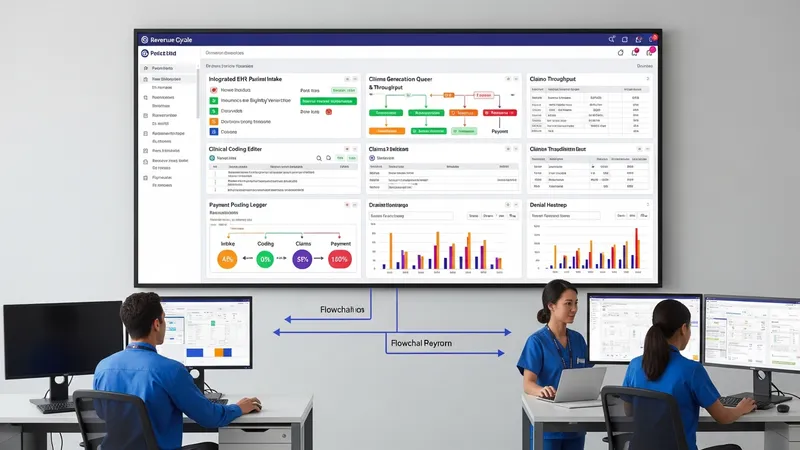
Integration between registration, coding, and claims modules may reduce transcription errors and speed claim submission. For example, when patient demographics flow automatically from registration into coding and billing modules, the likelihood of mismatched identifiers may decline. Systems that include pre-submission scrubbers can identify commonly rejected fields and prompt corrections before sending claims. These patterns often translate into shorter accounts receivable cycles and clearer operational metrics, although results will vary with implementation and organizational processes.
Automation features such as eligibility verification APIs and rules-based coding checks can shift routine tasks away from manual processing, which may help teams focus on complex cases and appeals. Automation typically requires configuration to match local payer rules and clinical workflows. Organizations may find that iterative tuning—adjusting scrubber thresholds, updating code sets, and refining mapping rules—can be necessary to align system behavior with payer expectations and local billing practices.
Denial management workflows within RCM software commonly include categorization, assignment, and tracking of appeals. Effective denial tracking often depends on consistent coding, timely documentation, and clear handoffs between clinical and billing staff. Analytics that surface denial trends by payer, procedure, or practitioner can support targeted interventions, such as coder training or documentation improvement initiatives. These interventions may reduce repeat denials over time when combined with process changes and feedback loops.
Data security and regulatory alignment are integral parts of RCM implementations. Software may offer role-based access controls, encryption in transit and at rest, and audit logs that record user actions. Compliance modules often include features to help manage payer rules, support audits, and maintain appropriate documentation retention. Organizations typically consider these capabilities alongside operational needs to ensure that billing workflows both protect patient data and satisfy regulatory expectations.
In summary, RCM software for hospitals and clinics encompasses modules for registration, coding, claims, payments, denials, and analytics, with an emphasis on integration and workflow support. Implementations may vary by facility size, specialty, and local payer landscapes; therefore, assessing module interoperability, configurability, and data protection features is often useful. The next sections examine practical components and considerations in more detail.
Registration and front-desk features typically form the entry point for RCM workflows. These components often handle demographic capture, scheduling, insurance plan identification, and upfront estimates. In many settings, eligibility verification APIs or batch checks may be used to confirm coverage before services are rendered. Attention to data validation at this stage may reduce downstream claim rejections related to incorrect subscriber information or coordination-of-benefits errors. Organizations commonly configure alerts and verification steps to align with their patient volume and payer mix.
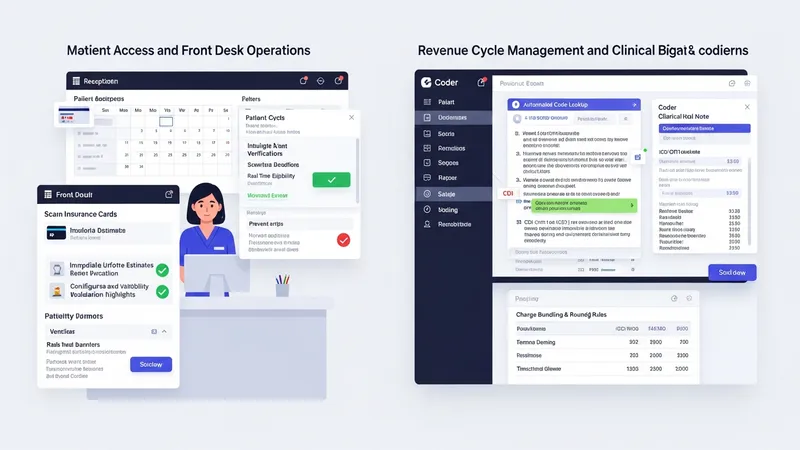
Coding and charge capture modules focus on translating clinical activity into billable items. These modules may support code lookup for widely used code sets, automated mapping from procedure or diagnosis documentation, and charge rounding or bundling rules. Some systems include clinical documentation improvement (CDI) prompts that may help coders align notes with appropriate codes. Accurate charge capture often relies on timely clinician documentation and periodic updates to code lists and pricing tables to reflect contractual or regulatory changes.
Claims management features typically include claim assembly, scrubbing, electronic submission (EDI), and payment adjudication tracking. Scrubbers run rules to identify formatting errors, missing provider identifiers, or code conflicts that often result in denials. After submission, remittance and explanation of benefits (EOB) processing may be automated so that payment posting can occur more quickly. Reconciliation processes compare expected reimbursement to received amounts, and adjustments or write-offs are recorded according to organizational policies.
Payment posting and patient billing components manage remit posting, patient statements, and collection workflows. Systems often support multiple posting methods, including electronic remittance advice (ERA) imports and manual entry. Patient balance estimation and itemized statements may be generated to clarify charges and payments. Where available, secure patient payment portals and integration with third-party payment processors can support electronic payments; configuration choices typically reflect institutional billing policies and consent procedures.
Interoperability between EHRs and RCM systems often underpins accurate coding and billing outcomes. Data exchange standards such as commonly used clinical messaging formats may be leveraged to transfer encounter details, procedure notes, and diagnosis lists into coding modules. When metadata—such as clinician identifiers and encounter timestamps—align across systems, the chance of mismatches may decrease. Facilities often plan integration testing cycles to validate that key fields map correctly and that updates to either system do not break interfaces.
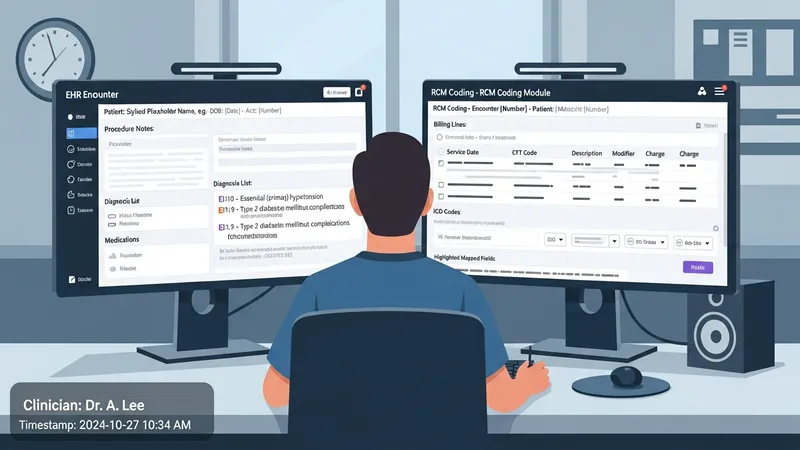
Clinical documentation improvement (CDI) workflows may be embedded or linked to RCM modules to enhance code specificity. CDI processes can prompt clinicians for clarifications when documentation lacks detail needed for accurate coding. These prompts typically operate as non-mandatory queries that seek additional clinical context. Over time, CDI activities can shift coding patterns and may be measured by changes in code specificity, documentation completeness, or audit outcomes, bearing in mind that results may differ across specialties.
Code set maintenance is another practical consideration: coding standards and bundled payment rules may change periodically, and RCM systems typically support updates to ICD, CPT, or other relevant lists. Organizations often schedule regular updates and version control to ensure charge capture and claim logic reflect current coding rules. Maintaining a documented process for code updates and a rollback plan for interface issues can reduce operational disruption during transitions to new code versions.
Audit trails and edit histories within RCM software can support internal reviews and external audits. These logs often capture user actions, code changes, and claim edits, which may be valuable when reconciling disputed claims or responding to payer inquiries. Facilities commonly define retention policies for these records and may use audit outputs to guide coder training or to refine automated rules that drive charge capture and claim assembly.
Claims processing often follows a pipeline of pre-submission validation, electronic transmission, remittance processing, and reconciliation. Pre-submission validation typically applies business rules to check for missing or inconsistent data elements that could prompt payer rejections. Electronic claim formats and submission channels may vary by region and payer; therefore, software often supports multiple transmission methods. Monitoring tools that show claim status by batch or payer can help teams prioritize follow-up for items pending longer than typical adjudication windows.

Denial tracking systems generally categorize denials by reason codes and severity to support prioritized response. Common categories may include eligibility, coding, bundling, or medical necessity-related denials. Tracking denial trends across payers, service types, or practitioner groups can surface systematic issues such as recurring documentation gaps or incorrect charge mapping. Teams often use dashboards to identify high-volume denial drivers and allocate appeals resources where the potential recovery impact is greater.
Appeals workflows supported by RCM software may include document management for attaching clinical notes and prior authorization records, templated appeal letters, and assignment rules for routing tasks to appropriate staff. Recording the timeline of appeal actions and payer communications can aid in managing response deadlines and documenting follow-up. Organizations often maintain a knowledge base of payer-specific appeals guidelines to improve the quality and timeliness of submitted appeals.
Key performance metrics related to claims and denials commonly include denial rates, days in accounts receivable (AR), and appeal success ratios. While typical ranges for these metrics vary by specialty and payer mix, tracking trends over time can inform process improvements. Confidential review of these measures, combined with targeted operational adjustments, may help reduce repeat denials and shorten claim resolution cycles without implying guaranteed outcomes.
Reporting and analytics modules in RCM software often present KPIs such as net collection rate, denial rate, days in AR, and average reimbursement by procedure. Dashboards may allow filtering by payer, provider, or service line to reveal patterns that merit investigation. Analytics tools sometimes include configurable alerts for unusual trends, but organizations commonly calibrate threshold settings to avoid excessive notifications. Regular review of these metrics may support budgeting, staffing decisions, and process improvement plans.
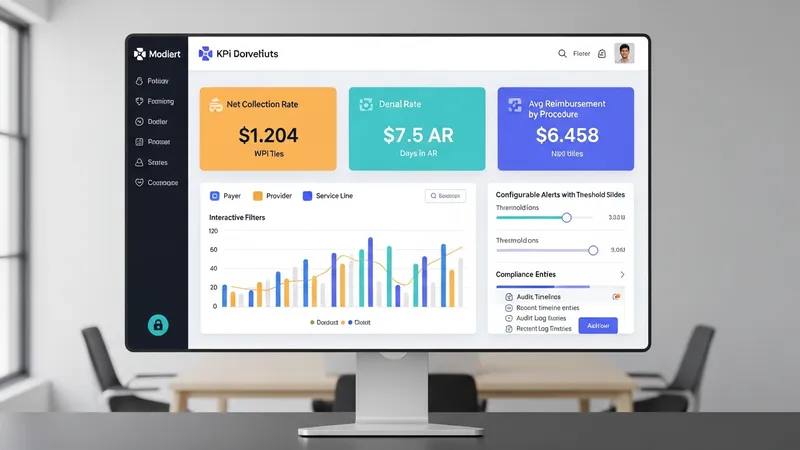
Compliance support features typically include access controls, audit logging, and configurable documentation retention policies. Systems may also provide payer rule libraries and regulatory update feeds to inform claim edits and billing rules. Maintaining alignment with applicable privacy and billing regulations often requires a combination of technical controls and documented operational procedures. Facilities frequently review compliance settings during vendor evaluations and at regular intervals thereafter to ensure continued alignment with current requirements.
Billing workflow management capabilities enable assignment, escalation, and tracking of tasks across teams. Role-based queues and status indicators can clarify who is responsible for each account and what actions remain. Some organizations implement service-level targets for collections or appeals and use workflow tools to measure adherence. Clear routing logic and standardized status codes may reduce handoff errors and improve throughput when paired with staff training and documented processes.
Forecasting and scenario analysis features may assist financial planning for hospitals and clinics by projecting expected cash flows based on historical collections, payer remittance patterns, and scheduled service volumes. Such projections typically rely on assumptions about payer behaviors and seasonal variation; therefore, sensitivity analysis is often used to explore alternative scenarios. Stakeholders may use these outputs to inform staffing, reserve planning, and operational priorities while recognizing that forecasts are estimates rather than guarantees.