
Inventory Management Systems are software and procedural frameworks that help organisations record, monitor, and control physical stock across channels and locations. They combine hardware inputs (barcodes, RFID, scanners) with software functions (item master records, transactions, valuation) to maintain a clear audit trail for receipts, issues, transfers, and adjustments. These systems may operate on-premises or in the cloud and typically aim to present a single source of truth about on-hand quantities, committed stock, and available inventory for planning and fulfilment.
Key components within an inventory management approach often include real-time tracking, stock level policies, purchasing and receiving workflows, order processing, warehouse operations, valuation methods, and reporting. Each component interacts: tracking data feeds replenishment signals, valuation choices affect financial reporting and KPIs, and user access controls mediate who can change records. Describing these elements helps clarify how inventory systems support operational accuracy and financial transparency rather than serving a single, uniform purpose across all organisations.
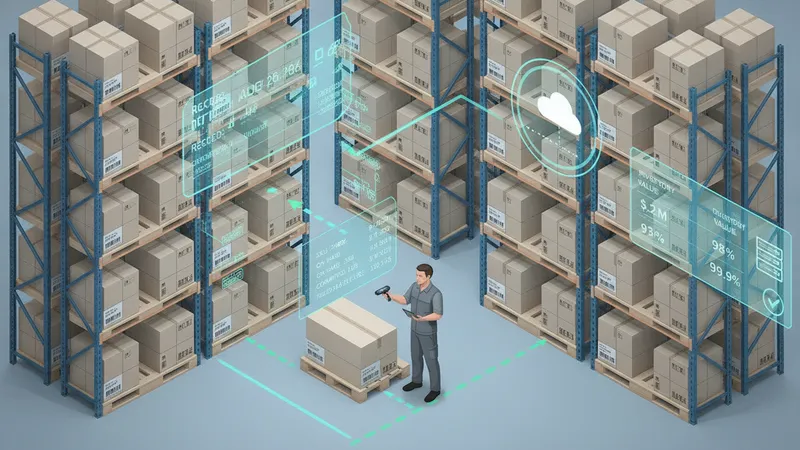
Inventory tracking methods may be perpetual or periodic. Perpetual systems update stock records at each transaction and typically provide near real-time visibility, which can reduce discrepancies when paired with scanning workflows. Periodic approaches rely on scheduled counts and reconciliation and may suit low-transaction environments. Organisations often combine methods, using perpetual records for high-turn SKUs and periodic checks for slow-moving items. Selection often depends on transaction volume, accuracy requirements, and available scanning infrastructure.
Stock level management involves parameters such as reorder points, safety stock, lead time, and economic order quantities. Reorder point calculations can integrate average demand and supply lead time; safety stock may be set to cover variability in demand or supplier performance. Some organisations use automated triggers from the inventory system to generate purchase suggestions, while others prefer manual review. These mechanisms generally aim to balance service levels with carrying costs, and metrics such as fill rate and days of inventory often inform ongoing adjustments.
Purchasing and receiving workflows in inventory systems commonly include purchase order creation, supplier confirmation, goods receipt posting, and inspection or quality checks. Receiving transactions should update on-hand quantities and generate disposition records for inspected, quarantined, or returned items. Order processing links availability to allocation and picking instructions; allocation rules may reserve inventory for specific channels or customers. Well-configured workflows can reduce manual entry, but organisations typically validate automated steps with periodic reconciliation.
Inventory valuation and identification support are core financial and operational functions. Valuation methods such as first-in first-out (FIFO) or weighted average cost can change reported cost of goods sold and inventory valuation on financial statements and may therefore be selected in consultation with accounting practice. Barcode and RFID technologies help maintain accurate transaction timestamps and item provenance, which can improve traceability for batch or serial-controlled goods. Reporting and analytics draw on transactional history to produce KPIs such as turnover, stock ageing, and fill rates.
In summary, Inventory Management Systems bring together tracking, stock control, purchasing, warehousing, valuation, and reporting into a coherent framework that may improve visibility and operational decision-making. Implementation choices — including tracking technology, valuation approach, and automation level — tend to reflect organisational scale, transaction patterns, and regulatory needs. The next sections examine practical components and considerations in more detail.
Inventory tracking and stock level management are central to system design and usually determine the required hardware and data model. Tracking may rely on line-item scanning for each transaction or on batch-level records for groups of units; serial and lot control provide additional granularity for traceability. Stock levels are commonly managed through parameters such as reorder point and safety stock; these parameters may be static or recalculated periodically using recent demand data. Many organisations implement cycle counting routines to verify records, and a combination of automated posting and physical checks often reduces long-term discrepancies.

Common tracking approaches include perpetual record-keeping, where each receipt and issue updates the ledger instantly, and periodic stocktakes, where inventory is reconciled at set intervals. Perpetual systems may support near-real-time dashboards and alerts, while periodic methods can be simpler to operate in low-transaction settings. Cycle counting frequencies are typically risk-based, focusing on high-value or high-turn SKUs more often than slow-moving items. Such risk-based counting may improve accuracy while keeping labour requirements manageable.
Reorder strategies can vary from simple min-max rules to demand-driven forecasts. Min-max approaches set lower and upper bounds for inventory that trigger replenishment when levels fall below the minimum. Forecast-driven replenishment uses historical sales and seasonality to suggest order quantities and timing; forecast accuracy can significantly affect inventory holding and stockouts. Organisations often monitor lead time variability and supplier reliability as inputs to safety stock calculations and may adjust parameters when service levels or supply conditions change.
Practical considerations for tracking and stock levels include barcode label quality, scanning workflows, and staff training. Label durability and consistent SKU naming conventions often reduce scanning errors. Integration with sales and procurement channels helps ensure that committed and available quantities are reconciled across systems. Where systems support exceptions (damaged items, returns), explicit workflows for quarantining and disposition can prevent misstatements in available inventory. Readers may observe that these features typically require policy discipline alongside technical capability.
Purchasing, receiving and order processing form the inbound and outbound transaction flows that stock systems must capture. Purchasing workflows often begin with purchase requisitions and lead to purchase orders that include supplier terms, expected delivery dates, and quantities. Inventory systems may support automated PO generation based on reorder triggers or forecasted demand, but organisations generally retain review steps for high-value or irregular purchases. Matching invoices to receipts is a common control point to ensure that financial and inventory ledgers align.
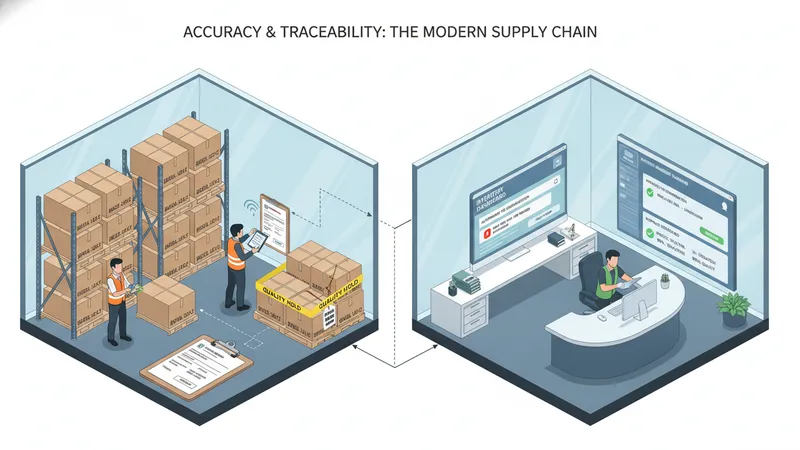
Receiving processes are critical for timely updates to on-hand quantities. Typical steps include logging the arrival, inspecting items against purchase orders, recording serial or batch identifiers, and posting goods receipts. Where quality checks are required, systems usually allow for items to be placed on hold or quarantined until inspection completes. Accurate receiving can reduce downstream fulfilment delays and improve supplier performance measurement, and organisations often link receiving data to supplier scorecards for procurement decisions.
Order processing covers order capture, allocation, picking instructions, packing, and shipping confirmation. Allocation rules may reserve inventory for priority channels or backorders, and picking strategies (single-order pick, batch pick, wave pick) can be selected based on order profiles and warehouse layout. Integration with carriers and shipment tracking often occurs at the final stage to update order status. Systems typically record fulfilment timestamps for performance metrics such as order lead time and on-time shipment rates.
Controls and exceptions are important across purchasing and order processing. Common exceptions include short deliveries, over-receipts, damaged goods, and returns; systems that support clear disposition and credit processes can reduce reconciliation effort. Audit trails that record who performed transactions and when they occurred help maintain internal control and support investigations. Organisations may also implement approval thresholds to manage spending and ensure segregation of duties between purchasing and receiving functions.
Warehouse management features within inventory systems aim to optimise physical flow and storage. Slotting — assigning preferred storage locations based on velocity and size — may reduce travel time for picks. Picking methods such as pick-to-light, voice-directed picking, or barcode-guided picking can increase accuracy and speed depending on investment and transaction density. Replenishment from bulk to picking locations is often scheduled by threshold or driven by demand forecasts, and proper sequencing between replenishment and picking reduces out-of-stock occurrences at the pick-face.

Reordering and replenishment strategies vary with product characteristics. For high-turn items, continuous replenishment and smaller, more frequent deliveries may reduce safety stock needs, while slow-moving items may be replenished less frequently to reduce holding costs. Techniques such as kanban or pull-based replenishment rely on consumption signals to trigger movement, whereas push-based methods issue transfers based on forecasted requirements. Selecting a replenishment approach typically reflects operational priorities like service level targets, supplier lead times, and storage constraints.
Technology supports automation of many warehouse tasks. Barcode scanning and RFID readers can automate put-away and retrieval, and warehouse control systems may coordinate conveyors or sorters in larger facilities. Where automation is partial, hybrid workflows that combine manual processes with system-driven instructions often balance cost and efficiency. Organisations commonly pilot small changes (a single zone or SKU group) to measure impact before scaling automated solutions across the warehouse.
Practical considerations include workforce ergonomics, change management, and measurable KPIs such as picks per hour and on-time fulfilment. Training on scanning procedures and exception handling is frequently cited as a determinant of system accuracy. Regular review of slotting, replenishment parameters, and demand patterns can reveal opportunities for incremental improvement; however, such reviews usually proceed cautiously to avoid introducing operational disruption.
Reporting and analytics transform transactional inventory data into insights for purchasing, operations, and finance. Common reports include stock valuation, ageing analysis, turnover ratios, slow-moving SKU lists, and fill-rate dashboards. Analytics may support demand forecasting, safety stock simulation, and scenario analysis for supplier lead time changes. Data quality and completeness are prerequisites for reliable analytics: missing or inconsistent item attributes can lead to misleading metrics, so governance processes for SKU creation and master data maintenance are typically important.

Integration with enterprise systems—ERP, point-of-sale, e-commerce platforms, and supplier portals—reduces manual reconciliation and supports end-to-end visibility. APIs and standard data exchange formats allow inventory systems to receive sales orders, push shipping confirmations, and synchronise item attributes. Integration planning usually addresses data frequency, transformation rules, and error-handling procedures. Organisations often start with key interfaces and expand integrations incrementally to manage complexity and risk.
User roles and access controls are part of data governance, limiting who can create, modify, or approve inventory transactions. Role-based permissions, approval workflows for adjustments, and audit logging typically help maintain accountability. Periodic reviews of user access and separation of duties between operational and financial roles may be adopted to reduce fraud and error risk. Clear documentation of policies and procedure flows supports consistent application of controls and aids onboarding of new staff.
Maintaining reliable inventory data commonly involves routine reconciliation, exception reporting, and scheduled audits. Cycle counts and variance investigations help correct systemic issues such as mislabelled SKUs or inaccurate put-away. When implementing new features or integrations, organisations often pilot changes and monitor key metrics to validate effects before wider rollout. These governance and validation practices typically support more stable inventory performance over time without relying solely on technological fixes.