
Mental health electronic health records (EHRs) are digital systems designed to record, organize, and support clinical information specific to behavioral and psychological care. These systems typically structure clinical documentation, store longitudinal patient records, and integrate tools for assessment and progress tracking. In practice they may combine text-based notes, standardized screening scores, medication lists, and treatment plans to reflect ongoing mental healthcare encounters.
Beyond storage, mental health EHRs often include workflow elements such as appointment scheduling, secure messaging, billing triggers, and reporting capabilities that align with behavioral health workflows. The architecture of these systems can vary by vendor and setting, and they may emphasize different modules depending on whether the environment is outpatient therapy, community mental health, inpatient psychiatry, or integrated primary care.
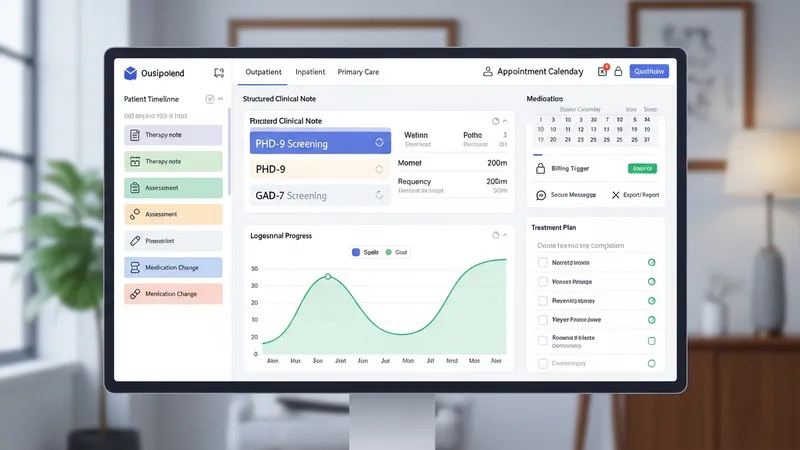
Structured clinical documentation templates may support consistent information capture across clinicians and can often include fields for symptom ratings, risk indicators, and referral history. These templates typically reduce variability in record content, which may facilitate auditing and quality measurement. However, relying solely on structured fields can constrain narrative detail; many systems therefore allow a mix of templated fields and free-text notes so clinicians can preserve important contextual information about a patient’s presentation.
Treatment planning and outcome-tracking tools in mental health EHRs often allow clinicians to assign measurable goals, attach timelines, and record progress using validated scales. Such tools can be used to visualize changes across sessions and to generate summary reports for care teams. In multidisciplinary settings, treatment plans may be shared among therapists, prescribers, and case managers to support coordinated interventions, with access permissions controlling which team members can edit or view specific elements.
Scheduling and communication modules commonly include features for appointment booking, automated reminders, waitlist management, and telehealth session links. These elements can reduce missed appointments and support access, particularly when telehealth options are available. Secure messaging and portal-based communications may permit limited exchange of information between patients and clinicians while maintaining audit trails, although organizations typically define policies for what types of clinical communication are appropriate through these channels.
Interoperability and reporting functions are frequently part of mental health EHRs to enable data exchange and performance measurement. Systems may export standardized clinical summaries, produce registry-style reports for populations, and generate compliance-related documentation. When implementing reporting workflows, organizations often consider data standardization, mapping of assessment scores, and the frequency of extracts to balance operational workload with the need for timely information.
In summary, mental health EHRs combine structured documentation, treatment-planning tools, and workflow modules such as scheduling and secure communication to support behavioral healthcare delivery. These components may be configured differently across care settings and should be evaluated in relation to clinical workflows, data needs, and privacy considerations. The next sections examine practical components and considerations in more detail.
Clinical documentation modules within mental health EHRs typically include progress note templates, diagnostic coding support, and assessment forms for standardized screening tools. Progress notes often follow formats such as problem-oriented notes or SOAP-style entries adapted for behavioral health, and systems may incorporate built-in fields for common measures like symptom checklists or functional status ratings. Documentation features may also include time-stamped entries, version history, and metadata that help teams track who made changes and when. These capabilities can support clinical continuity while preserving a record suitable for audits and reporting.
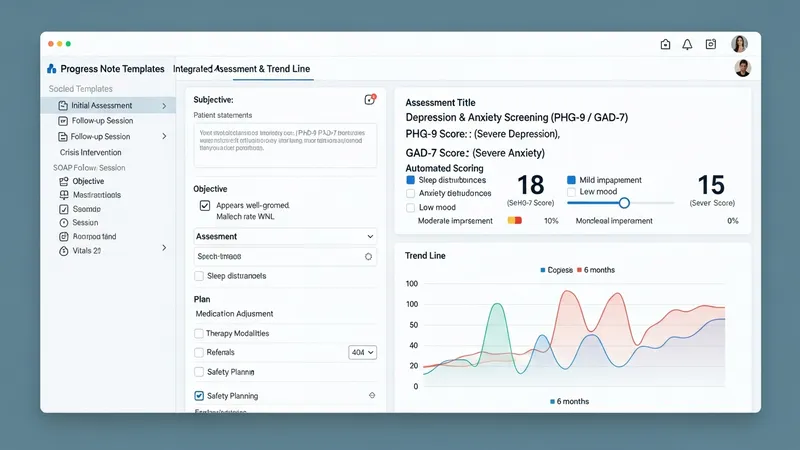
Assessment integration commonly enables clinicians to administer validated instruments electronically and store scores directly in the record. Measurement-based care workflows may link assessment results to treatment plans and alert clinicians to significant score changes. In routine practice, automated scoring and trend displays can assist clinicians in monitoring response, though interpretation remains a clinical task that often requires contextual notes and clinician judgment. Organizations may standardize which instruments are collected and how frequently to balance clinical utility with administrative burden.
Documentation for risk management and consent is frequently a focus in mental health EHRs. Templates may prompt clinicians to document safety planning, informed consent for treatment, and capacity assessments where relevant. These prompts can support consistency but also require careful configuration to avoid checklist-driven entries that omit narrative nuance. Additionally, privacy-sensitive documentation may be flagged within the system to limit access to only authorized roles, which is often important for sensitive behavioral health information in collaborative care settings.
Operational considerations include clinician usability and note-writing efficiency. Many organizations weigh the benefits of detailed structured data against the time required to complete templates. Common adaptations include using smart phrases, dropdown menus with customizable options, and voice recognition to streamline entry. From an implementation perspective, pilot testing templates with representative clinicians may reveal workflow mismatches and inform iterative adjustments to improve adoption while preserving the needed clinical detail.
Treatment planning modules in mental health EHRs often allow clinicians to document problems, set measurable goals, and select interventions with start and review dates. These plans can be linked to progress notes and outcomes to show whether interventions are achieving intended effects. In team-based care, shared plans may be visible to multiple providers with role-based access, supporting coordination among psychotherapists, prescribers, and social services. Care coordination features typically include referral tracking, task assignment, and documentation of inter-provider communications to maintain continuity across settings.
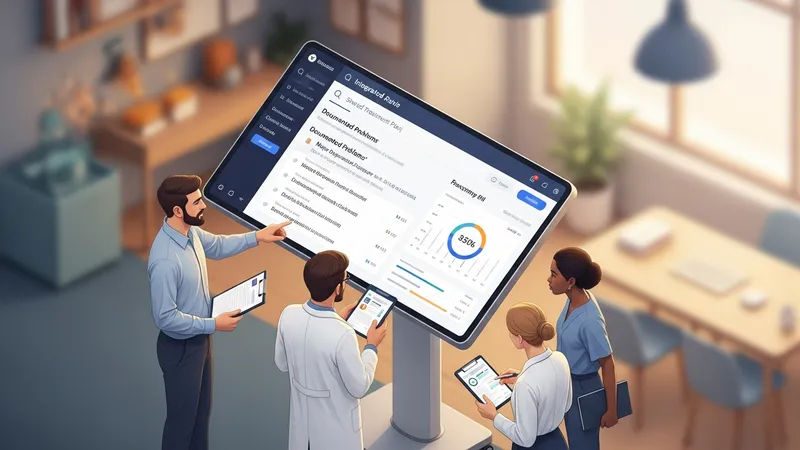
Outcome tracking tools can present session-level and longitudinal data alongside treatment plans to illustrate trends. Dashboards may display symptom scores, medication adherence indicators, and appointment attendance metrics that clinicians and program managers can use for review. Such views often support population-level quality efforts, for example by identifying subgroups with slower improvement. When using outcome tracking, teams commonly establish protocols for interpreting score changes and for documenting adjustments to treatment plans based on observed progress.
Interprofessional communication capabilities may be built into EHRs to facilitate case conferences and collaborative documentation. Secure in-system messaging, shared care notes, and aggregated care summaries can reduce reliance on separate communication channels. However, teams often define conventions for what information is shared in the central record versus private notes to balance transparency and confidentiality. Configurable alerts and task queues can help coordinate follow-up actions but should be tuned to avoid alert fatigue among clinicians.
Implementation considerations include aligning treatment planning templates with clinical models used by the service (e.g., cognitive-behavioral, recovery-oriented, or case-management frameworks). Configuring templates to reflect local practice enables clinicians to integrate documentation into care rather than treating it as an administrative burden. Pilot periods and feedback loops may help ensure that treatment planning and coordination workflows remain clinically relevant and support measurable care objectives over time.
Appointment management features often include scheduling that supports recurring sessions, waitlists, and automated reminders. Mental health settings may require longer appointment block types and flexible cancellation policies, which scheduling modules can reflect through configurable appointment templates. Integrated check-in workflows can capture consent forms, current medications, and updates to contact or emergency information. These pre-visit data collection elements may streamline intake and reduce administrative tasks during sessions.
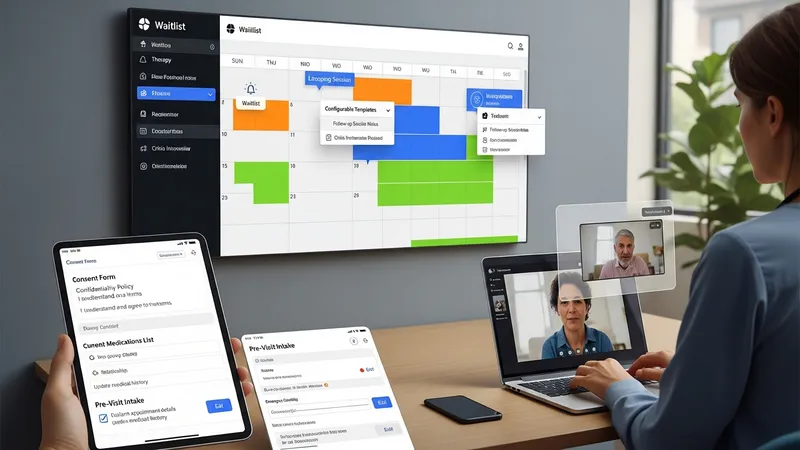
Telehealth integration has become a component of many mental health EHRs, enabling secure session initiation and documentation tied to the encounter. Telehealth workflows typically link appointment records with virtual visit URLs and record session metadata, such as start and end times. When telehealth is used, clinicians and administrators commonly define documentation expectations—for example, noting modality, location of clinician and patient, and any technical issues encountered—to ensure a complete clinical record.
Patient record workflows often include portals that allow individuals to view selected parts of their record, complete pre-visit questionnaires, and manage appointments. In behavioral health, organizations may control which notes and documents are available via portal access to address privacy considerations. Administrative workflows for release of information and record requests are also frequently supported within the EHR to manage legal requirements and interagency data exchange.
Operational tips include aligning scheduling rules with staffing patterns and allowing for buffer times between sessions for documentation. Organizations sometimes use reporting on no-show rates and appointment utilization to adjust scheduling templates. Careful configuration of appointment types, combined with staff training on workflow expectations, typically helps reduce scheduling friction and supports predictable documentation practices tied to each encounter.
Security and privacy protections are central to mental health EHR design because behavioral health records often contain sensitive information. Systems typically support access controls, audit logging, encryption in transit and at rest, and role-based permissions to limit access to authorized personnel. Data retention and disclosure settings may be configurable to align with applicable laws and organizational policies. From a governance perspective, clinicians and administrators often establish access rules and periodic audits to ensure appropriate use of sensitive clinical data.
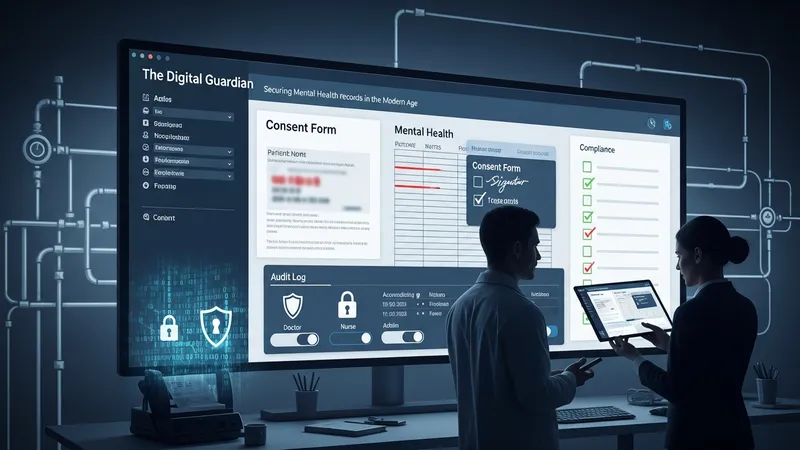
Compliance with applicable privacy and health information regulations is commonly addressed through technical and administrative controls. Depending on jurisdiction, systems may need to support legal requirements for consent, mandated reporting, or recordkeeping. Organizations may implement consent management workflows within the EHR to document patient agreements about information sharing, and compliance teams often map EHR configurations to regulatory checklists to identify gaps and remedial actions.
Interoperability features enable data exchange between behavioral health systems and external partners such as primary care, laboratories, or community agencies. Standard formats and protocols—such as clinical summaries, assessment score exports, or industry interoperability standards—can facilitate information flow. When planning interoperability, teams often prioritize the types of data that have highest clinical value for transitions of care, such as recent medications, active diagnoses, and safety plans, while considering privacy constraints on sensitive content.
Reporting and analytics modules may provide aggregated views for quality measurement, population health initiatives, and program oversight. Common reports include appointment utilization, outcome trajectories, and documentation completeness. When deploying reporting tools, organizations typically define data governance practices, standardize measure definitions, and schedule extract frequencies that balance timeliness with resource constraints. These practices can support continuous improvement without implying guaranteed outcomes from any single technology choice.