
The concept of NCCN non-small cell lung cancer (NSCLC) guideline-based care pathways describes a structured approach to clinical decision-making that aligns diagnostic, staging, molecular testing, treatment selection, and follow-up steps with current evidence summaries. These care pathways typically present sequence-oriented options that clinicians may use to evaluate a newly identified lung lesion, determine extent of disease, and match findings to appropriate local and systemic therapies. The framework is intended to organize information so multidisciplinary teams can consider patient-specific factors, tumor characteristics, and available resources when formulating individualized management plans.
In practice, guideline-based care pathways for NSCLC often clarify which diagnostic tests are commonly indicated, which staging procedures may be appropriate, and when to perform targeted biomarker assays. The pathways typically integrate recommendations about imaging modalities, tissue acquisition methods, and the timing of molecular or immunologic assays relative to treatment planning. They also outline approaches for assessing response to therapy and for surveillance after initial treatment, noting that specific choices may vary according to clinical context and evolving evidence.
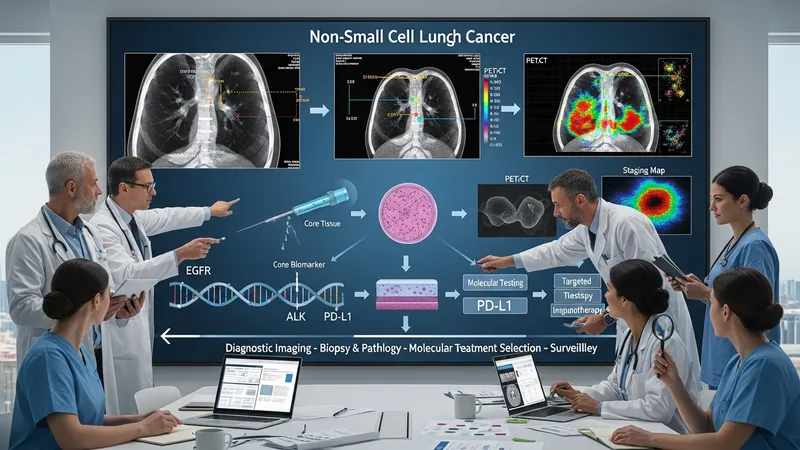
Diagnostic and staging workflow as a pathway component often begins with cross-sectional imaging and targeted tissue sampling. Imaging such as chest computed tomography (CT) and positron emission tomography (PET) may be used to assess local extent and distant disease, while bronchoscopy, percutaneous biopsy, or surgical sampling may provide diagnostic tissue. The pathway may emphasize obtaining adequate material for both pathologic diagnosis and downstream molecular testing, since insufficient tissue can delay subsequent steps. Recommendations generally note that sequencing of these actions can vary and should take into account clinical urgency and patient comorbidities.
Biomarker-driven molecular profiling within guideline-based pathways typically outlines which assays are commonly considered and how results can influence systemic therapy options. Testing for driver alterations, gene rearrangements, and protein expression markers may be described as part of the initial diagnostic workup for certain stages. The pathway framework often suggests parallel processing—performing molecular assays while staging is completed—to reduce delays in treatment planning. Guidance usually frames testing as informing choices rather than dictating a single course, acknowledging that access to assays and therapies can differ by setting.
Multimodality treatment planning in these pathways commonly describes how local therapy (surgery, radiation) and systemic therapy (chemotherapy, targeted agents, immunotherapy) may be integrated. The pathway may delineate typical scenarios—for example, operable early-stage tumors managed primarily with resection, versus locally advanced disease managed with combined modality approaches. Emphasis is often placed on multidisciplinary review to consider patient fitness, pulmonary function, and tumor features. The pathways usually underline that sequencing and combinations may be tailored based on individual risk–benefit considerations.
Response evaluation and surveillance elements within care pathways generally provide structured intervals for clinical assessment, imaging, and, where appropriate, laboratory monitoring. The framework may describe criteria for radiographic response assessment and recommended timing for follow-up imaging after definitive therapy. Surveillance recommendations often balance the potential for early detection of recurrence with considerations about cumulative testing and patient burden. Pathway documents commonly present ranges of reasonable intervals and highlight that follow-up plans may be individualized.
In summary, the concept of NCCN non-small cell lung cancer guideline-based care pathways involves organized sequences that cover diagnostic assessment, staging, biomarker testing, treatment planning, response evaluation, and follow-up. These pathways aim to present evidence-aligned options and considerations clinicians may use when developing individualized care plans. The next sections examine practical components and considerations in more detail.
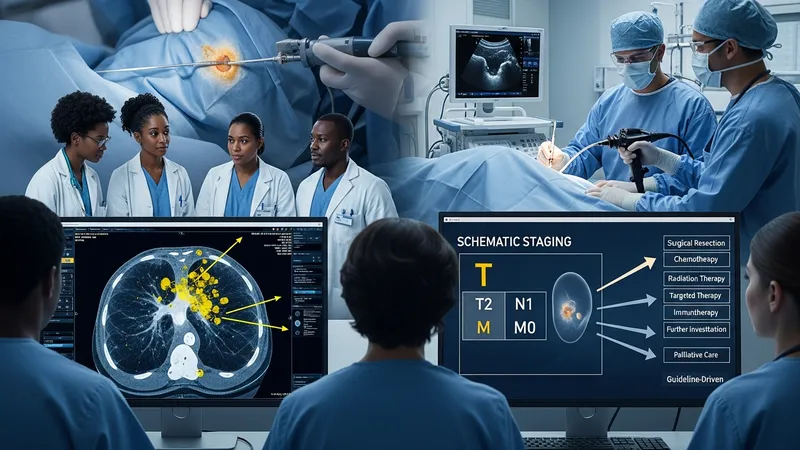
Diagnostic assessment and staging components of guideline-based NSCLC pathways typically begin with clinical history, physical examination, and targeted imaging. Chest CT with contrast is commonly used to characterize primary lesions and regional nodes, while PET-CT may be used to evaluate metabolic activity and detect occult metastases in many settings. Tissue diagnosis is usually recommended before definitive therapy when feasible; options for tissue acquisition include bronchoscopic biopsy, CT-guided percutaneous biopsy, and surgical sampling. Pathways often stress acquiring sufficient tissue for both histologic classification and molecular testing to streamline subsequent decision steps.
Staging within these pathways is frequently described using standard anatomic staging systems to convey tumor size, nodal involvement, and distant spread. Care pathways may outline when invasive mediastinal staging (for example, endobronchial ultrasound-guided sampling) is appropriate, particularly when imaging findings could alter the therapeutic approach. The pathways also often note that staging results can change initial treatment intent; for instance, detection of limited metastatic sites may shift the plan toward systemic therapy or combined modality approaches depending on patient factors and institutional practice patterns.
Considerations noted in many pathway documents include the timing of diagnostic steps to minimize delays and ensure tissue adequacy. For example, performing molecular testing concurrently with diagnostic confirmation can often shorten the interval to therapy initiation when systemic options are under consideration. Pathways commonly encourage multidisciplinary communication so that radiologists, pathologists, and proceduralists understand the need for specific samples, such as core biopsies or cell blocks, that may be more suitable for comprehensive testing compared with small cytology specimens.
Practical points emphasized in pathways include contingency planning when initial tissue is insufficient and the potential role of repeat biopsy or use of plasma-based assays in select circumstances. The pathways may discuss limitations of certain sampling techniques and the need to weigh procedural risk against the expected information yield. These considerations are presented as contextual factors that may influence the diagnostic sequence rather than prescriptive commands.
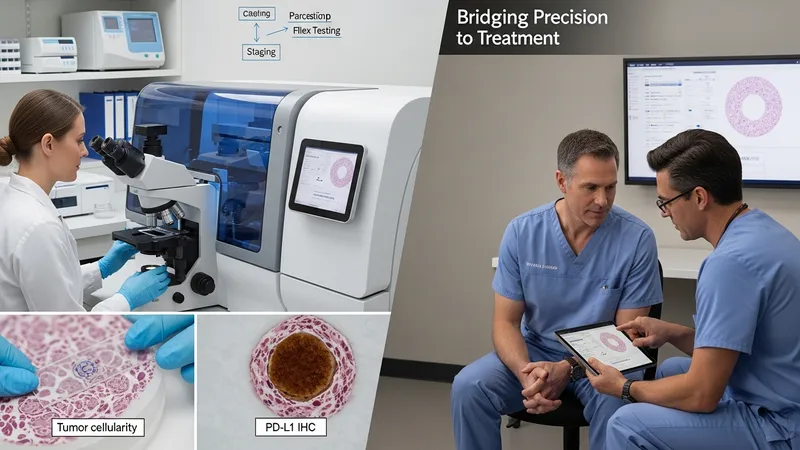
Biomarker testing and molecular profiling sections of guideline-based pathways outline which assays are often relevant for informing systemic therapy decisions. Commonly described molecular targets, protein expression markers, and gene rearrangements may be listed with guidance on test methodologies—such as polymerase chain reaction panels, next-generation sequencing, or immunohistochemistry—while noting that availability and local laboratory capabilities can vary. The pathways usually recommend that testing be considered early in the care sequence for patients with advanced or recurrent disease and that results be interpreted in the context of clinical and pathologic data.
Pathways frequently address the practical timing of testing, suggesting that molecular profiling proceed in parallel with staging to prevent treatment delays. They may also describe when reflex testing by the pathology laboratory is appropriate and how tumor cellularity and sample quality can affect assay validity. In some settings, plasma-based circulating tumor DNA assays are presented as an adjunctive option when tissue is inadequate or difficult to obtain, recognizing that sensitivity and the spectrum of detectable alterations can differ from tissue-based assays.
Interpretation guidance in these pathways often frames biomarker data as one element among several that inform therapy selection. For example, the presence of a specific actionable alteration may open certain systemic options, while other biomarkers may provide prognostic or predictive information of varying strength. Pathways commonly encourage multidisciplinary review for complex or discordant results and note that confirmatory testing or consultation with molecular pathology may be useful when results will materially influence care.
Operational considerations addressed include sample handling, turnaround times, and communication of results to the treating team. Pathways typically suggest minimizing delays by coordinating sample submission and using laboratories with validated assays; they also note that turnaround times may vary and can affect the timing of therapy initiation. These points are framed as workflow considerations rather than mandates, allowing flexibility based on institutional resources and patient circumstances.
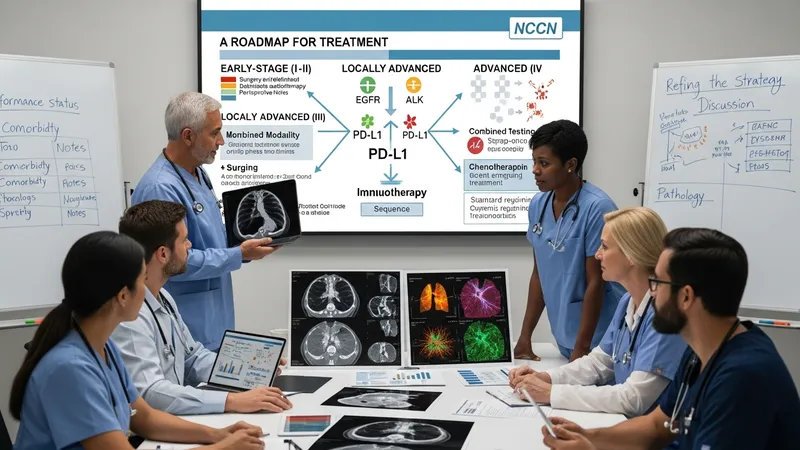
Treatment planning sections of guideline-based NSCLC pathways generally describe frameworks for selecting local and systemic therapies based on stage, performance status, and tumor characteristics. For early-stage disease, pathways often outline criteria for considering surgical resection versus definitive radiotherapy and provide notes on perioperative considerations. For locally advanced presentations, the pathways typically detail combined modality approaches and sequencing options. For advanced disease, systemic therapy selection is commonly discussed in relation to molecular and immunologic test results, with attention to patient-specific factors and prior treatments.
Within these pathways, multidisciplinary tumor board review is often presented as an organizational component that may improve alignment of care choices across specialties. Pathways frequently describe roles for thoracic surgeons, radiation oncologists, medical oncologists, pulmonologists, radiologists, and pathologists in evaluating complex cases. The frameworks usually indicate that recommendations may vary according to patient comorbidities, functional status, and preferences, and that individualized choices are expected within the pathway structure rather than a single uniform plan.
Sequencing and integration of modalities are discussed with attention to practical constraints such as treatment tolerability and timing of systemic therapies relative to local treatments. The pathways may outline common sequences—for example, neoadjuvant systemic therapy followed by surgery in selected cases or concurrent chemoradiation for certain unresectable tumors—while noting that evidence strength and practice patterns can evolve. These sections emphasize that pathway guidance is intended to support clinical judgment and multidisciplinary coordination.
Operational details in pathway documents often include recommendations for pre-treatment assessments, such as pulmonary function testing and cardiopulmonary evaluation for surgical candidates, and for supportive care needs during systemic therapy. The pathways typically recommend monitoring parameters and considerations for dose adjustments based on toxicity, framing these as examples of routine clinical management rather than definitive rules. Such guidance is presented to aid consistent planning across care teams.
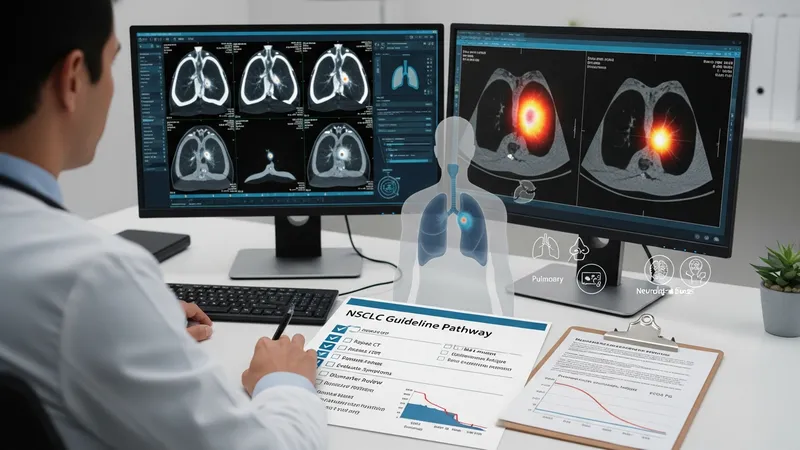
Guideline-based pathway content on response evaluation commonly describes standardized intervals and criteria for radiographic assessment following therapy. Imaging modalities and timing may be outlined for post-treatment evaluation, and response criteria—such as commonly referenced radiographic response definitions—are often summarized to provide a consistent framework for assessing tumor control. The pathways typically emphasize that response assessment should be coordinated with clinical symptoms and, where relevant, biomarker trends, recognizing that radiologic changes may lag or be difficult to interpret in certain contexts.
Surveillance recommendations in pathways usually present reasonable timeframes for follow-up visits and imaging after definitive therapy, balancing the potential benefits of earlier detection of recurrence with the risks of overtesting. For example, routine chest imaging at defined intervals may be described as a commonly used approach, with the acknowledgement that exact frequency and modality can be individualized. Pathways also often include suggestions for monitoring late effects of treatment, such as pulmonary or neurologic symptoms after radiation or surgery, and recommend documentation of functional status over time.
Follow-up planning sections may address when to consider additional diagnostic evaluation for suspected recurrence, including tissue confirmation when clinically actionable change is anticipated. The pathways often discuss the role of salvage therapies and how prior treatments influence subsequent options. Emphasis is placed on multidisciplinary reassessment at the time of progression to consider available systemic and local interventions, always noting that choices depend on prior therapies, patient factors, and evolving evidence.
Practical considerations highlighted in these sections include coordination of long-term care between oncology specialists and primary care, documentation of survivorship issues, and the potential psychological and social support needs of patients. Pathways typically present these aspects as part of comprehensive care planning, encouraging structured follow-up approaches that can be adapted to individual circumstances and healthcare system resources.