
Payroll systems are organized sets of processes, rules, and tools used to calculate employee compensation, manage deductions, and produce records for payments and reporting. They typically combine data on hours worked, salary rates, tax rules, benefit elections, and applicable statutory deductions to determine gross and net pay. A payroll system may operate as dedicated software, a module within a larger human resources or accounting system, or as an outsourced service managed by a third party. The scope often includes pay calculation, payment distribution, recordkeeping, and generation of compliance reports.
Core aims of a payroll system include accurate wage calculation, consistent application of withholding rules, and timely delivery of payments. Systems often implement business rules such as pay frequency, overtime calculations, shift differentials, and leave accruals. Integration points commonly include time and attendance sources, benefits administration platforms, and general ledger systems for accounting purposes. Effective payroll systems also maintain audit trails and documentation that can support internal review and external regulatory requirements.
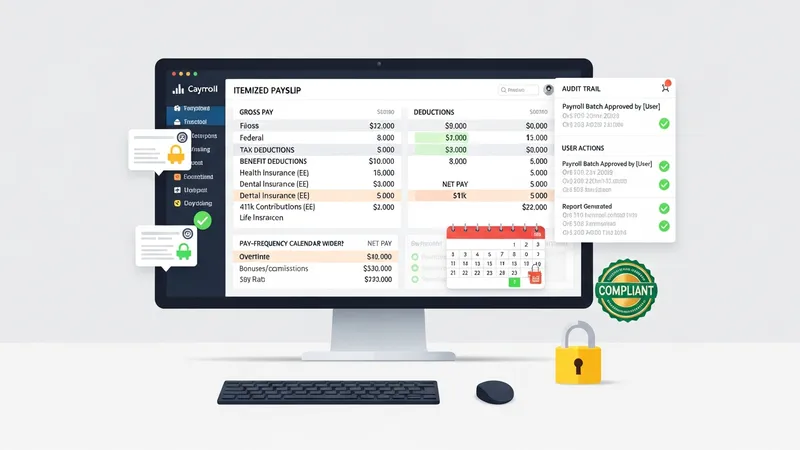
Automated payroll processing often follows a defined workflow: data collection, validation, calculation, approvals, payment execution, and posting to accounting systems. Data collection can include timecards, salaried schedules, commission inputs, and adjustments for bonuses or corrections. Validation steps may flag missing or inconsistent records and may route issues to payroll administrators for resolution. Approval stages typically require sign-off from managers or payroll specialists before finalizing runs; this reduces the risk of errors reaching payment execution.
Wage calculation logic in payroll systems commonly handles multiple pay elements in parallel, such as base pay, overtime, differential pay, commission, and one-off adjustments. Systems typically apply rounding rules, proration for partial periods, and carry forward year-to-date balances for benefits or deductions. Payroll calculations often must reconcile with employment contracts, collective bargaining agreements, and internal pay policies. Where applicable, systems may also support multiple pay cycles and varied payment methods for different classes of workers.
Tax withholding and statutory deductions are central functions and often require frequent updates to tax tables, social insurance rates, and local assessment rules. Systems usually support configurable tax parameters and deduction buckets so that withholdings can be computed by jurisdiction and by employee status. Many payroll setups provide reporting templates for tax remittance and year-end statements, while also maintaining histories needed for audits. Compliance features may include validation checks and alerts when configured thresholds are exceeded.
Integration with time and attendance tools, benefits administration, and accounting systems is a common emphasis in payroll design. Time capture methods such as biometric terminals, web timesheets, and mobile punch tools feed hours into payroll for validation and calculation. Benefits platforms provide enrollment and deduction feeds, which may affect both pre-tax and post-tax withholdings. Accounting integration helps post payroll expenses and liabilities to appropriate ledger accounts, supporting reconciliation and financial reporting.
Payroll records and reporting capabilities often include pay registers, tax remittance reports, general ledger summaries, and employee pay statements. Systems may allow the extraction of aggregated payroll metrics for internal analysis and statutory reporting. Security controls and access restrictions typically protect sensitive payroll data and restrict actions such as changing tax codes or initiating payments. The next sections examine practical components and considerations in more detail.
Processing workflows in payroll systems typically map the lifecycle from raw labor inputs to finalized pay outputs. Inputs may include timekeeping entries, salary schedules, commission reports, and manual adjustments. Systems often provide validation routines that can detect anomalies such as overlapping shifts, missing time entries, or inconsistent pay rates. Administrators commonly configure pay calendars and run sequences to support weekly, biweekly, semimonthly, or monthly cycles. Where multiple pay groups exist, systems may support parallel runs and consolidated reporting to ensure consistency across organizational units.
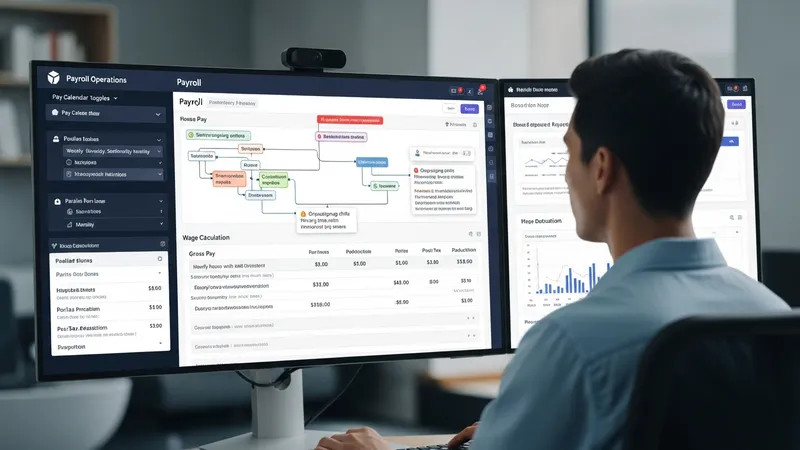
Wage calculation modules often separate gross pay elements from deductions and employer contributions. Gross pay computation may handle hourly calculations with overtime multipliers, salaried proration for partial periods, and variable components such as bonuses. Deduction logic typically covers taxes, statutory contributions, retirement plan deferrals, and voluntary benefits. Payroll engines may allow layered deduction priorities so that pre-tax and post-tax withholdings apply in the intended order and do not conflict with statutory caps or thresholds.
Complex pay situations—for example, multi-state work, shift differentials, or commission-based compensation—may require conditional logic and supplemental data feeds. Systems that support multiple currencies, pay rates, or labor categories can assign rules per worker or per assignment. Where changes to pay are frequent, audit trails and versioning help trace when and why calculations changed. Robust testing and parallel runs may be used during configuration changes to verify that calculation rules produce expected outcomes before going live.
Operational controls around processing typically include role-based access, segregation of duties, and approval gates. Common controls may require supervisor approval for manual adjustments, review of exception reports before payroll finalization, and separation between staff who input data and those who authorize payments. These practices can reduce error rates and create clear accountability paths for payroll actions. Technical measures such as reconciliation reports and automated alerts for threshold breaches further assist in maintaining reliable processing.
Tax withholding capabilities in payroll systems usually incorporate configurable tax tables and jurisdictional rules to calculate income tax, social insurance, and other statutory charges. Systems may support multiple levels of taxation such as national, regional, and local assessments, and they often allow mappings by employee residence or work location. Regular updates to tax logic are commonly required to reflect legislative changes; organizations may maintain internal processes to apply updates or rely on vendor-provided updates when available.
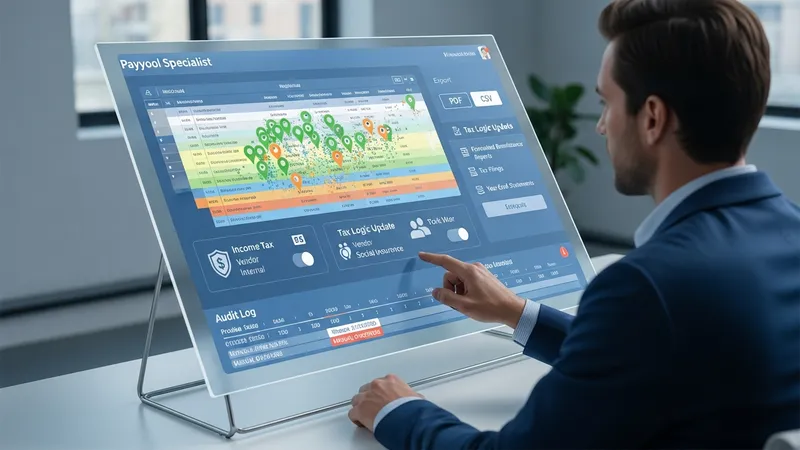
Reporting functions for compliance typically generate periodic remittance reports, tax filings, and year-end statements for employees and authorities. Payroll systems may format outputs to align with standard submission forms or allow exports for external filing tools. Retention of payroll records and generation of historical reports can be important in the event of audits or disputes. Systems may also include audit logs that track changes to tax setup, employee tax classifications, and manual overrides.
Handling multi-jurisdictional taxation introduces complexity that payroll systems address through rule hierarchies and nexus determination. Systems may flag potential multi-jurisdiction exposures when employees work in multiple locations or when business operations span different tax jurisdictions. Controls often include tests for withholding thresholds and validation of employee tax elections. Organizations frequently establish review cycles to confirm tax setups and to reconcile withholding with remittance records to reduce the risk of penalties.
Compliance considerations extend beyond tax calculations to include statutory reporting on benefits, payroll taxes, and labor-related filings. Payroll systems often support generation of standard statutory reports and may allow parameterization to meet specific local requirements. Organizations commonly document compliance procedures and maintain checklists for periodic filings. These administrative practices may reduce the likelihood of missed filings and help ensure that payroll processes align with current regulatory obligations.
Time and attendance integration is a central functionality that connects labor capture with pay calculations. Systems often accept feeds from time clocks, mobile punching apps, or web-based timesheets and may perform rounding, rounding policies, or exception detection. Integration can eliminate manual transcription of hours, reducing errors and enabling faster processing. When configured, attendance feeds may automatically populate accruals for leave types and trigger supervisor approvals where exceptions occur, supporting consistent application of paid-time-off policies.
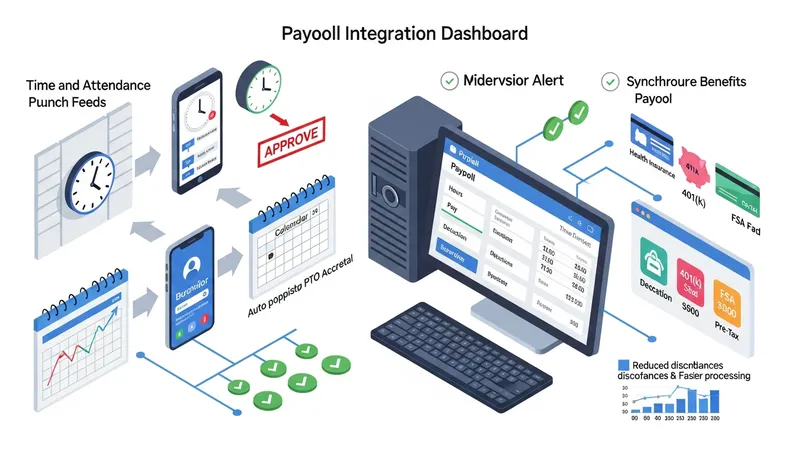
Benefits administration interfaces commonly feed employee elections and deduction amounts into payroll. These feeds can include health plan premiums, retirement deferrals, flexible spending account elections, and other voluntary deductions. Payroll systems frequently provide mechanisms to calculate employer contributions and to apply pre-tax treatment where applicable. Maintaining synchronized data between benefits and payroll systems may reduce discrepancies in withholding and ensure that benefit deductions align with plan eligibility and enrollment periods.
Leave and accrual management often interacts with payroll to calculate paid absence payments and to update remaining balances. Systems may support accrual rules based on service time, hours worked, or other criteria, and can automate proration and carryover calculations. Integration with scheduling tools may also help match leave usage to staffing needs. Clear visibility of accruals in employee self-service portals can assist workers in understanding available balances and reduce administrative inquiries to payroll teams.
When connecting multiple systems, data governance and mapping are practical considerations. Organizations may define canonical employee identifiers to avoid mismatches, establish error-handling rules for missing or conflicting records, and perform routine reconciliations after imports. Testing integration scenarios—such as mid-period status changes or retroactive adjustments—can surface mapping issues. Documentation of integration logic and update procedures helps maintain reliable flows and supports troubleshooting when discrepancies arise.
Reporting capabilities in payroll systems typically include operational outputs like pay registers, deduction summaries, tax remittances, and ledger distributions. Custom reports may be created for analytical needs such as labor cost by department or overtime trend analysis. Systems often support export formats for accounting systems and may include configurable report schedules. Security controls around reporting limit access to sensitive payroll metrics and ensure that confidential data is available only to authorized roles.
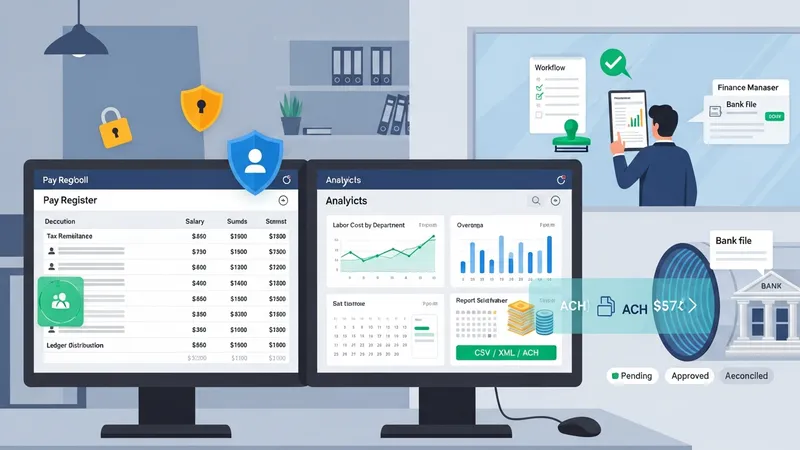
Payment execution frequently involves direct deposit mechanisms and other payment methods. Systems that support direct deposit commonly prepare ACH-formatted files or integrate with banking interfaces for payment initiation. Payroll systems may also manage payment batching, handle multiple funding accounts, and record payment statuses for reconciliation. Controls around payment initiation and bank file approval are commonly used to reduce unauthorized transfers and to maintain separation between payroll processing and disbursement authorization.
Workflow management within payroll systems can include multi-step approvals, exception handling, and scheduled tasks. Systems may allow administrators to define review sequences for changes such as pay-rate updates or retroactive adjustments. Exception workflows can route flagged items to designated reviewers and maintain resolution histories. Role-based workflows help enforce separation of duties so that data entry, approval, and payment initiation are performed by distinct users where required.
Security, privacy, and scalability are ongoing considerations when selecting and configuring payroll systems. Access controls, encryption for data at rest and in transit, and routine backups are common technical safeguards. Scalability planning may consider growth in employee counts, additional pay groups, or expanded geographical coverage. Regular reconciliation, periodic reviews of user access rights, and documentation of procedures often form part of an organization’s approach to maintaining reliable payroll operations.