
Living long-term or part-time in a converted van requires adapting daily routines, vehicle layout, and systems so that practical needs are met within a compact footprint. For older adults this often emphasizes ease of movement, simplified daily tasks, predictable storage and utilities, and solutions that reduce physical strain. Daily life in this setting typically centers on balancing mobility with stability: planning routes and stops that allow rest, arranging interior spaces to limit bending or reaching, and establishing routines for cooking, hygiene, and vehicle upkeep.
Considerations for older adults may include reduced mobility, sensory changes, medication storage and access, and social contact. These factors can affect choices about bed height, door thresholds, seating that swivels or reclines, and placement of frequently used items. Managing power, water, and waste systems in a way that aligns with routine medical or personal-care needs can also be part of planning. The focus is often on predictable, low-effort processes rather than elaborate customizations.
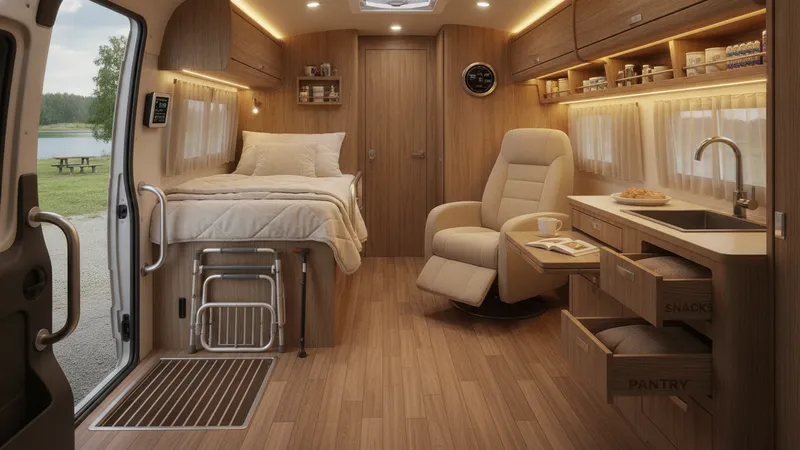
Layout choices often reflect trade-offs between accessibility and storage capacity. For example, a low fixed bed may reduce transfers but limit under-bed storage; a fold-away bed can increase storage but require repeated lifting. Wheelchair or walker access usually requires a cleared aisle and reduced step heights, which can consume space that might otherwise be used for cabinets. Material choices such as cushioned flooring and rounded edges can reduce the risk of injury during movement. These considerations may influence decisions about van size and conversion complexity.
Daily routines in a van environment tend to be more intentional than in a conventional home. Typical routines may include morning hygiene at a campsite or rest stop, planned food preparation using compact appliances, scheduled equipment charging, and regular checks of systems like batteries and water tanks. Routines can also include brief maintenance tasks—such as topping up fluids or checking tire pressure—to avoid surprises. Establishing predictable workflows for medication, laundry, and communications may reduce stress and physical demand.
Sleeping and living arrangements can vary from fixed beds to convertible seating areas. Fixed beds often reduce the need to set up each night and may be positioned at an accessible height to reduce transfers. Convertible beds can allow more daytime living space but may require repeated physical effort to transform. Mattresses with pressure-relieving properties may be useful for individuals with joint sensitivity, and options for auxiliary lumbar support or cushions can improve comfort. Ventilation and insulation also affect sleep quality and thermal comfort.
Cooking, food storage, and hygiene choices impact daily convenience and safety. Smaller refrigerators or 12V fridges can preserve perishables with lower power draw, while dry goods stored in labeled, pull-out bins can reduce unnecessary reaching. Induction hobs and well-secured cookware can lower the risk of open-flame incidents during travel. For hygiene, interior wet baths allow privacy and warmth but use more water and require waste management; portable or cassette toilets can be lighter on space but need regular emptying. Each option may be weighed against the frequency of stops and personal mobility.
In summary, living in a van as an older adult involves aligning interior layout, daily routines, and system choices with mobility, comfort, and predictable maintenance needs. Modifications that reduce lifting and bending, systems that support simple daily tasks, and routines that account for energy and water management can all play roles. The next sections examine practical components and considerations in more detail.
Layout and accessibility determine how easily daily tasks can be performed within a van. Key layout elements often include door threshold height, aisle width, bed configuration, seat placement, and storage accessibility. Those with limited mobility may prefer a single-level floor or a low step-in threshold to reduce transfers; swivel cab seats can create a smoother transition between driving and living areas. Flooring with moderate cushioning and non-slip surfaces may be favored to reduce fall risk and joint stress, and rounded counter edges can limit accidental knocks. These choices typically influence usable floor area and storage strategies.
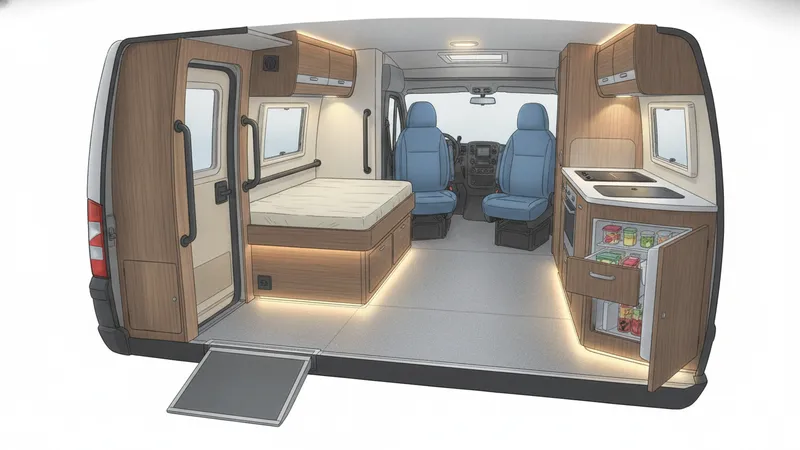
Accessibility aids such as grab rails, fold-out steps, or short ramps can assist with entry and movement, but they require planning for secure attachment and storage. Rails are often mounted near doors and bed edges where transfers occur most frequently. When planning storage, pull-out drawers and drawer-style fridges can lower the need to reach overhead, while labeled and frequently used items are commonly stored within arm’s reach. Lighting placement and contrast between surfaces may also assist with navigation at night.
Trade-offs between space efficiency and accessibility are common. For instance, reducing overhead cabinets to create more headroom can improve maneuverability but reduces storage capacity for items like linens and dry goods. Designers and occupants often prioritize storage for essential items and relocate less-used belongings to external compartments. When considering structural modifications, it may be useful to evaluate how changes affect vehicle center of gravity, seating safety, and legal compliance with vehicle modification standards relevant to where one travels.
Practical considerations include testing movements in a mock-up or temporary layout before committing to built-in fixtures, and planning for eventual changes as mobility needs evolve. Some people use modular components that can be reconfigured over time, which may prolong the vehicle’s usefulness without permanent structural changes. Maintenance access for systems such as water tanks and batteries should not be overlooked, since frequent checks and occasional servicing are typically part of ongoing living arrangements.
Sleeping arrangements are a central comfort factor and often dictate daily routines. Choices range from fixed platform beds at a lower height to convertible sofas or bench systems that fold into beds. Fixed beds may reduce nightly setup and lower effort, while convertible solutions conserve daytime living space. Mattress selection can affect pressure distribution and joint comfort; foam or hybrid mattresses designed for limited spaces may better conform to a compact frame. Proper ventilation, window coverings to manage light, and the ability to control cabin temperature may all influence sleep quality.
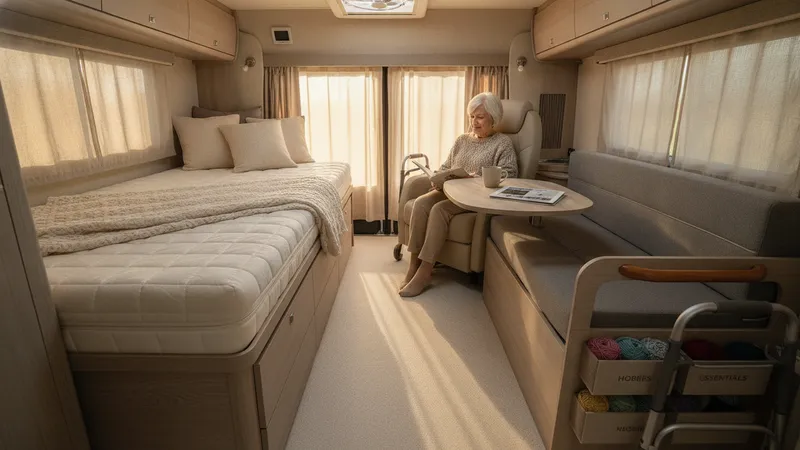
Daytime living arrangements influence social interaction, mobility, and rest. Seating that allows upright, stable posture with adequate back support can reduce strain during reading, eating, or using devices. Seat height and cushion firmness often matter for transfers from mobility aids. Arranging a small, reachable table area for meals and tasks may reduce repetitive movement. For those who spend more time inside the van, storage for hobbies or assistive devices positioned for easy access may support well-being and routine maintenance of social contacts.
Climate control and insulation are practical comfort considerations. Insulation quality and window coverings affect temperature regulation and condensation management; both can influence respiratory comfort and sleep. Portable or built-in heating solutions may be necessary in cooler climates but require attention to ventilation and carbon monoxide safety. Conversely, passive ventilation, fans, and reflective window coverings can reduce overheating in warm conditions. These measures can make daily routines such as dressing, resting, and meal preparation more predictable.
Ergonomic details may include bedside grab points, anti-slip mats near entryways, and easily reached night-time lighting. Small adjustments—such as adjustable reading lights, a bedside shelf for medications, or a low step stool stored near the bed—can reduce nightly exertion. Since individual needs can change over time, designing for adaptability, such as leaving space for future assistive equipment, may be a practical planning consideration rather than committing to a single permanent configuration.
Cooking and food storage systems affect daily meal routines and safety. Compact refrigerators or 12V systems may keep perishables while minimizing power draw; insulated coolers can be an interim option for short trips. Cooking surfaces such as induction hobs reduce open-flame exposure and can be used on stable counters, while propane cooktops require ventilation and secure storage for fuel. Storing frequently used items at mid-level or in pull-out drawers can minimize reaching. Planning meals around simple preparation and using pre-portioned ingredients may reduce time spent standing and moving.
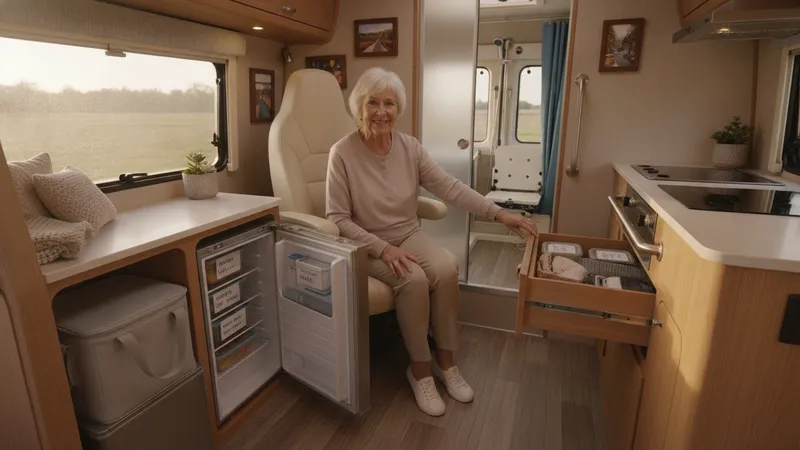
Hygiene and bathroom options vary widely and usually reflect space, water availability, and the occupant’s mobility. Wet baths provide enclosed privacy and warm water but typically demand more water and larger tanks; cassette toilets and composting toilets require regular emptying or maintenance but can conserve water and space. Portable shower setups can be used outdoors when privacy and weather permit, and low-step shower pans with seating or shower chairs may support those with limited balance. Waste disposal logistics should be planned based on frequency of travel and local regulations.
Water management is central to hygiene routines. Freshwater storage capacity, pump accessibility, and filtration options influence how often tanks need refilling and the feasibility of using onboard showers. Greywater handling varies by system; some setups collect greywater for later disposal while others are designed for short-term holding. Practical routines often include limiting shower duration, using low-flow fixtures, and scheduling tank emptying at designated service points or campsites that permit disposal.
Food safety and medication storage are additional considerations. Medications that require stable temperatures may need insulated containers or small medical coolers for certain doses, and dry goods kept in sealed, labeled containers can reduce spoilage and pest risk. Cleaning supplies and hygiene products are commonly stored in easily accessible locations to encourage regular use. Planning for contingencies—such as alternative food options or temporary reliance on external facilities—can be part of a cautious, routine-focused approach to daily living.
Mobility and ongoing maintenance are intrinsic to life in a van and typically shape daily and weekly routines. Vehicle maintenance schedules for tires, brakes, fluids, and electrical systems can be planned to coincide with travel routes to minimize interruption. Mobility considerations include ease of entering and exiting the van, securing mobility aids during transit, and ensuring seating positions support safe driving posture. Regular checks of systems—battery state, tire pressure, and fluid levels—may become part of a predictable maintenance routine to reduce the likelihood of service needs while on the road.

Utilities and power management influence daily comfort and planning. Solar panels combined with properly sized battery banks may support lighting, refrigeration, and small appliances, while shore-power connections at campgrounds can be used for heavier loads or battery charging. Conserving energy through LED lighting, low-draw appliances, and mindful charging habits can make power use more predictable. Water refilling, waste emptying, and propane resupply are periodic logistical tasks that can be incorporated into travel planning and route selection.
Budgeting for ongoing expenses typically includes fuel, maintenance, campsite fees, utilities, insurance, and occasional repairs. Costs can vary widely by region and season and may be expressed conservatively when planning. Tracking regular expenditures and establishing a modest contingency buffer for unexpected repairs may help maintain continuity of daily routines. Insurance and registration considerations, including coverage for modifications, may influence long-term planning and should be reviewed with qualified sources relevant to one’s travel region.
Social and community life can be a supportive element for older adults living in vans. Many people form routines around local services, community centers, or campsite meetups that provide social contact and practical assistance. Planning for reliable connectivity—cellular data or Wi‑Fi access—may support telehealth consultations, communication with family, and participation in online communities. Establishing a predictable schedule for social contact and local services can enhance well-being and make daily life in a van more sustainable over time.