
Small business ideas in the USA: Practical options for new entrepreneurs refers to a range of manageable commercial concepts that individuals can form within United States markets. These concepts include service-based activities, online and home-based retail, food and beverage micro-enterprises, professional freelance services, local community offerings, and technology-enabled businesses. Each concept typically involves distinct customer segments, cost structures, and regulatory requirements, and can be pursued at different scales depending on available resources and local market demand.
When evaluating practical options, new entrepreneurs often consider startup costs, business structure, required permits, and likely revenue models. Market demand within a given city or county may shape whether a particular service or product is viable. Many small business paths allow gradual scaling: for example, a home-based online seller can expand to a dedicated storefront, while a service provider may add employees or subcontractors. Planning frequently focuses on realistic timelines, break-even expectations, and basic record-keeping needs.

Comparing product-based and service-based small business ideas, entrepreneurs may weigh typical up-front investments and operating complexity. Product sellers often manage inventory, shipping, and platform fees, while service providers may invest more in marketing and time-based capacity. In metropolitan areas such as New York City, Los Angeles, or Chicago, demand density may make certain service models easier to fill, whereas in smaller towns a niche product or community service may find a stable audience. Market research may typically include simple local searches, competitor reviews, and conversations with prospective customers to refine an initial offering.
Startup costs for the listed concepts can vary widely and often determine early scope. For example, a basic home-based e-commerce venture may involve website and listing fees that can start under $500, while a food truck often involves vehicle purchase and outfitting that may range from approximately $25,000 to $100,000. Service businesses such as mobile detailing or lawn care can often begin with under $5,000 for basic equipment. Technology projects may require developer time that can translate to several thousand dollars for a working prototype. These ranges are illustrative and may vary by state and local market.
Regulatory and permit considerations are frequently relevant across these business types. Food-related enterprises typically need local health department permits and may need to comply with state food safety regulations. Many small businesses will register a legal entity (such as an LLC) at the state level and obtain an Employer Identification Number (EIN) from the federal IRS if hiring or for certain tax structures. Local business licensing requirements often differ by city and county and may include zoning checks for home-based activities.
Revenue models for small businesses can include one-time sales, hourly or per-project service fees, subscription-based access for ongoing services, or marketplace commissions. Sellers on established marketplaces usually factor platform commissions and shipping costs into pricing. Service providers may structure fees as hourly rates, per-project caps, or retainer arrangements for recurring work. New entrepreneurs often pilot a single revenue approach and then iterate based on customer response and unit economics.
In summary, practical small business options in the United States cover a spectrum from low-capital home-based retail to capital-intensive food or technology initiatives. Important considerations include realistic startup cost estimates, applicable permits and registrations, market demand in the intended locality, and a clear revenue model. The next sections examine practical components and considerations in more detail.
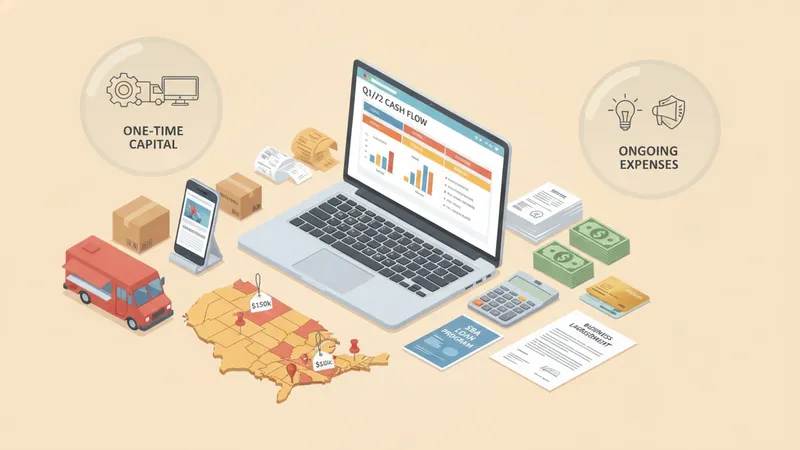
Estimating startup costs for small business ideas in the United States often begins by separating one-time capital expenses from ongoing operational costs. One-time expenses may include equipment, initial inventory, vehicle purchase for mobile services, or website development. Ongoing expenses typically include rent or hosting, utilities, supplies, insurance, and marketing. For many home-based sellers, initial website setup and inventory might typically fall under $2,000, while a small food truck or café could often require tens of thousands of dollars. These figures may vary significantly by state and city.
Funding sources commonly used by U.S. small business founders include personal savings, bank loans, credit lines, and government-supported options such as SBA microloans or community lender programs. The U.S. Small Business Administration provides resources and links to lenders that may support smaller capital needs. Entrepreneurs often prepare a conservative three- to six-month cash-flow projection showing projected sales, cost of goods sold, and fixed expenses to anticipate near-term funding needs and break-even timing.
Budgeting best practices often emphasize separating personal and business accounts, maintaining simple bookkeeping from the start, and tracking actual spending against projections. Tools such as cloud accounting services may reduce manual overhead and help with tax reporting. New owners may typically plan for contingency reserves because unplanned expenses or slower-than-expected sales can extend the time to break even. State sales tax registration and sales tax collection should also be budgeted for where applicable.
Price-setting considerations include covering production or service delivery costs, marketplace and payment processing fees, and a margin that reflects local competitive conditions. For professional services, hourly rates often reflect local market demand and practitioner experience. For product sellers on platforms like Etsy or Amazon, fee structures and shipping costs commonly enter pricing calculations. Monitoring gross margin and adjusting pricing iteratively may help ensure sustainable operations without relying on promotional claims or unsustainable discounts.

Choosing a legal structure and completing required registrations are foundational steps for U.S.-based small businesses. Common structures include sole proprietorships, partnerships, limited liability companies (LLCs), and corporations (C or S). Each structure has different implications for liability, taxation, and administrative complexity. Many entrepreneurs consult state secretary of state websites for entity registration processes and the IRS for EIN guidance. State-specific registration fees and forms vary by jurisdiction.
Licensing and permit needs depend on activity and location. Food enterprises typically liaise with local health departments and may require food handler certifications, facility inspections, and commissary agreements for mobile food vendors. Contractors, cosmetologists, and certain professional services may require state licensure. Local zoning ordinances can affect home-based businesses, particularly those with customer traffic or signage. Entrepreneurs may consult city or county business licensing portals to confirm requirements prior to launching.
Insurance and compliance considerations commonly include general liability, professional liability, property, and commercial auto policies where appropriate. For businesses that handle customer data, attention to privacy and data security practices may be relevant. Employers must also address payroll tax withholding and worker classification; the IRS and Department of Labor provide guidance on employer responsibilities. Many small business development centers and SCORE chapters in the U.S. offer free consultations on compliance topics.
Record-keeping and tax registration are ongoing administrative aspects. Sales tax registration is typically required for retail sales in a state that imposes sales tax; thresholds and remote seller rules can differ. Accurate records of income and deductible expenses support federal and state tax filings. New entrepreneurs often register for applicable state tax accounts and maintain organized receipts to facilitate quarterly estimated tax payments where required.
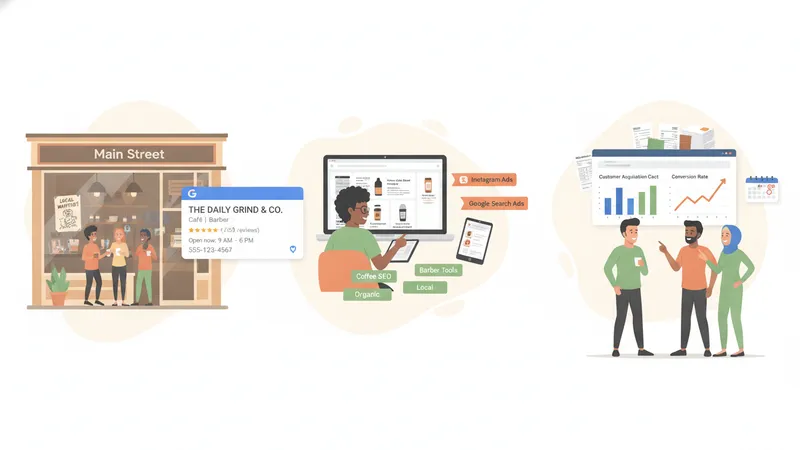
Marketing approaches for U.S. small businesses vary by concept and target customer. Local service providers often combine local search optimization, community listings, and targeted flyers or partnerships with complementary local businesses. E-commerce sellers may use marketplace listings, search engine optimization for product pages, and paid advertising on platforms such as Google Ads or social media. Tools like Google Business Profile help local businesses appear in search results and often include hours, contact methods, and reviews.
Customer acquisition costs and channels typically differ by business model. Marketplaces can provide built-in traffic but usually at a cost in fees and competition. Direct-to-consumer websites may require investment in content, search optimization, and paid promotion. Service businesses often rely on repeat customers and word-of-mouth referrals; systematic invoicing and appointment management systems can improve client retention. Tracking lead sources and simple conversion metrics may help refine where limited marketing resources are most effective.
Revenue models commonly seen among U.S. small businesses include one-time product sales, hourly or project-based service fees, subscription or membership models for recurring services, and hybrid approaches combining product and service income. For example, a consulting practice may charge per-project fees while also offering a subscription-based advisory service. Each model may imply different cash-flow patterns and billing practices; careful invoicing and payment processing setups can reduce administrative friction.
Measurement and iteration are central to marketing and revenue planning. New entrepreneurs often start with small pilots to measure customer interest and conversion rates before scaling marketing spend. Reviewing simple performance indicators — revenue per customer, repeat purchase rate, and gross margin — can inform adjustments to pricing, service scope, or channel focus. Local business resources and analytics tools may provide further data to refine customer acquisition approaches.

When evaluating a small business idea within the United States, practical criteria include estimated startup and operating costs, expected local demand, regulatory requirements, and personal time commitment. Unit economics — the relationship between the cost to deliver one sale or service and the price charged — may often indicate whether scaling is feasible. Many reviewers recommend a modest pilot or minimum viable offering to validate assumptions before larger investments. Local market conditions and competitive density can materially affect revenue expectations.
Feasibility considerations typically cover cash-flow timing, necessary permits, and supplier dependability. For food-related concepts, verifying commissary availability or supplier lead times can be critical. For e-commerce sellers, assessing shipping options and return policies is practical. Entrepreneurs may consult federal resources such as the SBA local assistance directory or SCORE mentors for localized guidance on planning and feasibility without implying any specific outcome.
Planning steps often include drafting a simple business plan, estimating a conservative timeline to break-even, and mapping key milestones (licensing, website launch, first sales, first payroll). Record-keeping and basic bookkeeping set a foundation for financial clarity; tools such as industry-standard accounting software may assist in tracking revenue and expenses. New business owners may also consider community resources like Small Business Development Centers for workshops and counseling that explain state-specific processes.
Finally, iterative evaluation and adaptation are typical in early stages: monitoring customer feedback, adjusting pricing or service scope, and refining marketing channels. Reasoned, data-informed adjustments may help align offerings with local demand while managing financial exposure. Resources such as federal small business pages and local assistance networks can provide factual, jurisdiction-specific information to support planning and compliance.