
Small-capital business planning describes approaches for starting commercial activity with limited initial capital. The concept typically focuses on models that reduce upfront expenditures, prioritize quick revenue pathways, and use scalable processes so owners can adapt spending as demand develops. It encompasses identifying low-capital business models, estimating realistic initial outlays, and preparing simple operational plans that emphasize cash preservation. The goal of this approach is to provide a structured route for launching a venture using conservative assumptions and iterative testing rather than large upfront investment.
This planning approach often separates activities into discrete stages: model selection, cost estimation, demand validation, and initial operations. It emphasizes methods for reducing fixed costs (for example, relying on freelance support or shared workspaces), choosing product or service mixes that can be adjusted quickly, and creating a minimal viable offer to assess customer interest. The framework typically encourages tracking short-term cash flows and incorporating feedback loops so founders can pivot or scale without committing extensive capital.
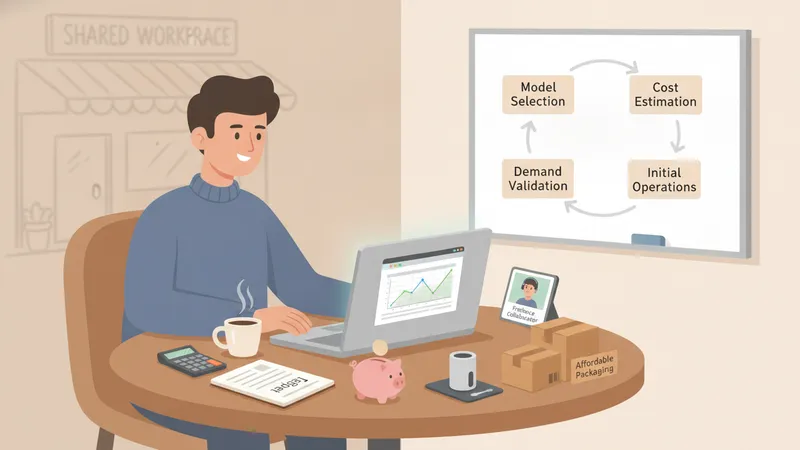
Service-based freelance offerings often require little more than a reliable internet connection, a portfolio or sample work, and an online presence to reach initial clients. Typical immediate costs may include a basic domain and hosting, simple productivity software, and optional membership in professional directories; these are commonly lower than product-oriented launches. Services can allow direct, rapid feedback from early buyers and may permit income to start flowing soon after initial outreach efforts. This model can be suitable when skills are transferable and the founder prefers flexible work arrangements.
Low-inventory product sales use third-party fulfillment or production-on-demand to reduce initial purchases of finished goods. This option typically shifts capital from inventory to product development and marketing experiments. Common activities include testing designs via limited runs, using third-party platforms for listings and fulfillment, and iterating product variations based on real orders. The approach can reduce warehousing and obsolescence risk, though it may yield lower per-unit margins; founders may need to measure unit economics carefully to determine viability.
Micro-consulting and tutoring rely primarily on subject-matter expertise and scheduling systems rather than inventory or heavy equipment. Initial setup may include a simple booking tool, a professional payment method, and basic materials or lesson plans. These models often allow pricing flexibility—hourly rates or multi-session packages can be used—while enabling founders to calibrate offerings from direct interaction with clients. They can also be combined with digital products, such as short guides or recorded sessions, to create additional revenue streams with limited incremental capital.
Across these examples, typical validation techniques include small paid tests, pilot client agreements, simple landing pages, and outreach to a target audience through organic channels. Early validation may involve offering reduced-scope trials or collecting pre-orders to confirm demand before expanding offerings. When estimating costs and planning early operations, many founders use conservative projections and short forecasting horizons (for example, monthly cash-flow estimates) to keep commitments aligned with available capital. These practices may help manage financial exposure while providing actionable evidence for incremental investment.
In summary, small-capital business planning centers on selecting low-capital models, estimating and prioritizing modest initial costs, and validating demand through lightweight experiments. The examples above—service-based freelancing, low-inventory product sales, and micro-consulting or tutoring—illustrate common low-capital approaches that may be adjusted to different skills and markets. The next sections examine practical components and considerations in more detail.
When assessing low-cost business models, founders often compare service-oriented approaches with product-oriented ones. Service models typically require less physical investment but may depend more on time and reputation, while product models can scale differently and often shift capital to marketing and distribution. Common evaluation criteria include initial cash outlay, time-to-revenue, required skills, and flexibility to iterate. Using such criteria can help prioritize models that align with available resources and short-term goals. Consideration of customer acquisition methods and typical conversion timelines may also influence the model selection.
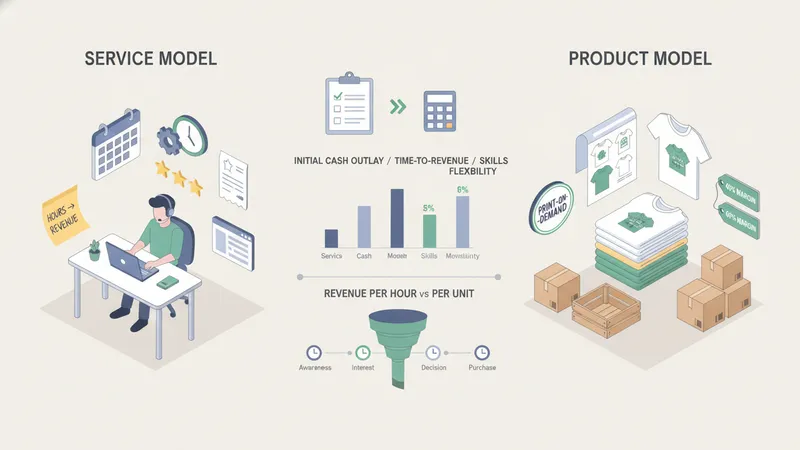
Practical distinctions include how each model handles inventory risk and margin structure. For low-inventory product approaches, fulfillment partners and print-on-demand services can reduce warehousing needs but may lower per-unit margin. For services, the chief constraints are time and the ability to reach clients; cost structures typically include software subscriptions and basic equipment rather than physical stock. Founders may map projected revenue per hour of work or per unit sold to compare how long it may take to recover initial expenses under each model.
Another evaluation factor is platform dependence and discoverability. Many small-capital ventures rely on existing marketplaces, social platforms, or professional networks to reach customers with limited promotional spend. Using established channels can reduce initial marketing needs but may introduce fees and platform rules to consider. Founders may balance the advantages of platform reach against the desire for direct customer relationships, keeping in mind that early customer data often informs subsequent strategic choices about channel mix and investment.
Finally, founders may weigh the scalability and repeatability of operations when choosing a model. Some service offerings may be packaged or productized to allow limited delegation or automation, while product models may benefit from incremental design improvements that increase average order value. The chosen model can directly influence early operating decisions such as hiring freelancers, investing in a basic website, or setting aside modest funds for testing advertisements and promotions under controlled conditions.
Estimating initial costs typically involves separating essential one-time expenses from ongoing operating needs. Essential one-time items often include basic technology (computer, phone), minimal professional branding (domain, basic logo), and any required materials to produce an initial offer. Ongoing operating needs can include subscription software, internet access, and small marketing budgets. Many founders create a short-term budget covering the first three to six months to identify the minimum capital needed to reach a break-even point or to gather sufficient customer feedback.

Budgeting with conservative assumptions may mean planning for slower-than-expected revenue and setting aside a contingency for unanticipated operational expenses. Small-capital founders often prioritize expenditures that directly enable customer interactions or revenue generation, such as time spent creating an online listing, setting up a booking system, or producing an initial product sample. Tracking actual expenses against these initial estimates helps refine forecasts and informs decisions about whether to adjust scope or seek small incremental funding.
Estimating costs can also include projecting variable costs per sale, such as payment processing fees, fulfillment fees, or platform commissions. Calculating a simple contribution margin—revenue per sale minus variable costs per sale—can clarify how many sales may be needed to cover fixed operating costs within a target period. This type of analysis can guide pricing choices and reveal whether a planned model requires adjustments to reach workable unit economics.
Founders may also use staged spending approaches to reduce risk: allocate minimal funds to early validation, and with positive signals, reinvest a portion of early revenue into scaling experiments. This staged approach often includes defined checkpoints where progress is reviewed against measurable criteria (for example, conversion rate from a landing page or number of repeat clients) before increasing expenditure. Such checkpoints help maintain disciplined budgeting while allowing data-driven scaling decisions.
Validating demand often begins with low-cost tests that gather real customer responses. Examples include simple landing pages to collect interest, limited-run product offerings, pilot service sessions, or direct outreach to targeted prospects. These tests may use free or low-cost tools to measure interest indicators such as email sign-ups, pre-orders, or scheduled consultations. The emphasis is on obtaining observable market signals before committing to larger production runs or long-term contracts so that founders can adjust offers based on feedback rather than assumptions.

Managing early cash flow requires attention to timing between receipts and payments. Techniques that often help include shortening invoicing terms, offering electronic payment options to reduce collection time, and negotiating supplier terms where possible. Maintaining a simple cash-flow forecast that tracks expected inflows and outflows over the next 30–90 days can highlight potential shortfalls. Founders commonly monitor working-capital needs to avoid overcommitting on inventory or services that create delayed revenue realization.
Metrics useful during validation and early operation include conversion rates from outreach, average revenue per customer, customer acquisition cost relative to initial spend, and repeat-purchase frequency. Tracking these metrics in simple spreadsheets or basic dashboards can provide clear decision triggers for whether to persist, pivot, or pause an initiative. Emphasis on data collection during small tests can improve the quality of estimates used in later budgeting and planning.
Practical considerations often include selecting payment and invoicing solutions that minimize fees while supporting the customer experience, and prioritizing paperwork that establishes clear terms for both parties. Early-stage founders may consider simple accounting tools to separate personal and business transactions and to track profitability by product or service line. These practices may reduce administrative friction and provide clearer visibility into the financial health of the venture as it develops.
Sourcing affordable resources can involve using open-source software, secondhand equipment, freelancer networks for specific tasks, and shared or pay-as-you-go services for occasional needs. This approach often reduces fixed costs and allows access to capabilities that would otherwise require larger capital commitments. When selecting resources, founders may weigh trade-offs between cost, quality, and control, recognizing that lower initial expense can sometimes increase time spent on coordination or quality assurance.
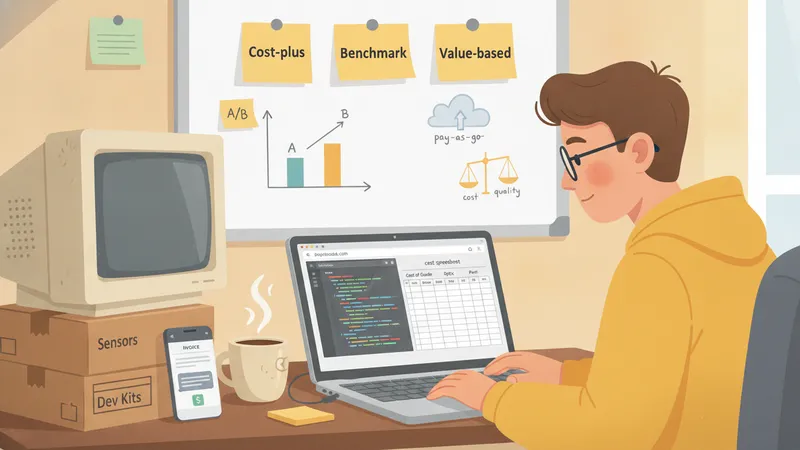
Pricing strategies for small-capital ventures commonly start with simple frameworks such as cost-plus, competitor benchmarking, or value-based considerations. Cost-plus pricing accounts for variable costs and contributes to covering fixed expenses, while benchmarking helps understand market expectations. Value-based approaches may be used when the offering provides distinct time savings or specialized outcomes. Founders often test different price points in early sales to observe effects on conversion and perceived value.
Practical startup steps often include documenting a minimal operations plan, creating a simple offer ready for customer testing, and identifying low-cost channels to reach initial prospects. Typical steps may be: define the core offering, prepare minimal marketing materials, run a small pilot with selected customers, and collect structured feedback. Iterating based on that feedback may lead to incremental adjustments in service scope, product features, or pricing, helping to align the venture with real customer needs while conserving capital.
Legal and administrative considerations usually involve basic registration, clear recordkeeping, and simple contracts or terms of service appropriate to the scale of operations. Founders may seek low-cost professional advice for critical items such as tax treatment and liability protection, or use reputable templates as an initial measure while keeping documentation organized. These actions may reduce downstream friction, support clearer financial reporting, and help the business operate within common regulatory expectations as it grows.