
Stair lifts are mechanical devices designed to aid individuals in moving up and down staircases by means of a motorized chair or platform. These devices typically operate via a rail system that is securely affixed along the side of an existing staircase. The user can control the movement of the chair or platform with a simple interface, often in the form of buttons or a remote control. This arrangement allows for a seated ascent or descent on stairs, potentially enhancing ease of access within multi-level dwellings.
The mechanics of stair lifts generally involve an electric motor driving the chair along the rail, which may be straight or curved depending on the staircase configuration. The system usually includes safety features such as seat belts, obstruction sensors, and automatic braking mechanisms. Controls are designed to be user-friendly, supporting operation by individuals with varying degrees of mobility. Installation involves customizing the rail layout to the specific staircase dimensions in the residence.
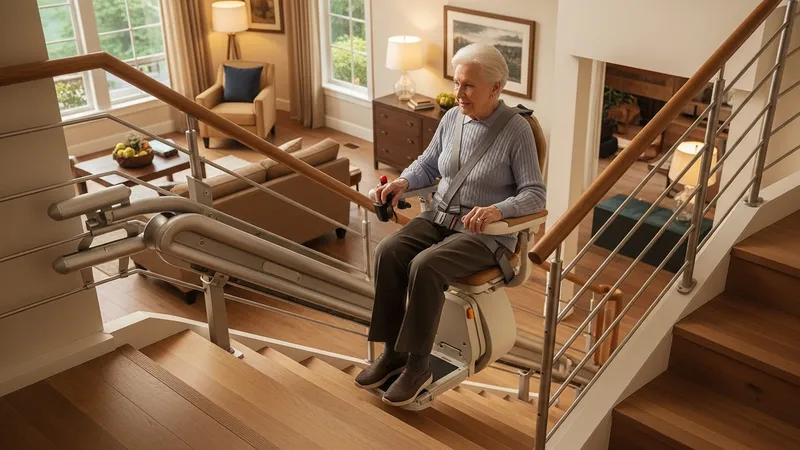
Several design aspects differentiate stair lift systems based on staircase type, user needs, and installation conditions. Straight stairlifts generally have simpler rail designs and may be less costly, whereas curved or custom stairlifts accommodate complex staircase shapes through specialized rail engineering. The motor and control equipment used in these systems often reflect the need for smooth and quiet operation to preserve the residential environment’s comfort.
Safety mechanisms embedded in stairlift systems can include sensors that halt operation if obstacles are detected on the stairs, aiding in accident prevention. The motorized component usually incorporates fail-safe features to avoid uncontrolled movement during power interruptions. Electrical requirements and battery backups may be structured to maintain functionality and reliability, especially in residences prone to outages. Safety standards in France require adherence to certain normative controls during manufacturing and installation.
User interfaces are essential in stairlift design, offering various control methods like onboard buttons, handheld remotes, or integrated wireless systems. Ease of operation is a focus to accommodate users with limited manual dexterity. Furthermore, installation may influence home usability, with efforts made to minimize interference with regular stair use when the stairlift is not in motion. The modular assembly of rails and seats allows for some degree of customization.
Overall, stair lifts merge mechanical engineering with accessibility principles to provide a modality for seated stair navigation within residential settings. They involve multiple components that work together to offer controlled, stable, and relatively quiet transit along staircases. The next sections examine practical components and considerations in more detail.
Stair lifts may be broadly categorized based on the physical structure of the staircase and the lift mechanism. The primary types include straight rail stair lifts, curved rail stair lifts, and platform stair lifts designed for wheelchair users. Each type serves specific architectural and user needs and is engineered accordingly to accommodate these variables.
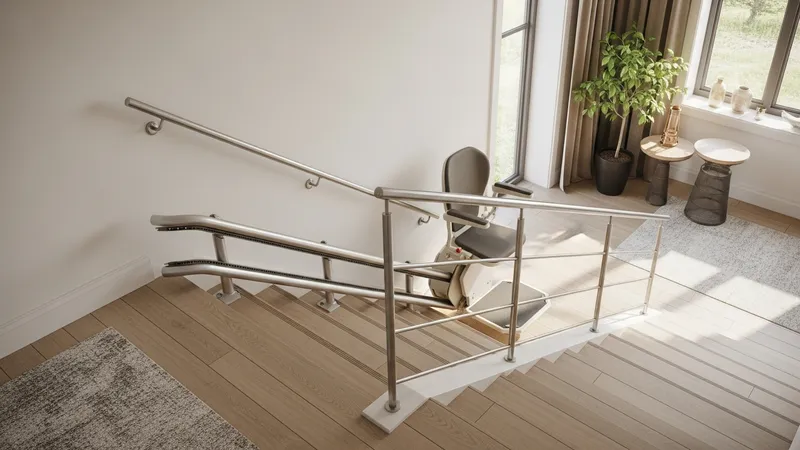
Straight rail stair lifts typically constitute the simplest design. Their rails are installed in a direct line along the staircase, favoring staircases without bends or landings. These systems may incur lower material and installation costs due to their standardized components and typically shorter installation time compared to curved variants. They are widely used in single-flight stairs within residential buildings.
Curved rail stair lifts are customized to follow the precise geometry of staircases with turns, intermediate landings, or irregular shapes. The rails are often segmented and can include features like swivel seats or motorized footrests to enhance user comfort. Due to their tailored build, these can require more detailed on-site assessment and specialized manufacturing, which often influences pricing and lead times.
Platform stair lifts cater to individuals using wheelchairs, providing a flat surface that can support the wheelchair securely during stair transit. These lifts tend to require more space and structural support, as their design needs to cater to heavier loads and accommodate safe boarding and disembarking. Installation usually involves careful integration with the home’s architectural features and consideration of the staircase’s width.
A stair lift system typically integrates several essential components that work cohesively to ensure functionality and safety. Understanding these parts provides insight into how they contribute to overall operations and user experience. The main elements include the motor, rail, chair or platform, control interface, and safety features.
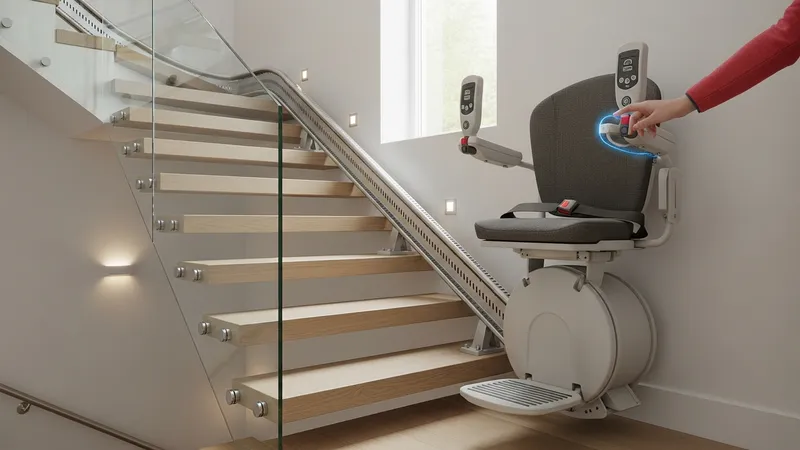
The motor serves as the prime mover, usually an electric actuator that drives the stair lift chair or platform along the rail. Motors are often designed for smooth acceleration and deceleration to prevent sudden movements. Depending on the model, the motor may be powered by direct electrical connection from the mains or from rechargeable batteries, allowing the lift to function during power outages.
The rail acts as the guided track or pathway along which the chair or platform moves. Made from durable materials such as steel or aluminum, rails are installed along one side of the staircase. For curved staircases, the rails are custom fabricated to fit the geometry accurately. Rails often incorporate safety switches and mechanical stops to prevent movement beyond designated points.
The chair or platform carries the user safely during movement. Chairs include seating, armrests, and footrests, designed for ergonomic support and user comfort. Platform lifts consist of a flat surface and may include safety barriers. Both types generally feature seat belts or restraints that help secure passengers during transit.
Stair lifts employ several operating principles to enable user-controlled vertical movement along stairs. The control mechanisms are important components dictating how users interact with the system and influence user accessibility. These controls generally function through wired or wireless systems and vary in complexity and functionality.
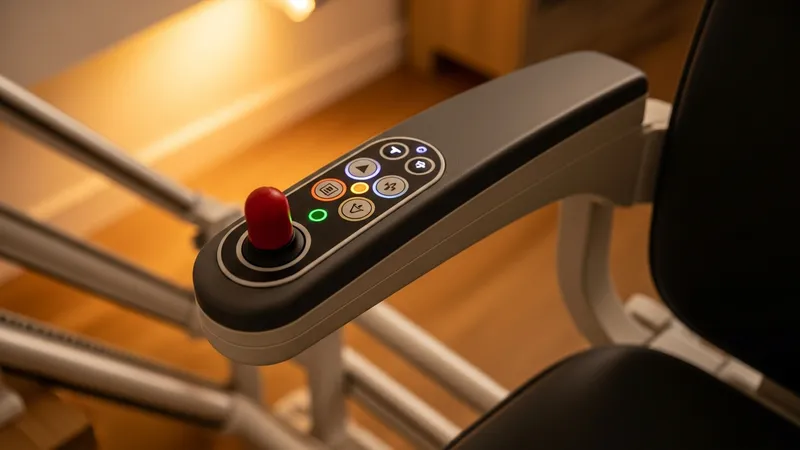
Most stair lifts have onboard control panels integrated into the armrest or side panels of the chair, featuring buttons that allow users to initiate movement upward or downward. These controls are typically designed with simplicity in mind to accommodate users with limited dexterity or vision. Some systems include tactile buttons or illuminated indicators for ease of use in varied lighting conditions.
Remote controls are also a common option, allowing operation from a distance, such as from the upper or lower floor. These handheld devices usually communicate wirelessly with the stair lift system and may include safety interlocks to prevent unintended movements. This feature can be useful for caregivers or residents who may wish to park or summon the lift remotely.
Additional operating mechanisms may include obstacle detection sensors that automatically stop the lift if an obstruction is detected on the stair path during operation. Safety interlocks often prevent the lift from operating if the seat swivel mechanism is not locked or if the footrest is not in position. Such mechanisms contribute to reducing risks during use.
Installation of stair lifts involves several considerations based on the specific characteristics of the home staircase and intended user requirements. Factors influencing installation complexity include the staircase’s architectural design, dimensions, and structural integrity, as well as the presence of features such as handrails or landings.
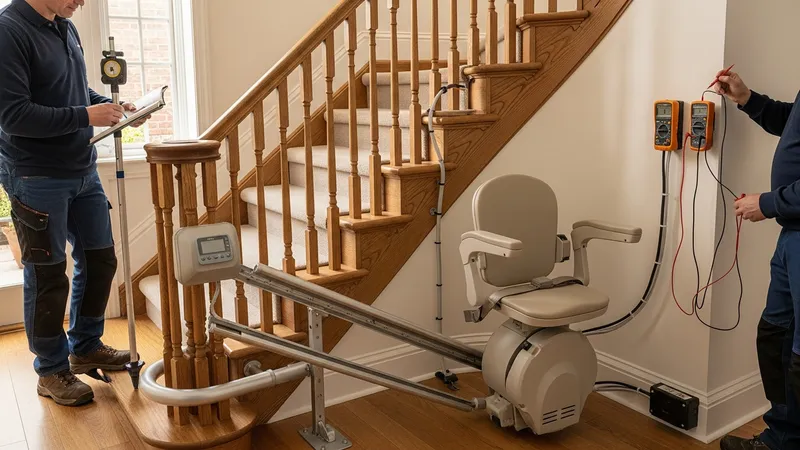
Specialized surveyors often assess the staircase to determine the best rail configuration and mounting method. The weight capacity and dimensions of the stair lift chair or platform must be matched to user needs and available space. Electrical wiring or batteries must comply with local electrical standards, and installation processes usually require a period of adjustment and testing to ensure smooth operation.
Maintenance of stair lifts typically involves periodic inspections and servicing to check motor function, rail integrity, electrical components, and safety systems. Users may be advised to keep rails free of dust and debris to prevent operational issues. Some stair lift models include diagnostic features that indicate when service may be needed.
In France, stair lifts must conform to certain national standards and regulations related to electrical safety and mechanical stability. Local authorities or accredited technicians often handle installation and maintenance to ensure compliance and safe functioning. These processes can help prolong the operational life of stair lifts and support reliability for users.