
Tech Tools for Business: Understanding Digital Solutions for Modern Operations refers to the range of software and platforms that support daily organizational activities. This concept covers systems used for communication, task coordination, customer relationship management, finance, analytics, cloud storage, and security. The focus is on how these digital solutions function together to enable routine operational processes, streamline workflows, and provide structured data for decision-making rather than on any single vendor or marketing claim.
These digital solutions may be delivered in different models, such as cloud-hosted services, managed platforms, or self-hosted installations, and they often include APIs, integration points, and administrative controls. They typically serve specific operational roles—communication, project tracking, customer records, accounting, marketing, or infrastructure—and may be combined to address broader business requirements. Understanding their capabilities, constraints, and common deployment patterns helps clarify how they contribute to modern operations.
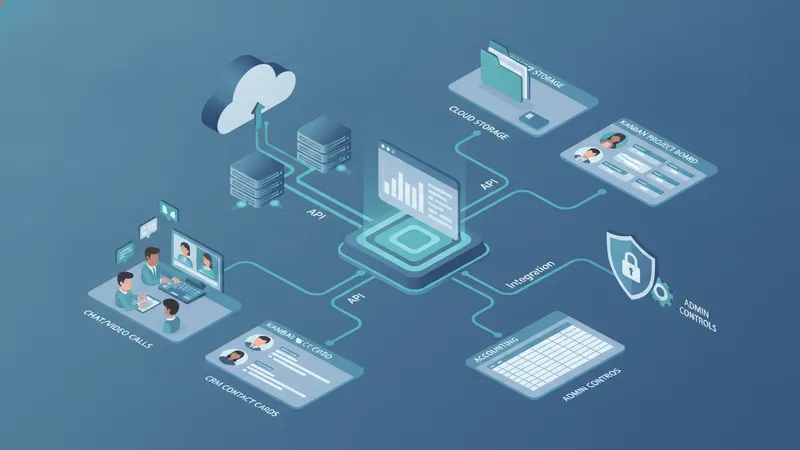
Integration between these categories may occur through native connectors, third-party middleware, or custom APIs. When systems communicate, they exchange structured data such as user records, task statuses, and transactional entries. Typical integration patterns include event-driven updates, scheduled synchronizations, and direct API calls. Organizations often balance the benefits of tighter integration—faster data flows and reduced duplicate entry—against the complexity and maintenance overhead that connected architectures can introduce.
Deployment models influence operational and administrative responsibilities. SaaS offerings may offload infrastructure maintenance but often require ongoing subscription management and attention to configuration settings. Self-hosted solutions may give more control over data locality and customization but can increase the need for in-house maintenance and backups. Hybrid approaches frequently appear in practice, where critical data remains on controlled systems while non-sensitive functions use third-party cloud services.
Security and compliance considerations typically shape technology choices and configurations. Organizations commonly evaluate access controls, encryption in transit and at rest, logging, and role-based permissions when selecting tools. Compliance frameworks (such as privacy or sector-specific standards) may require data handling rules and retention policies that affect how tools are configured and how integrations are implemented. Risk assessments can help identify which systems require tighter governance.
Operational measurement and reporting often rely on aggregating data from multiple tools into dashboards or reporting platforms. Standard metrics may include task throughput, customer response times, invoicing cycles, and resource utilization. Tools that expose APIs or offer exportable datasets may simplify reporting, while platforms with limited data access can complicate analysis. Careful planning of data schemas and field mappings often reduces manual reconciliation during reporting.
In summary, understanding digital solutions for modern operations involves recognizing categories of tools, how they integrate, and the trade-offs between control, maintenance, and ease of use. Considerations around deployment models, security, and data access typically guide practical decisions. The next sections examine practical components and considerations in more detail.
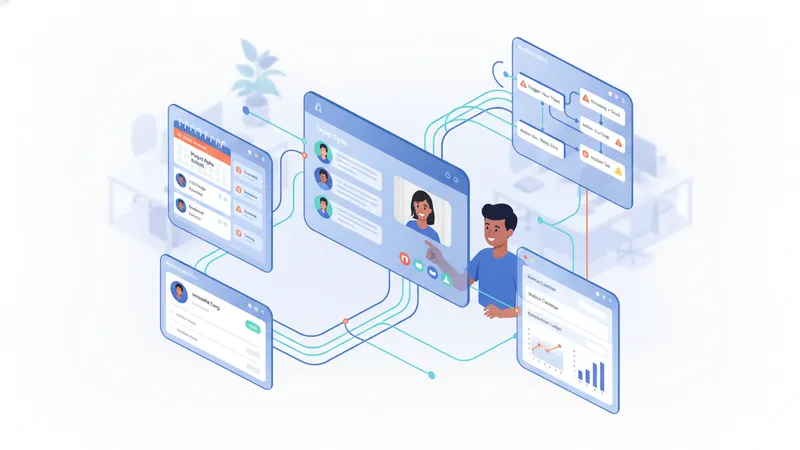
Communication platforms often serve as the central hub for team interaction and may include instant messaging, presence indicators, and video conferencing. These platforms typically provide integrations with calendar systems and project tools, which can reduce context switching. Project and task management systems focus on defining work items, assigning ownership, and tracking progress across stages or boards. CRM systems capture customer records and interactions to support sales and service processes. Accounting and finance tools handle invoicing, reconciliation, and basic reporting. Each category may include many role-specific features and is often chosen to align with operational needs rather than marketing claims.
Automation and workflow tools may connect the categories above by triggering actions across systems—for example, creating an invoice when a deal stage advances or notifying a team channel when a task is overdue. These automation layers can be lightweight rule engines within a single tool or more sophisticated platforms that orchestrate multi-step processes. They often include conditional logic, retry rules, and error handling patterns. When used judiciously, automation can reduce repetitive work; however, complexity growth is a common operational consideration.
Cloud computing and storage solutions frequently underpin the listed categories by providing hosting, scalability, and data persistence. Cloud platforms commonly offer managed databases, object storage, and compute resources that tools leverage to operate without local infrastructure. For many organizations, cloud-based delivery may simplify provisioning and scaling, yet it may also affect data residency and integration latency considerations. Understanding the underlying hosting model may inform decisions around backup, failover, and service-level expectations.
Analytics and reporting tools often consume data from communication, task, CRM, and finance systems to produce consolidated views. These tools may connect via APIs, data warehouses, or CSV exports. Typical reporting use cases include monitoring operational KPIs, tracking financial cycles, and supporting customer analytics. Data quality, field consistency, and update cadence are key factors that influence the reliability of outputs. Planning for data integration and standardizing field definitions often reduces downstream reconciliation work.
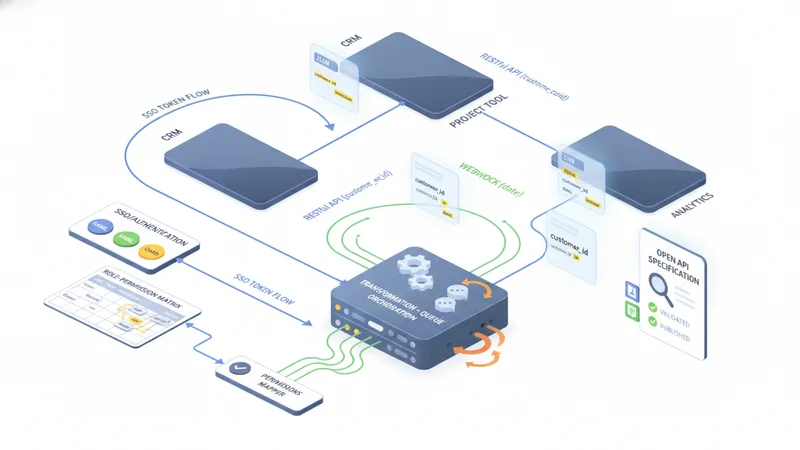
APIs and data formats commonly determine how easily tools interoperate. RESTful APIs, webhooks, and standardized data formats (JSON, CSV) are frequent methods for exchanging information. When integrating, mapping fields between systems is often required to maintain semantic consistency—customer identifiers, status codes, and date formats are typical alignment points. Middleware platforms that provide transformation, queuing, and orchestration capabilities may be used to decouple systems and manage retries. Organizations often assess integration maintenance costs and prefer solutions that expose clear, documented interfaces.
Authentication and identity integration often affect interoperability and user experience. Single sign-on (SSO) implementations using protocols such as SAML or OAuth may streamline access across multiple tools and reduce password-related overhead. Role and permission mapping across connected systems is a common complexity: a user’s role in a project tool may not directly correspond to a CRM permission set. Planning for consistent identity and access management can reduce administration time and help enforce consistent security controls across the environment.
Latency, data freshness, and synchronization frequency are practical trade-offs when designing integrations. Real-time updates via webhooks may support immediate notifications and near-instant status changes, while scheduled batching can reduce API call volumes and complexity. The choice often depends on how critical immediate consistency is for a given workflow. In many cases, teams adopt a hybrid approach that uses event-driven updates for high-priority flows and periodic syncs for bulk reconciliation tasks.
Vendor compatibility and versioning policies are relevant long-term considerations. Tools that change APIs or deprecate connectors may require ongoing adaptation. Using industry-standard integration approaches and documenting integration points helps mitigate future migration effort. It is common for organizations to maintain a concise integration inventory that lists data flows, owners, and update frequencies to manage technical debt and support operational continuity.
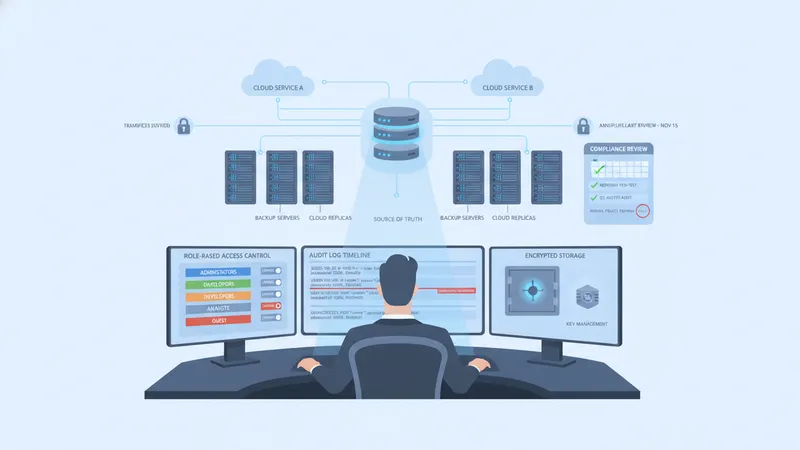
Access control and least-privilege principles often guide configuration of business tools. Role-based access control (RBAC) lets administrators limit sensitive actions to appropriate roles while preserving operational efficiency. Audit logging and activity trails commonly provide visibility into administrative actions and user activity. Regular review of access lists and periodic audits may surface unnecessary privileges. These practices typically support both internal governance and external compliance needs without implying any specific legal outcome.
Data protection measures such as encryption at rest and in transit often form part of baseline technical controls. Many tools provide transport-layer security and support for encrypted storage; however, the configuration and key management approach can vary. Backup and retention policies may address operational resilience and recovery needs. When integrating multiple tools, consideration of how backups are coordinated and which system is the source of truth for a data object can reduce recovery complexity following a disruption.
Compliance requirements vary by sector and jurisdiction, and tools may include features to assist compliance rather than guarantee it. Privacy controls, consent capture, and data deletion workflows commonly support privacy-related obligations where applicable. Organizations frequently consult legal or compliance specialists to interpret regulatory obligations and translate them into tool configuration and operational processes. Risk assessments may prioritize which systems require heightened controls based on data sensitivity and business impact.
Third-party vendor risk often factors into tool selection and ongoing oversight. Vendor questionnaires, SOC reports, or documented security controls may inform risk reviews. Contractual terms concerning data processing, incident notification timelines, and liability often influence how organizations allocate responsibilities. Maintaining an inventory of vendors and the types of data they handle is a frequent operational practice to support governance and incident response planning.
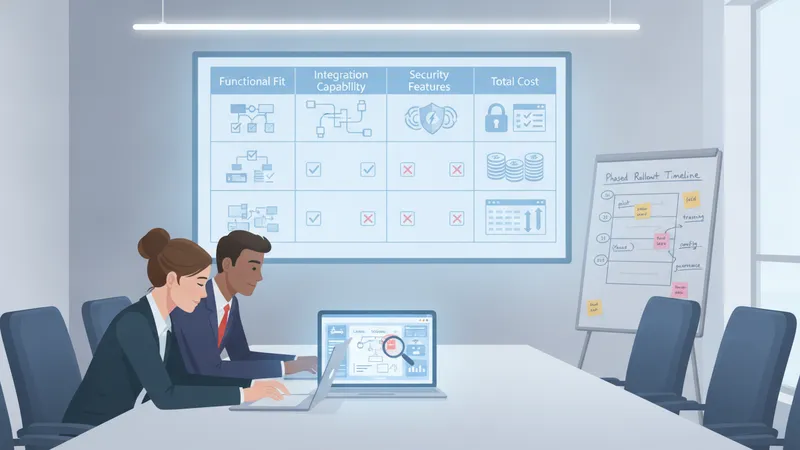
Evaluation criteria typically include functional fit, integration capability, security features, and ongoing operational costs. Functional fit assesses whether a tool supports required workflows and reporting needs. Integration capability examines APIs, connector availability, and compatibility with existing systems. Security features consider authentication options, encryption, and logging. Cost assessments commonly look beyond subscription fees to include implementation, training, and maintenance effort. Framing these criteria as comparative considerations helps teams align selection with organizational constraints rather than asserting absolute recommendations.
Pilot testing and phased rollouts often help validate assumptions about usability and integration complexity. Small-scale pilots may reveal data mapping issues, workflow gaps, or user adoption barriers before wider deployment. Observing how staff interact with a tool in live scenarios can surface configurational or training needs. It is typical to treat pilots as learning exercises that inform configuration standards and governance practices rather than final endorsements of a single approach.
Total cost of ownership (TCO) and exit planning are practical topics frequently reviewed during selection. TCO may include subscription fees, integration development, user training, and administrative overhead. Exit planning considers data export options, portability, and migration paths should a switch become necessary. Evaluating data export formats, API availability, and the effort required to reconstruct historical records can reduce future operational friction and protect continuity of business processes.
Ongoing governance and continuous improvement processes often support sustained value from digital tools. Establishing ownership for each system, documenting configuration baselines, and scheduling periodic reviews can help adapt tools to changing processes. Collecting operational metrics—such as system uptime, API error rates, or user engagement—may guide incremental investments and remediation priorities. These considerations typically help organizations manage complexity and maintain alignment between technology and operational goals.