
Understanding the legal checks, searches and conveyancing process for property purchases in the United Kingdom involves confirming legal title, investigating local and environmental risks, and completing formal transfer steps. Conveyancing is the legal procedure that moves ownership from seller to buyer and typically includes checking the HM Land Registry title, identifying any charges or covenants, and obtaining reports or searches that reveal local authority, environmental, and water/drainage information relevant to the property.
These checks and searches are usually carried out by a conveyancer or solicitor acting for the buyer and may influence contract terms, lender conditions, or timing of exchange and completion. The process often includes review of planning history, building regulation compliance, leasehold or freehold status, and any rights or restrictions affecting use. Each element aims to clarify legal and practical obligations attached to the property before contracts are exchanged.

Title checks through HM Land Registry may disclose registered mortgages, restrictive covenants, easements and the formal title plan. A buyer’s solicitor often purchases an official copy of the title and examines historical entries to identify issues such as rights of way or previously registered notices. Unregistered interests can exist, particularly for very old titles or unregistered land, and may require additional investigation. These title matters can affect transfer drafting, completion conditions and whether indemnity insurance is considered.
Local authority searches commonly include two components: the LLC1, which relates to specific local authority charges, and the CON29 standard enquiries about planning and environmental matters. Responses can reveal pending planning applications, tree preservation orders, or enforcement actions. Typical local search turnaround can vary regionally and may take several weeks. Where timing is important, buyers often account for this in conveyancing timelines and may review which search elements are essential for their risk tolerance.
Environmental searches collect information about flood zones, groundwater contamination, radon, and historical industrial use. The Environment Agency and other sources provide maps and datasets that may indicate elevated insurance costs or development limitations. Results commonly influence survey scope and lender decisions. For properties in former coalfield areas, specific mining reports may be recommended. Environmental findings do not necessarily prohibit purchase but may prompt further technical advice or mitigation planning.
Water and drainage enquiries identify whether the property drains to public sewers, private drains, or shared systems, and whether there are adoption agreements with a water company. Local water companies in the UK (for example, Thames Water in London) supply adoption and asset information. Developers’ records, sewers maps and water supplier responses may uncover maintenance liabilities or requisition obligations. Clarifying sewer status often matters for renovation plans and for mortgage underwriting.
In summary, conveyancing combines title investigation, targeted searches and contractual arrangements to transfer property ownership in the United Kingdom. The next sections examine practical components and considerations in more detail.

Title checks normally begin with an official title register and plan obtained from HM Land Registry, which commonly shows the registered owner, charges and a basic plan of the property. Solicitors often compare the title plan to the physical property and the purchase contract to detect discrepancies. If the property is leasehold, the title will typically include lease terms and the freeholder’s details. Where entries are absent or ambiguous, additional enquiries or historical searches may be needed to establish the full scope of rights or obligations affecting the land.
Local authority searches may provide formal answers to standard enquiries about planning, highways, and statutory notices. The CON29 element can report whether the local planning authority has issued enforcement notices, listed building status, or whether the land lies within a conservation area. The LLC1 identifies charges such as outstanding local land charges or CIL (Community Infrastructure Levy) liabilities. Response times can vary by council; in some urban areas searches may be completed within a fortnight, while other councils may take longer.
Costs associated with title and local searches can differ across England and Wales. Official HM Land Registry copies have set fees for electronic and postal services, and local authority search providers may charge fixed administrative fees plus any supplementary fees for additional enquiries. Buyers often observe that professional fees for a solicitor’s review are separate from the search supplier costs. Solicitors may explain typical timing and what specific search results could mean for the transaction without making decisions for the client.
When title checks or searches identify potential issues—such as an unregistered interest, a restrictive covenant, or a planning constraint—responses often lead to focused follow-up enquiries. Options commonly include negotiation on contract terms, seeking formal indemnity insurance for certain defects, or requesting further documentation. Each route has trade-offs that may affect cost, time and perceived marketability; these are normally presented as considerations rather than prescriptive directions for action.
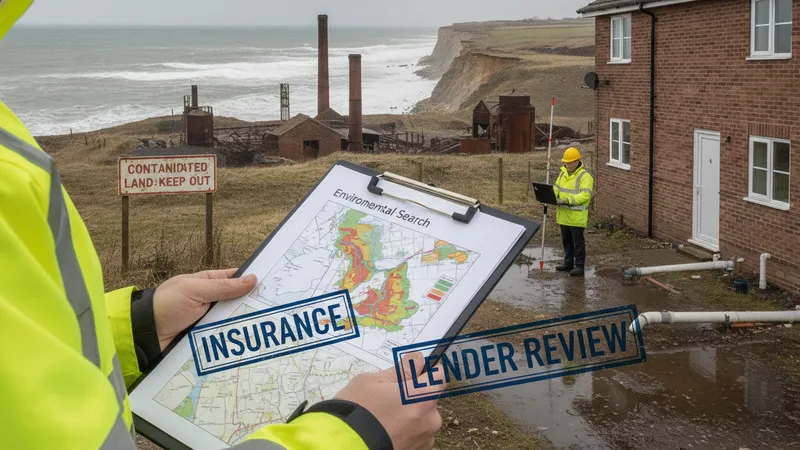
Environmental searches use data from the Environment Agency, local authority records and historical land use to assess flood risk, contamination and other hazards. The UK’s Flood Map for Planning provides a public indicator of flood zones that may affect planning permissions and insurance. For properties near former industrial sites or on reclaimed land, supplementary contaminated land or ground stability reports may be advised. These datasets typically inform whether specialised surveys or remediation assessments are warranted before proceeding.
Flood risk is often expressed by zone or probability, and lenders may request flood risk assessments where maps indicate heightened exposure. Insurance availability and premiums can be affected by flood designation, though designation alone does not determine mortgage approval. In rural or coastal areas, additional considerations such as coastal erosion or surface water flood risk can factor into both insurance and planning permissions; buyers commonly note these elements when reviewing long-term occupation plans.
Water and drainage enquiries are usually addressed to the local water and sewerage company and may confirm whether the property drains to public sewers or relies on private systems such as septic tanks. Public sewer adoption status can affect who is responsible for maintenance. Where drains cross neighbouring land, easements or maintenance agreements may be relevant. In some cases, local water companies provide maps or asset records for a fee that conveyancers review alongside building surveys and planning records.
Environmental and water-related findings typically prompt consideration of further technical advice rather than immediate transaction refusal. For example, a contamination flag may lead to a targeted soil investigation or a management plan. Where minor issues are identified, indemnity insurance or contractual adjustments may be considered. These options often balance cost, timing and residual risk and are normally evaluated in relation to the buyer’s priorities and any lender requirements.

Planning history and building control records demonstrate whether works were authorised and whether planning conditions remain outstanding. Buyers may examine local planning portals for recent applications and decisions; planning conditions can impose future obligations on owners. Building regulations completion certificates or final notices provide evidence that structural or service works complied with statutory standards at the time of alteration. Absence of certificates does not always preclude sale, but it can influence insurance and lender considerations.
Leasehold properties involve additional legal layers: the lease terms, service charge arrangements, ground rent clauses and any management provisions. Conveyancers commonly request the lease, details of any assigned rights, and the freeholder’s details to verify obligations and potential liabilities. Certain long-standing lease features, such as escalating ground rent formulas or restrictive user clauses, may affect mortgage underwriting or resale prospects. For complex lease situations, further scrutiny of title documents and lease administration records is often appropriate.
Rights over land—such as easements, rights of way, restrictive covenants and party wall matters—are typically recorded on the title or established by long-standing user. These rights can limit uses or impose maintenance duties. For example, a right of way used by a neighbour could restrict extensions or fencing plans. Identifying such rights early in conveyancing helps clarify which renovations or developments may require third-party consent or formal agreements, and whether historical maintenance patterns are documented.
When planning or building regulation non-compliance is discovered, options commonly include seeking retrospective approvals, negotiating remedial works, or obtaining indemnity insurance where appropriate. Leasehold concerns may prompt verification of service charge budgets and recent accounts. All of these items tend to influence the contract negotiation phase and the drafting of special conditions rather than being categorically prohibitive; they are normally evaluated as part of a balanced risk and cost assessment.

Mortgage lenders typically set conditions that must be satisfied before funds are released, such as satisfactory title, acceptable valuation, proof of identity and searches completed to the lender’s expectations. The lender’s solicitor may raise separate enquiries and require evidence that planning permissions and building regulations are in order for any recent works. Valuation reports differ from full structural surveys and are focused on lender security; where valuation flags arise, lenders may request additional reports or place conditions on their offer.
Contract review and exchange are formal stages where the buyer and seller’s solicitors agree final contract terms and a deposit becomes payable on exchange. Exchange creates legally binding obligations and sets a completion date. Timing between exchange and completion varies and can be used to satisfy remaining conditions, arrange mortgage funds, and finalise removal logistics. Parties often negotiate completion periods that reflect coordination of funds, particularly where chains of transactions are involved.
On completion, the purchase price balance is transferred to the seller and the buyer receives keys and possession as agreed. Following completion, the buyer’s conveyancer usually registers the transfer of ownership and any lender charge with HM Land Registry. Registration may involve payment of Stamp Duty Land Tax (if applicable), submission of relevant forms and payment of Land Registry fees. Registration finalises the official record and may take a few weeks depending on the complexity of the application and any priority applications lodged.
Each conveyancing case often includes practical considerations such as timing for searches, allowance for remedial works, and understanding lender-specific requirements. Typical fees and timescales can vary regionally; for example, some councils are faster at returning searches in urban areas while rural authorities may take longer. Buyers typically treat search results and lender conditions as inputs to the drafting of special conditions and to planning the practical steps between exchange and completion.

After completion, registration at HM Land Registry secures the buyer’s title on the public register and records any mortgage as a legal charge. The registration process requires submission of the transfer deed, application forms and payment of registration fees in GBP. Where the buyer is the first registered proprietor of previously unregistered land, additional documentary evidence and possibly sworn statements may be necessary. Registered title generally provides clearer public evidence of ownership and the extent of the land involved.
Stamp Duty Land Tax (SDLT) reporting applies to most freehold and leasehold transfers in England and Northern Ireland and must be filed within the statutory period; payment of any tax due is typically arranged prior to registration. Scotland and Wales have separate regimes (LBTT in Scotland, Land Transaction Tax in Wales), and conveyancers ordinarily reference the correct authority’s guidance. Compliance with tax filing requirements is an administrative element of finalising the transaction rather than a transfer condition in most cases.
Post-completion tasks can include updating utility accounts, arranging for any agreed repairs, and ensuring that insurance reflects the new ownership and any lender requirements. If any deeds or guarantees were held by the seller (for example, warranties for recent works), these documents are passed on and lodged with the buyer’s records. Where leasehold properties are involved, notifying the freeholder and ensuring service charge accounts are current are regular follow-up tasks.
Overall, the closing phase of conveyancing in the United Kingdom consolidates the legal transfer, lender protections and statutory reporting. Timeframes vary and may depend on search turnarounds, lender processing and local authority responsiveness. Readers may find it useful to consult official HM Land Registry and government guidance for current procedural details and fee schedules.