
Water heater replacement involves assessing an existing unit, selecting an appropriate replacement, and completing site-specific installation tasks. The process typically begins with identifying the current system type—such as a storage tank, a tankless (on-demand) model, or a heat pump system—and documenting key parameters like capacity, fuel type, venting arrangement, and available utilities. A clear inventory of these items helps clarify whether a direct like-for-like replacement is appropriate or whether modifying plumbing, gas, or electrical systems is required. This conceptual overview frames subsequent planning and installation steps without prescribing a single approach.
Replacing a water heater often includes coordinated work across trades: plumbing for water and drain connections, mechanical or gas work for fuel and venting, and electrical for power and controls. Project scope can vary from a simple swap to a more complex upgrade that changes fuel type, adjusts capacity, or improves efficiency. Decisions typically consider household hot water demand, available space, and local code requirements. Understanding these dimensions in advance may reduce unforeseen delays during installation and supports a safer, code-compliant outcome.
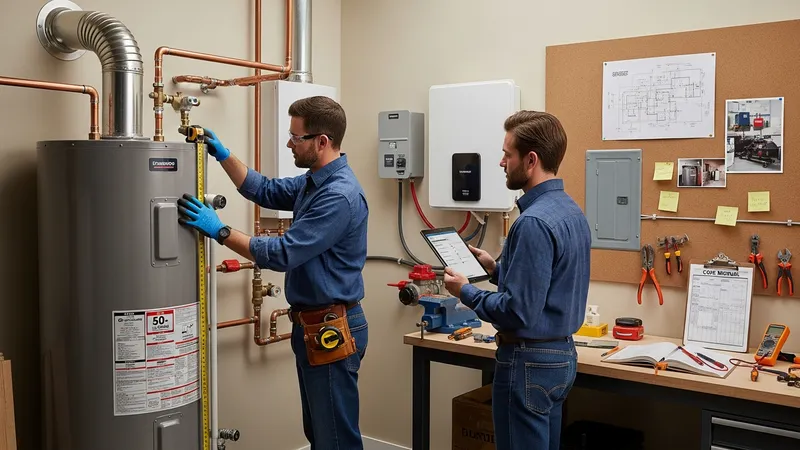
When evaluating replacement options, capacity matching and performance metrics are central considerations. Tank units may be sized by gallon capacity and first-hour delivery, while tankless units are sized by flow rate and required temperature rise. Heat pump systems are often described by coefficient of performance (COP) or an energy factor metric. These metrics can be used to compare likely in-service performance; however, site conditions, household usage patterns, and climate may influence actual results. A cautious planning approach considers typical daily use patterns and allows for some margin to avoid undersizing.
Installation logistics commonly influence selection and cost implications. Electric resistance units often need only existing electrical and plumbing connections, whereas tankless or higher-capacity gas units can require upgraded gas piping, larger flues, or dedicated electrical circuits. Venting arrangements vary between direct-vent, power-vent, or atmospheric vent systems, and changes to venting can trigger additional structural or routing work. Anticipating these needs in the planning stage can reduce scope creep and supports a smoother installation timeline.
Compliance with local codes and safety standards is a consistent theme in replacement planning. Typical compliance items include pressure relief valve installation, proper combustion air supply for fuel-burning equipment, and adherence to electrical connection and grounding practices. Some jurisdictions require permits and inspections that verify adherence to those standards. Documenting code requirements and confirming permit needs before work begins often helps prevent rework and supports a verifiable record of safe installation practices.
Maintenance expectations and end-of-life planning are relevant when choosing a replacement. Routine tasks such as periodic draining and inspection of sacrificial anodes for tank systems, checking for leaks, and verifying vent terminations can influence long-term performance. Planning for disposal or recycling of the removed unit and retaining service records may assist future homeowners or service providers. The next sections examine practical components and considerations in more detail.
An initial assessment documents the existing unit’s type, capacity, age, and condition as a basis for replacement planning. Inspecting the unit’s labeling may reveal model numbers, capacity in gallons, and energy-rating data where present. Recording inlet and outlet piping locations, venting routes, and access clearances helps determine whether the replacement can be a direct swap. This assessment typically includes noting any evidence of leaks, corrosion, or water damage and identifying the termination point for the drain pan or pressure relief valve discharge where applicable.
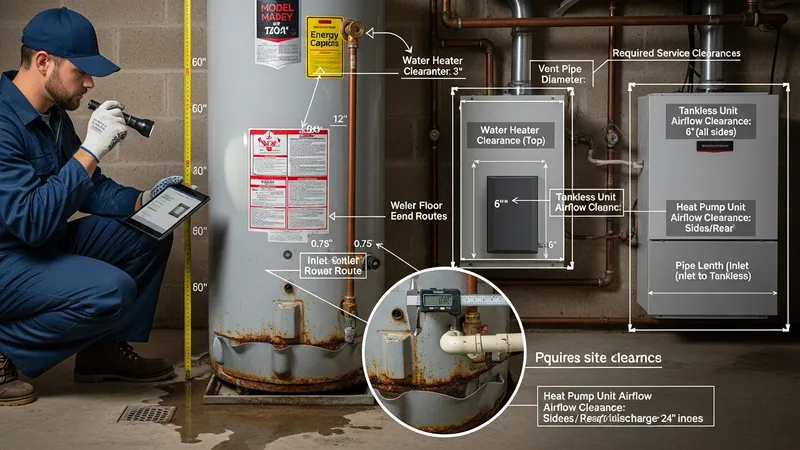
Measuring physical clearances and available space is often critical because modern alternatives can differ in height, diameter, or required service clearances. Tankless units are frequently wall-mounted and may fit into tighter footprints but require adequate space for service access and proper orientation for combustion or venting components. Heat pump units may require additional air clearance around the unit for heat exchange. Taking accurate site measurements early can reduce the need for on-site adjustments or additional carpentry work during installation.
Venting and combustion-air provisions must be verified when replacing fuel-fired equipment. Existing atmospheric venting, category I or category III vent systems, and power-vent configurations may not be interchangeable between different technologies. Assessing the current flue material, slope, and termination location helps determine whether modifications are required. In some cases, converting to a direct-vent or power-vent arrangement may necessitate additional exterior penetrations or rerouting that should be planned and permitted in advance.
Permitting and recordkeeping practices are part of the site requirements conversation. Many jurisdictions require a permit for water heater replacement and inspection upon completion. Anticipating permit timelines and preparing documentation—such as product specifications, schematic drawings of new venting, or electrical load calculations—can streamline approval. Keeping a record of permits, inspection reports, and equipment labels may assist in future maintenance, resale disclosures, or warranty claims where applicable.
Selecting an appropriate unit frequently balances capacity, energy efficiency, and compatibility with the existing site. Energy performance for water heaters is commonly expressed using standardized metrics such as the Uniform Energy Factor (UEF) or similar ratings. Electric resistance tanks often show lower energy efficiency compared with heat pump systems when conditions are favorable for heat-pump operation. Tankless units may show higher theoretical efficiency for continuous-flow demands, although real-world gains depend on usage patterns and inlet water temperatures.
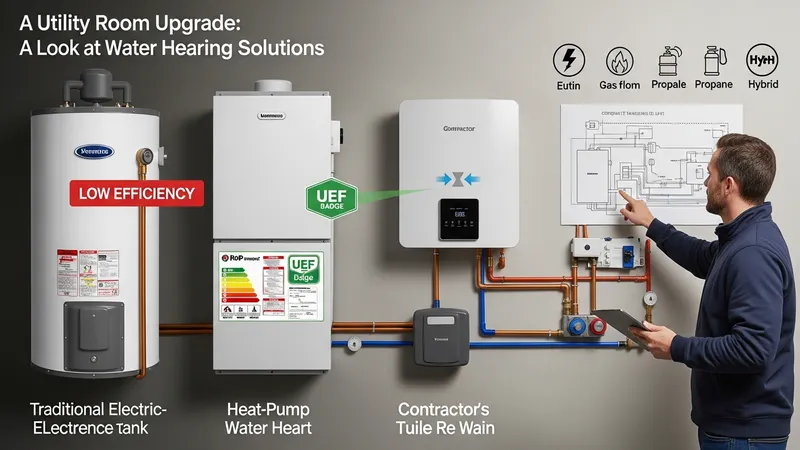
Fuel type considerations—electric, natural gas, propane, or hybrid—affect installation and operating characteristics. Fuel availability and cost in a particular area may influence choices, as can the need for upgraded service equipment like a larger gas meter or higher-capacity electrical panel. When converting fuel types, additional mechanical and code requirements typically apply, and such conversions often increase project complexity. Comparing typical operating patterns rather than relying on a single metric may present a more reliable prediction of likely energy use.
Capacity and sizing calculations differ by technology. For storage tanks, sizing often focuses on first-hour delivery or total gallon capacity relative to peak morning demand. For tankless units, sizing usually focuses on the required flow rate at a given temperature rise, which can vary by shower fixtures and simultaneous loads. Heat pump systems may be sized to meet average daily use with supplemental resistance elements for peak demand. Conservative planning may allow for future changes in household demand while avoiding frequent short cycling or undersizing.
Lifecycle considerations may include projected energy use, maintenance requirements, and expected usable life. Tanks may have relatively straightforward maintenance tasks but typically have limited lifespans due to corrosion and anode depletion. Tankless and heat pump systems may have different maintenance needs—such as descaling or refrigerant service—depending on hardness of local water and unit design. Considering these factors alongside local climate and typical usage can inform a balanced selection approach.
Plumbing connections often require alignment of inlet, outlet, and drain lines and may involve adding shutoff valves or a drain pan with a routed discharge. When the new unit’s connections do not match the existing layout, rerouting or added fittings may be necessary. Materials such as copper, PEX, or CSST-compatible fittings should be used in accordance with local code and manufacturer guidance. Ensuring accessible shutoffs and labeling service connections is a common best-practice consideration that can facilitate future servicing.
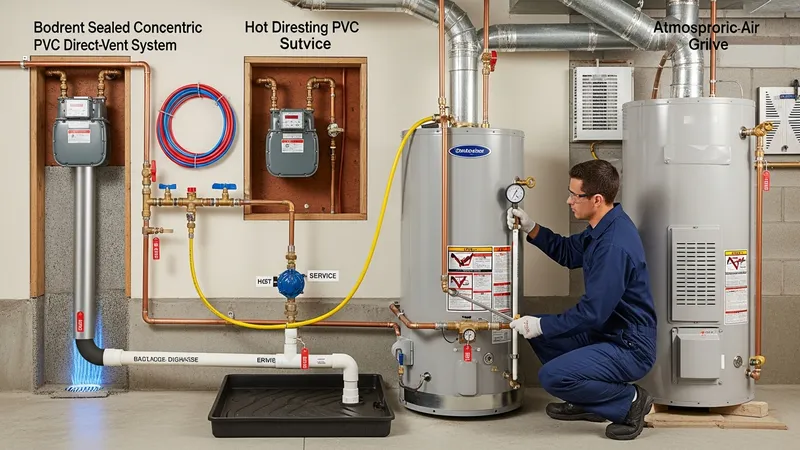
Gas installations may require verification of supply pressure, proper sizing of gas piping, and correct regulator selection. Some replacement scenarios, such as installing a larger-capacity gas-fired unit, can necessitate upsizing of gas piping or checking the gas meter supply. Venting components must be compatible with the selected appliance type; for example, sealed direct-vent systems use different materials and termination practices than conventional atmospheric vents. Proper combustion-air provisions should be confirmed to reduce incomplete combustion risks.
Electrical work for replacements can range from simple reconnects to installing dedicated circuits or upgraded service panels. Tankless electric units and heat pump systems frequently draw substantial current and may require larger conductors or dedicated breakers. Grounding, bonding, and protection devices such as GFCIs may be required where the appliance is located in wet areas. Coordination with a licensed electrician is typically advisable to verify code-compliant wiring and to obtain any required inspections.
Venting and flue integrity are important for safe operation of combustion appliances. Inspecting existing flue liners, checking for proper slope and termination height, and verifying material compatibility are common steps. For power-vent and direct-vent units, condensate management and appropriate vent materials are additional considerations. Where seismic strapping or anchoring is required—common in some seismic regions—this hardware is typically installed during the replacement to maintain compliance with local standards.
Safety provisions commonly addressed during replacement include installation of a temperature and pressure relief (TPR) valve, proper overflow routing, and verification of relief valve discharge termination. For gas units, testing for combustion gases and leak testing of fuel connections are typical post-installation checks. Electric installations often include verifying that disconnects and protective devices function as intended. Documenting these safety checks and retaining inspection reports supports later maintenance and can provide useful records for property owners.
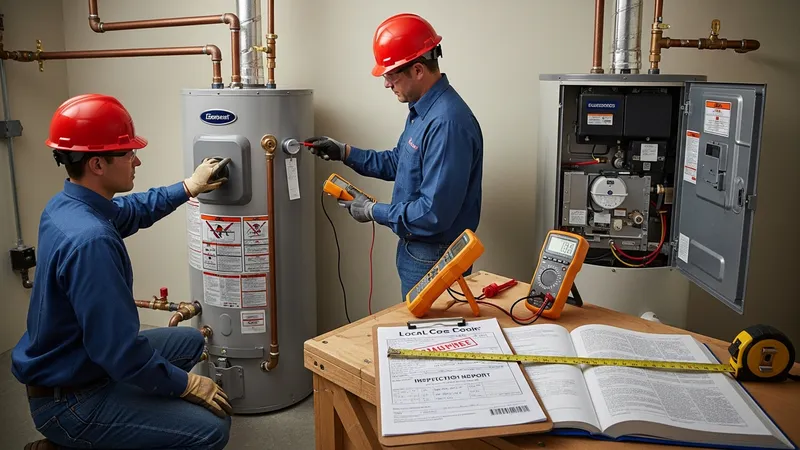
Local codes and standards frequently determine specific installation details such as required clearances, venting practices, and permitted appliance locations. Many jurisdictions require electrical, plumbing, or mechanical permits and inspections for water heater replacement. Consulting the applicable code text or local authority having jurisdiction during planning helps ensure that the scope of work aligns with permit requirements. Compliance steps may vary by municipality and are typically enforced through the permitting and inspection process.
Planned maintenance can extend useful life and maintain performance. For storage tanks, periodic draining to remove sediment and inspection or replacement of sacrificial anode rods may be suggested. Tankless systems may require occasional descaling where water hardness is high. Heat pump systems may need air-filter checks or clearance maintenance to ensure adequate airflow. Scheduling routine inspections and retaining service histories often helps identify developing issues before they necessitate emergency replacement.
End-of-life and replacement planning includes anticipating typical service lives and recognizing signs that replacement may be timely. Indicators such as recurrent leaks, significant drops in hot water delivery, visible corrosion, or frequent repair needs may signal diminished remaining life. Planning for an orderly replacement—considering equipment disposal, possible recycling, and timing around seasonal usage patterns—can reduce disruption. Maintaining documentation of product specifications and previous maintenance supports informed decisions when replacement becomes necessary.